Choose a topic !

The Code of Hammurabi Word Searches

Royal Reign Word Search

Royal Reign

The “Royal Reign” word search introduces students to terms associated with Hammurabi’s reign in ancient Mesopotamia. The vocabulary includes references to different civilizations such as the Sumerians and Akkadians, and concepts like unification, rulership, and governance. This worksheet highlights the political and administrative foundations of Hammurabi’s leadership. Students will find words that connect to how […]

View More
Law Stone Word Search

Law Stone

The “Law Stone” worksheet centers around the physical and linguistic features of the stele, a monumental stone slab used to engrave Hammurabi’s laws. Words like “Cuneiform,” “Basalt,” and “Engraving” highlight the technological and artistic practices of ancient Mesopotamia. It explores how early civilizations documented law and order on monuments for public display. The vocabulary also […]

View More
Punishment Puzzle Word Search

Punishment Puzzle

The “Punishment Puzzle” dives into the harsh principles and practices of justice under Hammurabi’s Code. Words like “Retribution,” “Execution,” and “Amputation” underscore the severity of penalties used to maintain law and order. This vocabulary reflects the belief in strict consequences for wrongdoing. It also introduces judicial terms such as “Imprisonment” and “Enforcement” that speak to […]

View More
Family Laws Word Search

Family Laws

“Family Laws” introduces students to the domestic regulations embedded within Hammurabi’s Code. It contains words like “Marriage,” “Divorce,” “Paternity,” and “Custody,” reflecting the code’s influence over personal and familial relationships. The vocabulary also includes terms that connect to inheritance and the roles of different family members, such as “Widow,” “Orphan,” and “Spouse.” These words help […]

View More
Property Code Word Search

Property Code

The “Property Code” word search is centered on property rights and regulations under Hammurabi’s legal system. Vocabulary includes terms such as “Tenant,” “Landlord,” “Ownership,” and “Foreclosure,” reflecting rules about land and economic exchanges. The worksheet explores how debt, loans, and property boundaries were managed in ancient Babylon. It shows how the law protected property holders […]

View More
Social Strata Word Search

Social Strata

The “Social Strata” worksheet presents vocabulary describing class distinctions in ancient Mesopotamia. Terms like “Noble,” “Slave,” and “Freeman” introduce students to the rigid hierarchy that governed social roles. The puzzle also features professions and statuses such as “Craftsman,” “Laborer,” “Matron,” and “Merchant.” These words help illustrate the diverse yet structured society that operated under Hammurabi’s […]

View More
Court Rules Word Search

Court Rules

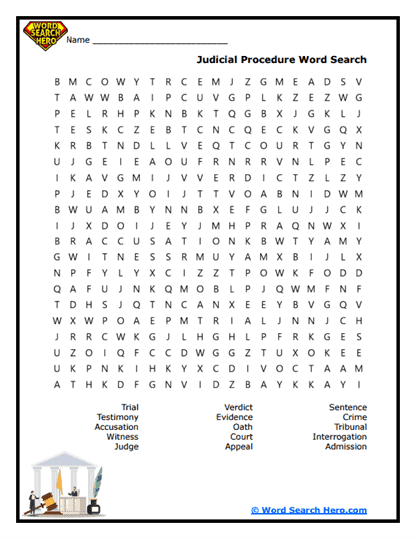
The “Court Rules” word search deals with legal procedures and courtroom terminology. Students encounter words like “Trial,” “Testimony,” and “Judge,” illustrating how ancient legal systems administered justice. Other terms like “Evidence,” “Verdict,” and “Appeal” offer insight into legal rights and due process. This worksheet mimics courtroom structure, showing the complexity of judicial decisions even in […]

View More
Sacred Roles Word Search

Sacred Roles

The “Sacred Roles” word search explores religious vocabulary relevant to Hammurabi’s time. It features roles such as “Priest” and “Oracle” and rituals like “Offering,” “Sacrifice,” and “Invocation.” Words such as “Temple,” “Sanctuary,” and “Blessing” reflect the spiritual institutions that held power. The puzzle highlights how religion was intertwined with law, politics, and daily life. These […]

View More
Trade Talk Word Search

Trade Talk

The “Trade Talk” worksheet focuses on economic terms from ancient Mesopotamia. Vocabulary such as “Commerce,” “Marketplace,” “Barter,” and “Harvest” relate to the systems of trade and value exchange. Other words like “Credit,” “Profit,” and “Taxation” show the early development of financial practices. The puzzle presents a picture of how the economy functioned under Hammurabi, emphasizing […]

View More
Law Legacy Word Search

Law Legacy

“Law Legacy” focuses on how Hammurabi’s Code influenced legal traditions. Vocabulary includes “Codification,” “Scholar,” “Translation,” and “Exhibit,” showcasing the legacy of ancient legal texts. Words like “Documentation,” “Preservation,” and “Interpretation” emphasize the lasting impact of these records. This puzzle captures the intellectual work behind lawkeeping and the scholarly interpretation of ancient rules. It demonstrates how […]

View More

About Our The Code of Hammurabi Word Searches

Let’s face it-when most people hear the words “ancient law code,” their eyes glaze over faster than wet clay in the Babylonian sun. But what if we told you that Hammurabi, the famously stern king of Babylon, could become your students’ next word-search obsession? Yes, we’ve chiseled his legacy into grid-based fun-no stylus required. Welcome to our Code of Hammurabi Word Search Collection: an unexpectedly delightful tour through one of history’s oldest legal frameworks, where justice isn’t blind-it’s just really, really well-organized.

Our goal was never to make Hammurabi “cool” (though honestly, ruling an empire and codifying 282 laws is kind of baller). Instead, we set out to make him memorable. Through each puzzle, students gain access to a broad sweep of historical concepts in a format that reinforces spelling, decoding, and reading fluency-without the yawns. Whether you’re a teacher trying to make ancient history sparkle, a parent sneaking in enrichment over snack time, or a curriculum designer who loves pairing cognition with culture, these puzzles deliver an educational punch with plenty of flair.

A Glance At The Collection

The collection unfolds like a legal drama binge with ten riveting episodes. We begin with the groundwork: Royal Reign is your pilot episode, painting the political landscape of Hammurabi’s empire. Students will learn about the Amorites, the Akkadians, and how a city called Babylon became the ancient equivalent of D.C. on a power trip. It’s here that monarchy meets muscle, and “Unification” isn’t just a warm fuzzy feeling-it’s a full-blown strategy.

Once students know who’s in charge, we bring in the bling-legal bling, that is-with Law Stone.” This puzzle celebrates the stele itself, that iconic black basalt column that makes modern signage look like a Post-it. Kids encounter words like “Engraving” and “Relief,” discovering that ancient legal documentation wasn’t just functional-it was artsy. The physicality of law becomes its own vocabulary set, and the puzzle becomes a tactile tribute to early written tradition. Who knew a rock could be so eloquent?

Next comes the heavy-hitter: Punishment Puzzle.” If Hammurabi were alive today, this would be the part of the show rated TV-MA. With words like “Execution,” “Amputation,” and the blood-chilling “Retribution,” this worksheet doesn’t shy away from the code’s eye-popping severity. But it also brings in structure: “Sentencing,” “Justice,” and “Enforcement” help frame these laws not just as brutal, but as surprisingly systematic. Ancient Mesopotamians didn’t just want revenge-they wanted results. Cue the dramatic courtroom gavel sound.

Then, it’s time to get domestic. Family Laws and Property Code pull back the curtain on everyday life in ancient Babylon. Forget soap operas-between marriage contracts, dowries, and foreclosures, these two puzzles are full-on legal melodrama. You’ll see that Hammurabi’s Code wasn’t just concerned with war and punishment-it was invested in paternity disputes and rental agreements. It’s Judge Judy with cuneiform. These puzzles encourage reflection on how laws govern personal relationships, and how society balances order, property, and family dynamics.

Social roles come sharply into focus in Social Strata,” where your class will wrestle with terms like “Noble,” “Slave,” “Freeman,” and-my personal favorite-“Matron.” No, it’s not just about status, but identity, occupation, and legal protections. One minute you’re a craftsman, the next you’re a “Ward” under protection. This puzzle gives a vivid picture of a society stacked like a ziggurat: complex, layered, and with very little upward mobility unless you happened to be born noble… or the king’s second cousin.

Court Rules serves up the procedural drama, complete with “Testimony,” “Evidence,” and “Appeal”-because even ancient judges needed a workflow. Students will track courtroom processes in vocabulary form and come away realizing that due process existed even when trials were held outdoors and the only court stenographer was a guy with a chisel.

The collection’s spiritual side comes to light in Sacred Roles,” where temples, idols, and oracles command center stage. This puzzle shows how religion and law weren’t just neighbors-they were roommates. In Hammurabi’s world, divine will and civil code often blended together in a sacred/legal smoothie, and terms like “Invocation” and “Sanctuary” reveal the holy underpinnings of Mesopotamian power.

We wrap with Trade Talk and Law Legacy.” The former reveals the bustling marketplaces and financial dealings of the time-barter systems, livestock deals, and the occasional angry toll collector. The latter brings it all full circle, focusing on Hammurabi’s enduring influence. Words like “Codification” and “Recordkeeping” demonstrate how his laws echo into the future. From dusty ruins to modern civics class, the king’s influence proves harder to shake than dried clay under your fingernails.

What Is the Code of Hammurabi?

The Code of Hammurabi was one of the earliest-and most famously detailed-sets of written laws in human history, created around 1754 BCE in ancient Mesopotamia. That’s right: while the Egyptians were still fine-tuning their pyramids and the Greeks were nowhere near inventing democracy, Babylon was getting its legal act together in spectacularly chiseled fashion. Hammurabi, the sixth king of the First Babylonian Dynasty, wasn’t just your run-of-the-mill monarch. He was a unifier, a lawmaker, and arguably, history’s first public policy influencer.

The code was inscribed on a massive basalt stele, a monument both literal and symbolic. Standing over seven feet tall, this imposing legal bulletin board stood in the middle of town like an eternal HOA rulebook. Except instead of “No loud parties,” it had entries like “If a builder constructs a house that collapses and kills the owner, the builder shall be put to death.” (You’ve got to admit, it’s clear and concise.)

The historical backdrop was one of transition. Hammurabi inherited a fragmented region made up of various city-states-think of it as Mesopotamian corporate mergers. Through warfare, diplomacy, and a bit of old-fashioned divine endorsement, he expanded Babylon’s influence until it became the most powerful empire in the region. But power alone wasn’t enough-Hammurabi wanted order. So he codified laws that touched everything from theft and agriculture to marriage and trade. In total, there were 282 laws, although a few were oddly missing. (Conspiracy? Stonecutter’s union break? No one knows.)

The laws themselves are famous for their brutal precision. “An eye for an eye” wasn’t just a metaphor-it was policy. But what’s often overlooked is that these laws represented a form of accountability that was revolutionary for its time. They covered not only punishment, but also rights, responsibilities, and legal protection based on social status. And yes, those protections were often wildly unequal-but the fact that they were written and accessible marked a significant leap forward in legal transparency.

Today, the Code of Hammurabi stands not just as a relic of past justice systems, but as a fascinating window into how societies first attempted to balance power, punishment, and peace. You may not agree with its ethics (spoiler: flogging features heavily), but you have to respect the ambition. And thanks to archaeology, we can now teach these ancient principles in classrooms, courtrooms, and-yep-word searches.