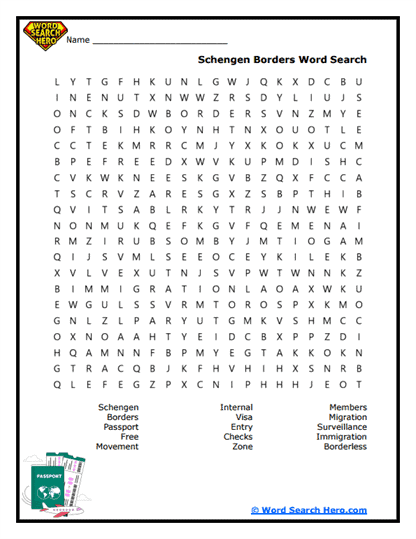
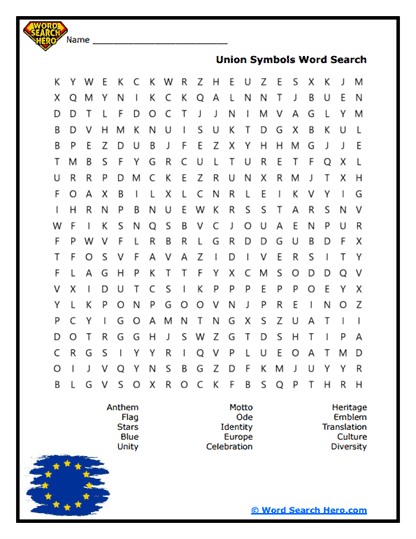
About Our The European Union Word Searches
Our The European Union Word Searches help students explore one of the most important modern political and economic organizations while strengthening vocabulary, spelling, and concentration skills. These printable puzzles introduce learners to the countries, institutions, and ideas connected to the European Union (EU).
Teachers often look for engaging ways to reinforce modern history and civics vocabulary. Word searches provide a simple and effective option. As students search for words related to member states, cooperation, trade, and government institutions, they become more familiar with the language used when studying modern Europe and international organizations.
Parents and homeschool educators also appreciate activities that combine learning with entertainment. Word searches encourage visual scanning, patience, and attention to detail while quietly reinforcing important historical and political concepts. Students interact with meaningful vocabulary connected to international cooperation, shared policies, and economic partnerships.
The European Union is an especially interesting topic because it represents an effort by many nations to work together politically and economically. Through these puzzles, students gain an engaging introduction to the vocabulary associated with this important organization in modern global affairs.
How the European Union Began
The European Union (EU) developed after World War II, when many European leaders believed that closer cooperation between countries could help prevent future conflicts and promote economic stability.
Early efforts focused on cooperation in key industries. In 1951, several countries formed the European Coal and Steel Community, which allowed them to share control of important resources used in manufacturing and construction. This cooperation helped build trust between nations that had previously been rivals.
Over time, additional agreements expanded this partnership. The Treaty of Rome in 1957 created the European Economic Community, which aimed to promote trade and economic cooperation between member countries.
These organizations eventually evolved into the modern European Union. Today, the EU includes many European nations that work together on policies related to trade, travel, environmental protection, and economic development.
Students studying the European Union often discover how international cooperation can help countries address shared challenges and strengthen regional relationships.
Paul’s Pro-Tip
When students finish the word search, try turning it into a quick “countries working together” activity.
Ask them to circle two country names and two words related to cooperation or government.
Then ask: Why might countries choose to work together instead of acting alone?
Students often suggest ideas like trade, peace, shared resources, and economic growth. It helps them see that organizations like the European Union are built around cooperation and common goals.
A simple puzzle can easily lead to a meaningful conversation about how nations collaborate.
Why the European Union Matters Today
The European Union plays a major role in modern international politics and economics. Member countries cooperate in many areas, including trade agreements, economic policies, environmental initiatives, and research programs.
One of the most well-known features of the EU is its single market, which allows goods, services, and people to move more freely between participating countries. This system helps encourage economic activity and business partnerships across national borders.
Some EU countries also share a common currency known as the euro, which simplifies trade and financial transactions within the region.
The European Union also works on policies that address shared challenges such as environmental protection, technology development, and regional infrastructure projects.
Students studying this organization often realize how cooperation between nations can influence global economics and diplomacy. Word searches featuring vocabulary related to the European Union help reinforce the terms students encounter when learning about modern international organizations.
By recognizing these words repeatedly, learners gain a clearer understanding of how countries collaborate to address common challenges and opportunities in today’s world.
Frequently Asked Questions
What is the European Union?
The European Union is a political and economic partnership between several European countries that cooperate on trade, laws, and shared policies.
Why was the European Union created?
The EU developed after World War II to encourage cooperation between European nations, strengthen economic connections, and help prevent future conflicts.
How can teachers use European Union word searches in class?
Teachers often use them as warm-up activities, vocabulary reinforcement exercises, or quick review tools during lessons about modern Europe and international organizations.
What grade levels are these puzzles best suited for?
They work well for upper elementary and middle school students studying world history or civics, though older learners may also use them as review activities.
What extension activity works well after completing the puzzle?
Students can locate several European Union member countries on a map and discuss how cooperation between those nations might benefit trade, travel, and cultural exchange.