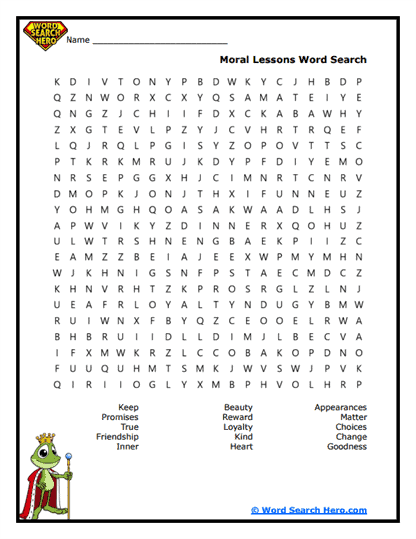
About Our The Frog Prince Word Searches
Our The Frog Prince Word Searches collection brings the magic of a classic fairy tale into an engaging printable puzzle activity. Based on the well-known story collected by the Brothers Grimm, these puzzles introduce students to the characters, settings, and memorable moments from the tale of a princess, a mysterious frog, and a surprising transformation.
Word searches are popular among teachers, parents, and homeschool families because they combine entertainment with meaningful literacy practice. As students scan the puzzle grid for words connected to the story-such as princess, pond, castle, crown, promise, and prince-they strengthen spelling recognition, build vocabulary, and improve reading confidence. The story context also helps students remember the words because they connect to familiar scenes from the fairy tale.
These puzzles can easily fit into a variety of learning settings. Teachers often use them as morning warm-ups, literacy centers, early-finisher activities, or quiet work during fairy-tale units. Homeschool educators may include them as part of literature studies focused on classic stories or European folklore. Families also enjoy using them as screen-free activities during travel, rainy afternoons, or relaxed learning time at the kitchen table.
Another benefit of word searches is the focus and patience they encourage. Students must carefully scan rows, columns, and diagonals while identifying letter patterns. This strengthens visual tracking skills and attention to detail, both of which are important for developing strong reading habits.
Because the story of The Frog Prince includes magical elements, royal characters, and a surprising ending, students often stay engaged longer than they might with traditional vocabulary worksheets. The puzzle feels like a game while quietly reinforcing literacy skills.
The Story Behind the Puzzle: A Fairy Tale of Promises
The Frog Prince is one of the earliest stories recorded in the Brothers Grimm collection of fairy tales. The tale begins with a princess who accidentally drops her golden ball into a pond. A frog retrieves it for her, but in return he asks for friendship and a place at the royal table.
At first, the princess makes a promise she doesn’t intend to keep. However, when the frog later arrives at the castle, the king insists she honor her word. This moment teaches an important lesson about responsibility and keeping promises.
The story eventually leads to the frog transforming into a prince, revealing that he had been placed under a magical spell. In many versions, the princess’s acceptance-or sometimes frustration-breaks the curse.
Using a word search based on the story can help students remember these key elements. Words connected to the puzzle often include characters, magical objects, and important locations such as pond, castle, crown, promise, and prince.
Teachers sometimes use the puzzle as a starting point for deeper discussions. Students might talk about the importance of keeping promises, how characters change during a story, or how magic often appears in fairy tales.
By connecting puzzle vocabulary to the story’s themes, students reinforce both their understanding of the narrative and their growing reading skills.
Paul’s Pro-Tip
After years of teaching fairy tales, I learned that kids love the strange moments in stories-like when a frog suddenly shows up at the dinner table.
When students finish a Frog Prince puzzle, I like to ask one simple question: “What would you do if a talking frog asked to eat at your table?”
You’ll hear some hilarious answers.
Then I sneak in a little learning by asking them to use one puzzle word in their explanation. Suddenly they’re practicing vocabulary and storytelling without even realizing it.
Trust me-if a frog shows up in the lesson, the kids will remember the story forever.
Fairy Tale Themes Students Discover Through the Puzzle
Classic fairy tales often include important themes that help students think about character choices and life lessons. The Frog Prince is a great example because it focuses on promises, honesty, and transformation.
When students complete a word search based on the story, they encounter words tied to these themes. Finding words like promise, princess, castle, spell, or prince can remind students of important moments in the tale.
Teachers can turn this into a quick reflection activity after the puzzle is finished. For example, students might choose one word they found and explain how it connects to the story’s lesson. A word like promise might lead to a conversation about why keeping one’s word is important.
Another theme in the story is transformation. The frog becoming a prince shows how appearances can be deceiving. This idea often sparks thoughtful discussions with students about judging others too quickly.
Fairy-tale puzzles are especially effective because they reinforce these themes in a relaxed way. Students feel like they’re simply solving a puzzle, but they’re also thinking about story structure, character behavior, and important lessons.
Over time, activities like these help students connect literature, vocabulary, and critical thinking-all through a simple printable puzzle.
Frequently Asked Questions
What words are typically included in The Frog Prince word searches?
Most puzzles include vocabulary related to the story such as frog, princess, pond, castle, crown, promise, spell, and prince.
Are Frog Prince word searches good for fairy-tale lessons?
Yes. They work well as review activities after reading the story and help reinforce key characters and story elements.
Can these puzzles be used for elementary students?
Absolutely. They are commonly designed for elementary grades and can be adjusted with easier or more challenging word lists.
Do the puzzles focus on the story’s main characters?
Many puzzles include the central characters like the princess, the frog, and the prince, along with important story objects like the golden ball.
When is the best time to use a Frog Prince word search?
Teachers often use them after reading the story, during literacy centers, or as a fun independent activity during a fairy-tale unit.