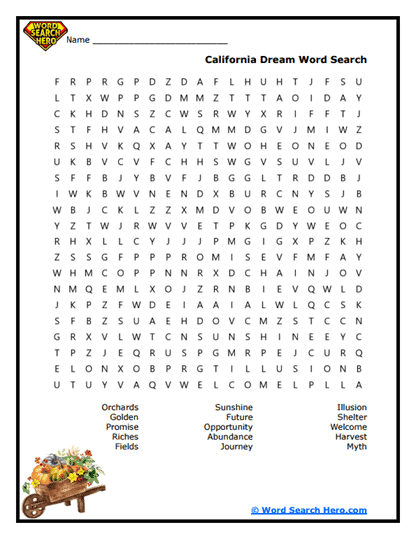
About Our The Grapes of Wrath Word Searches
Our The Grapes of Wrath Word Searches help students explore one of the most influential American novels while strengthening vocabulary, spelling, and concentration skills. These printable puzzles introduce learners to the characters, themes, and historical context connected to John Steinbeck’s powerful story.
Teachers often look for engaging ways to reinforce literary knowledge, and word searches provide a simple and effective option. As students search for words related to The Grapes of Wrath, they become more familiar with the characters, locations, and key ideas found in the novel. Repeated exposure to these terms helps learners recognize them more easily during reading assignments and classroom discussions.
Parents and homeschool educators also appreciate activities that combine learning with entertainment. Word searches encourage visual scanning, patience, and attention to detail while quietly reinforcing reading-related concepts. Students interact with vocabulary connected to perseverance, family, migration, and life during a challenging period in American history.
Because The Grapes of Wrath is commonly studied in literature classes, these puzzles can serve as useful warm-up activities before reading, review exercises after finishing the novel, or engaging reinforcement tools during classroom lessons.
Understanding the Story of The Grapes of Wrath
The Grapes of Wrath was written by John Steinbeck and published in 1939. The novel takes place during the Great Depression, a time when many families faced economic hardship and were forced to leave their homes in search of work.
The story follows the Joad family, who are driven from their farm in Oklahoma and travel west to California hoping to find better opportunities. Like many migrant families of the time, they face uncertainty, difficult working conditions, and long journeys as they try to rebuild their lives.
Along the way, the family encounters many challenges that reveal the struggles faced by migrant workers and farming communities during this era. The novel highlights the importance of family bonds, cooperation, and determination during difficult times.
Through the experiences of the Joad family, Steinbeck portrays the human side of a major historical event. His storytelling helps readers understand how economic hardship affected individuals, families, and communities.
Students studying The Grapes of Wrath often gain insight into both American history and the resilience of people facing adversity.
Paul’s Pro-Tip
After students finish the word search, try a quick “journey and perseverance” activity.
Ask them to circle one character name and one journey-related word from the puzzle.
Then ask: What challenges might a family face when traveling long distances to find work or a new home?
Students often begin thinking about the obstacles faced by migrant families during the Great Depression. This conversation helps connect vocabulary from the puzzle to the historical and emotional themes of the novel.
Sometimes the most powerful stories are about people who refuse to give up during difficult times.
Why The Grapes of Wrath Is Widely Studied
The Grapes of Wrath remains one of the most widely studied novels in American literature because it captures an important historical moment while telling a deeply human story. Steinbeck’s portrayal of migrant families during the Great Depression helped readers understand the challenges faced by many Americans during that time.
The novel explores themes such as resilience, family loyalty, fairness, and the search for opportunity. Through the journey of the Joad family, Steinbeck highlights both the hardships and the determination of people struggling to improve their lives.
The book received widespread recognition and was awarded the Pulitzer Prize for Fiction. It also contributed to Steinbeck later receiving the Nobel Prize in Literature for his contributions to storytelling.
Today, The Grapes of Wrath continues to be studied in classrooms because it combines historical insight with powerful storytelling. The novel encourages readers to think about compassion, community, and how societies respond during difficult times.
Word searches featuring vocabulary connected to The Grapes of Wrath help reinforce the characters, themes, and historical context students encounter when studying the novel. By recognizing these words repeatedly, learners gain a clearer understanding of why this story remains an important part of American literary history.
Frequently Asked Questions
Who wrote The Grapes of Wrath?
The Grapes of Wrath was written by American author John Steinbeck and published in 1939.
What is the novel about?
The story follows the Joad family as they travel from Oklahoma to California during the Great Depression in search of work and a better life.
Why is The Grapes of Wrath considered an important novel?
The book captures the struggles of migrant families during the Great Depression and highlights themes of resilience, community, and perseverance.
How can teachers use The Grapes of Wrath word searches in class?
Teachers often use them as warm-up activities, vocabulary review exercises, or supplemental activities while studying the novel.
What extension activity works well after completing the puzzle?
Students can discuss the journey of the Joad family and explain how the challenges they face help develop the themes of perseverance and hope in the story.