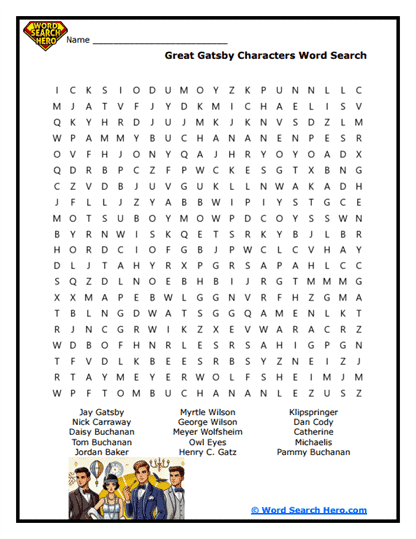
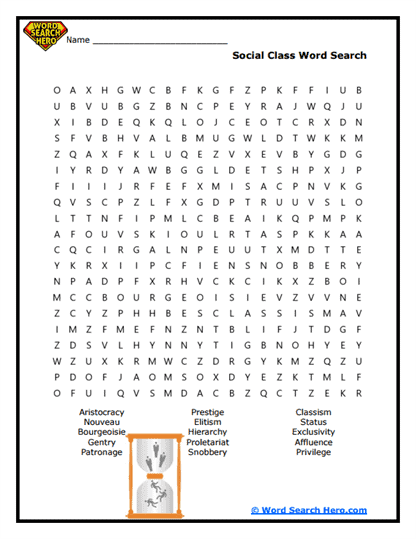
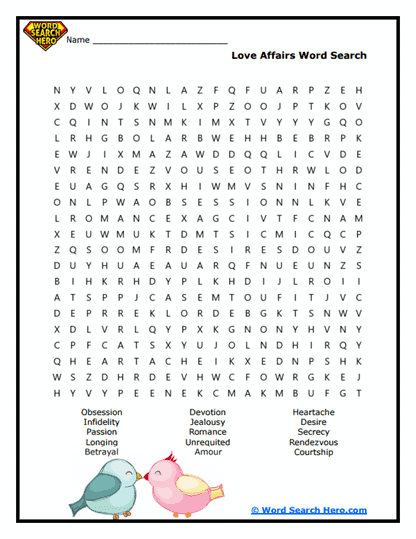
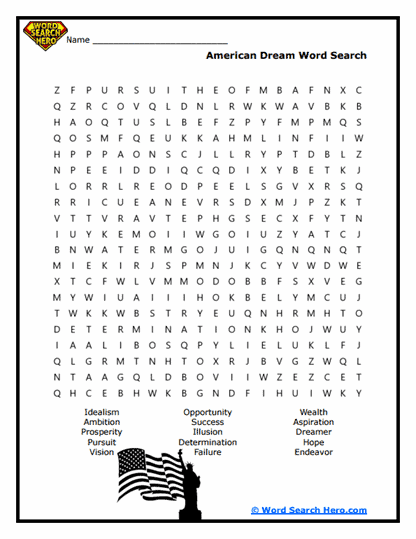
About Our The Great Gatsby Word Searches
Our The Great Gatsby Word Searches help students explore one of the most famous novels in American literature while strengthening vocabulary, spelling, and concentration skills. These printable puzzles introduce learners to the characters, symbols, settings, and themes connected to F. Scott Fitzgerald‘s classic story.
Teachers often look for engaging ways to reinforce literary knowledge, and word searches provide a simple and effective option. As students search for words related to The Great Gatsby, they become more familiar with the people, places, and ideas that shape the novel. Repeated exposure to these terms helps learners recognize them more easily during reading assignments, class discussions, and literary analysis.
Parents and homeschool educators also appreciate activities that combine learning with entertainment. Word searches encourage visual scanning, patience, and attention to detail while quietly reinforcing reading-related concepts. Students interact with vocabulary connected to wealth, dreams, identity, symbolism, and life in the 1920s.
Because The Great Gatsby is so often taught in literature classes, these puzzles work well as pre-reading introductions, chapter review activities, or end-of-unit refreshers. They can help students build confidence with names and concepts before deeper discussion begins.
Whether used in the classroom or at home, these printable activities offer an approachable way to connect students with a novel that continues to inspire conversations about ambition, illusion, and the meaning of success.
Glamour, Longing, and the Jazz Age
The Great Gatsby was written by F. Scott Fitzgerald and published in 1925. The novel is set during the Jazz Age, a period in American history known for economic growth, lively parties, changing social customs, and a fascination with wealth and status.
The story is told by Nick Carraway, who moves to Long Island and becomes connected to the mysterious and wealthy Jay Gatsby. Gatsby is famous for throwing extravagant parties, but much of his life is shaped by his hope of reuniting with Daisy Buchanan, a woman he has loved for years.
As the story unfolds, students begin to see that the novel is not only about romance or luxury. It is also about longing, reinvention, social class, and the gap between appearance and reality. Fitzgerald uses settings, conversations, and symbols to reveal that glittering surfaces do not always reflect happiness or truth.
Students often find the novel especially interesting because Gatsby himself is both impressive and puzzling. He seems to represent the dream of becoming someone new, yet his life also shows how difficult it can be to build a future on illusion.
A word search built around this novel helps students become more comfortable with the names, symbols, and ideas that make the story such a lasting part of American literature.
Paul’s Pro-Tip
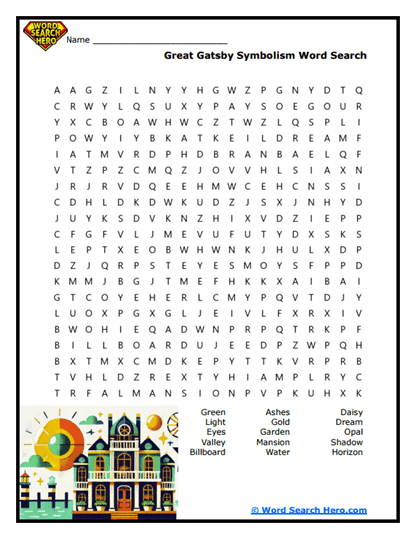
When students finish the puzzle, I like to give them a quick “symbol hunt.”
Tell them to pick three words from the puzzle that seem small but important. Then ask: Could one of these be a symbol instead of just a detail?
That’s when the fun starts. Students begin debating whether a light, a car, or even a place means more than it first appears to mean.
It’s one of my favorite tricks because it helps students realize literature loves to hide big ideas inside ordinary objects. Sneaky? Yes. Effective? Also yes.
Reading the Novel Beyond the Parties
One reason The Great Gatsby remains so widely taught is that it gives students plenty to analyze beyond the basic plot. On the surface, the story includes parties, wealth, romance, and drama. Underneath, it asks larger questions about identity, class, hope, and whether the American Dream is truly possible for everyone.
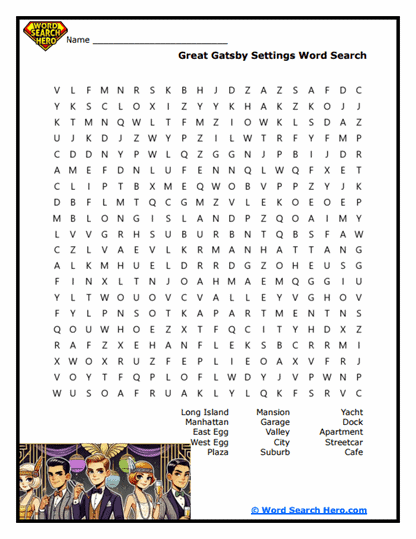
This makes the novel especially useful in the classroom. Students can explore how Fitzgerald builds meaning through symbolism, especially with recurring images and carefully described settings. They can also study characterization by examining how Gatsby, Daisy, Tom, and Nick each represent different values or viewpoints.
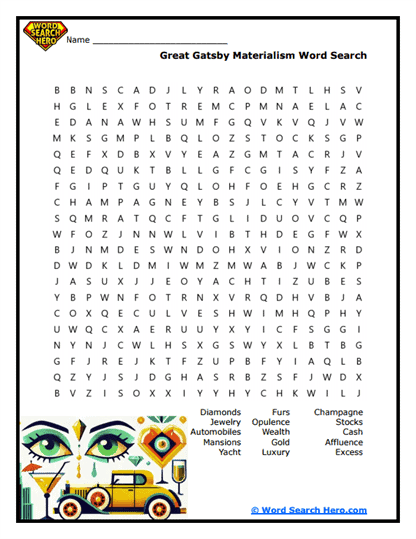
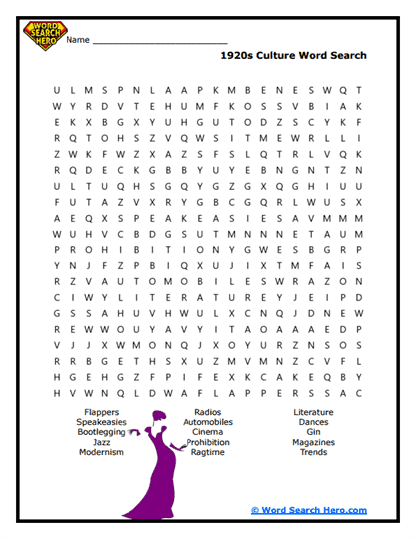
The historical setting adds another layer. The 1920s were marked by changing social expectations, rising consumer culture, and visible class differences. Understanding that context helps students see why the novel feels both glamorous and uneasy at the same time.
For teaching, a puzzle can be a great entry point into those deeper ideas. Once students know the major names, places, and terms, they are more prepared to talk about theme and interpretation. A simple printable activity can make a complex novel feel more approachable, especially for readers who need a comfortable starting point before tackling analysis.
That is what makes this collection useful. It supports vocabulary, reading confidence, and literary discussion all at once.
Frequently Asked Questions
How can these word searches support a The Great Gatsby unit?
They work well as pre-reading activities, chapter review exercises, bell ringers, or early finisher tasks that help students become more familiar with the novel’s vocabulary and characters.
Do these puzzles help with symbolism and theme?
Yes. They can introduce important objects, settings, and ideas from the novel, giving students a stronger foundation for later discussions about symbolism, dreams, class, and identity.
Are these activities useful before students finish the book?
Absolutely. They can be used at the start of a unit to preview major names and concepts, which helps students feel less overwhelmed once reading begins.
What literary topics connect especially well with this novel?
This novel connects especially well with symbolism, characterization, setting, social class, unreliable perspective, and the idea of the American Dream.
What is a strong follow-up activity after the puzzle?
A great extension is to have students choose one word from the puzzle and explain how it connects to a character, symbol, or theme in the novel.