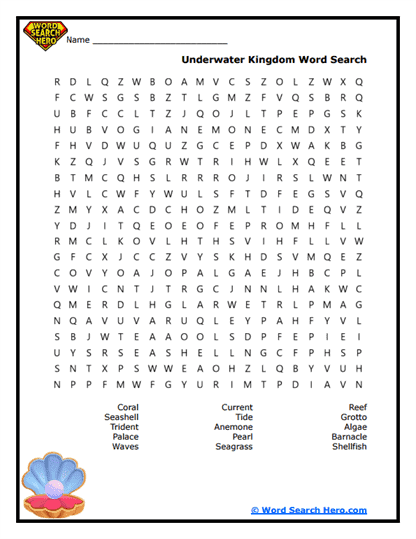
About Our The Little Mermaid Word Searches
Our The Little Mermaid Word Searches collection brings the magic of a classic sea tale into an engaging printable activity that supports reading and vocabulary development. Inspired by the famous story written by Hans Christian Andersen, these puzzles help students explore the characters, settings, and magical elements connected to the beloved underwater adventure.
Word searches are a favorite tool among teachers, parents, and homeschool educators because they combine fun with meaningful learning. As students search for hidden words related to the story-such as ocean, mermaid, prince, kingdom, sea, and coral-they strengthen spelling recognition, improve reading confidence, and expand their vocabulary. Because many children already recognize the story, the words feel familiar and exciting rather than intimidating.
These puzzles are also very flexible. Teachers can use them as literacy center activities, morning warm-ups, or early-finisher tasks during fairy-tale units. Homeschool families often include them as part of literature studies focused on classic storytelling or world folklore. At home, they make a great screen-free activity during quiet time, rainy afternoons, or family learning moments.
Word searches also help students develop patience and concentration. Learners must scan rows, columns, and diagonals while looking for letter patterns, which strengthens visual tracking skills that support reading fluency.
Because the story of The Little Mermaid is filled with magical sea creatures, underwater kingdoms, and emotional moments, students tend to stay highly engaged. What feels like a simple puzzle is actually reinforcing literacy skills and story familiarity at the same time.
Exploring the Ocean World of the Story
One of the most fascinating aspects of The Little Mermaid is the rich underwater world where much of the story takes place. The tale introduces readers to coral reefs, ocean creatures, underwater palaces, and mysterious sea magic.
When students complete a word search inspired by the story, they often encounter vocabulary connected to this ocean setting. Words like ocean, shell, coral, waves, sea, and kingdom help learners picture the environment where the mermaid princess lives. These words can also expand students’ understanding of ocean-related vocabulary.
Teachers sometimes use this opportunity to connect the story to simple marine science discussions. For example, students might talk about real ocean habitats such as coral reefs or learn about creatures that live under the sea. Even though the fairy tale itself is fictional, the setting provides a great opportunity to introduce real-world ocean topics.
Another activity is encouraging students to imagine what an underwater castle might look like. Would it be made of coral? Would fish swim through the halls? Questions like these encourage creativity and descriptive thinking.
By tying the puzzle vocabulary to the imaginative world of the story, students develop a deeper connection to the tale while strengthening their reading and language skills.
Paul’s Pro-Tip
After decades in the classroom, I’ve learned one thing: if a lesson involves the ocean, kids are instantly interested.
When students finish a Little Mermaid puzzle, I like to ask them to invent their own sea creature. Maybe it’s a glowing jellyfish dragon or a talking starfish detective.
Then I challenge them to include one word they found in the puzzle while describing their creature.
Suddenly you’ve got creativity, vocabulary practice, and storytelling all happening at once. Plus, the ideas kids come up with are usually way better than anything I could have imagined!
Why Fairy-Tale Puzzles Encourage Strong Reading Skills
Classic fairy tales provide an excellent foundation for literacy activities because they combine memorable storytelling with vivid imagery. The Little Mermaid is particularly effective because the setting and characters are so unique and imaginative.
Word searches based on the story help reinforce vocabulary in a natural way. When students locate words like mermaid, prince, ocean, magic, kingdom, and sea, they are revisiting important elements of the narrative. This repetition strengthens word recognition and memory.
These puzzles also help develop visual scanning skills. Students must carefully search across the grid to find hidden words that may appear forward, backward, or diagonally. This type of pattern recognition strengthens the same visual processing skills used when reading sentences and paragraphs.
Another advantage is the sense of accomplishment students feel when they complete the puzzle. Each discovered word acts like a small success, which encourages persistence and confidence.
Because the theme is exciting and imaginative, learners often stay engaged longer than they might with traditional worksheets. A simple puzzle becomes a gateway into reading practice, vocabulary development, and storytelling exploration.
Frequently Asked Questions
What types of words appear in The Little Mermaid word searches?
Most puzzles include vocabulary connected to the story such as mermaid, ocean, prince, sea, shell, coral, magic, kingdom, and underwater.
Are these puzzles based on the original Little Mermaid story?
Yes. Many word searches include words connected to Hans Christian Andersen’s classic tale, though some may also reflect elements popularized in modern adaptations.
Are Little Mermaid word searches good for a fairy-tale unit?
Absolutely. Teachers often use them alongside readings of the story to reinforce important vocabulary and story elements.
Can younger students complete these puzzles?
Yes. Many puzzles are designed for elementary learners, and simpler versions are available for younger readers who are still developing spelling skills.
When should students use a Little Mermaid word search during a lesson?
They work well as follow-up activities after reading the story, as literacy center tasks, or as engaging independent practice tied to fairy-tale studies.