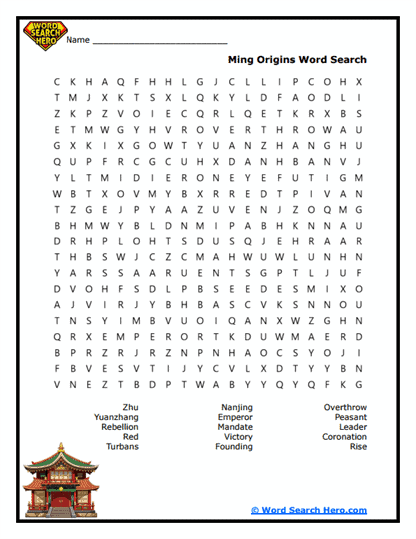
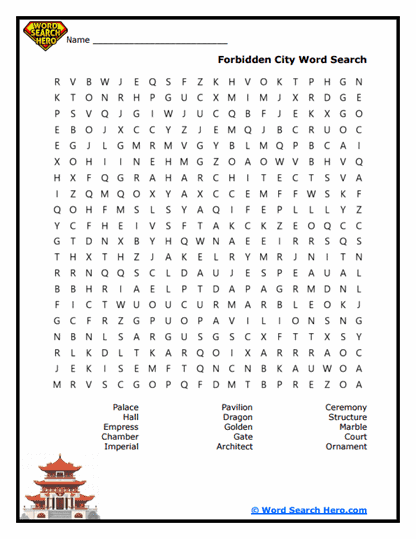
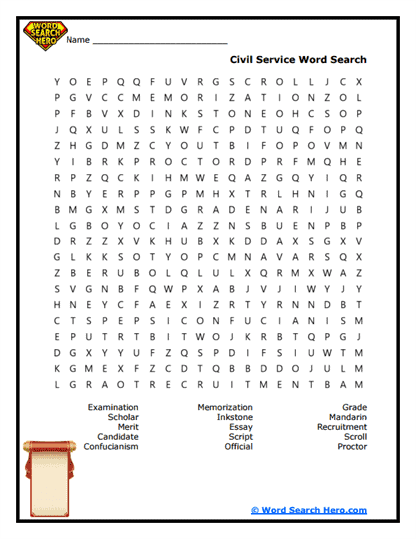
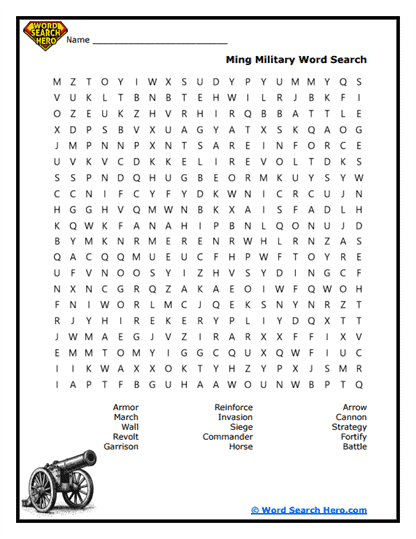
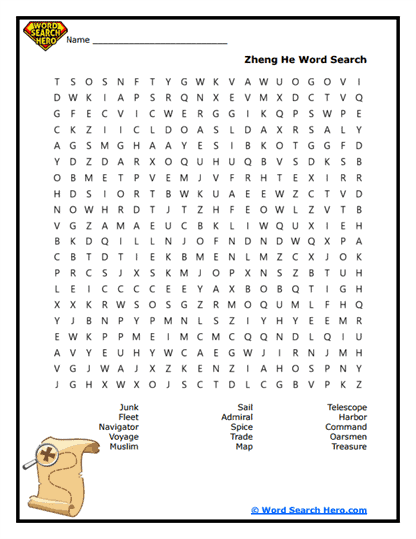
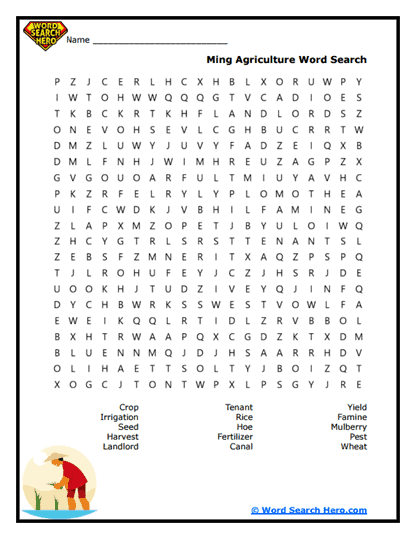
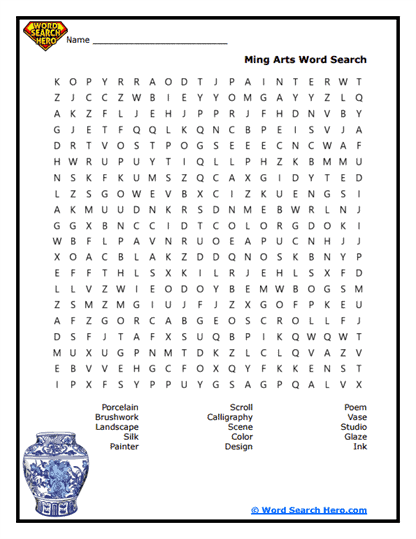
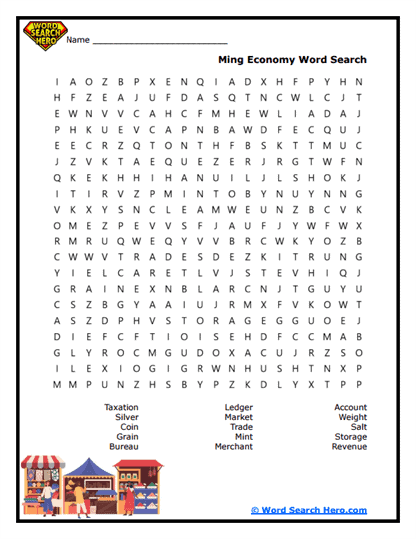
About Our The Ming Dynasty Word Searches
Our The Ming Dynasty Word Searches introduce students to one of China’s most influential historical eras while strengthening reading, vocabulary, and concentration skills. These printable puzzles provide a fun way for learners to explore important people, places, and concepts connected to the Ming Dynasty, which ruled China from 1368 to 1644.
Teachers often look for simple activities that reinforce historical vocabulary without feeling like extra work for students. Word searches are perfect for this purpose. As students scan the puzzle for key terms such as emperors, explorers, dynasties, and important cities, they become more familiar with the language used in world history lessons. This repeated exposure helps improve comprehension when students later encounter these words in textbooks or classroom discussions.
Parents and homeschool educators also find these puzzles helpful because they combine learning with a low-pressure activity. Students practice spelling, attention to detail, and visual recognition while interacting with meaningful historical terms. For many learners, the puzzle format removes the stress that sometimes comes with traditional worksheets or quizzes.
Another benefit is how naturally curiosity develops. Students may spot words like “Zheng He,” “Forbidden City,” or “Great Wall” and begin asking questions about them. Those questions can lead to conversations about Chinese exploration, imperial power, and the cultural achievements of the Ming period.
Whether used in a classroom unit on Asian history or as part of a homeschool world history curriculum, these printable puzzles help turn historical vocabulary into an engaging discovery activity that supports both literacy and historical understanding.
Trade, Exploration, and Power in Ming China
The Ming Dynasty was a time of remarkable growth, cultural development, and global connections. When students encounter vocabulary related to this period in puzzles, they are touching on a fascinating chapter of world history that shaped East Asia and influenced global trade.
One of the most notable features of the Ming era was its strong central government. The Ming emperors worked to rebuild stability after the fall of the Mongol-led Yuan Dynasty. They strengthened administrative systems, expanded agriculture, and invested in large construction projects. Among the most famous achievements was the continued construction and reinforcement of the Great Wall, which helped protect northern borders.
The dynasty is also well known for its impressive maritime voyages led by the explorer Zheng He during the early 1400s. His enormous fleets traveled across the Indian Ocean, visiting Southeast Asia, India, the Middle East, and parts of Africa. These journeys helped establish diplomatic ties and expanded China’s influence through trade and cultural exchange.
Students often find it fascinating that these ships were among the largest wooden vessels ever built at the time. The voyages demonstrated the technological and organizational power of the Ming government.
The period also produced cultural achievements in art, literature, and craftsmanship. Ming porcelain, for example, became famous around the world and remains highly valued today.
When students recognize these historical terms inside a puzzle, it often sparks questions about exploration, trade routes, and the daily life of people living during this powerful dynasty.
Paul’s Pro-Tip
If you want to get students thinking beyond the puzzle, try this little trick I used in my classroom.
After everyone finishes the word search, have students pick one word they found that sounds interesting. Then give them two minutes to guess what it might mean or why it matters in history.
The guesses are often hilarious, but they also get students thinking like historians. Once the guesses are out, reveal the real story behind the word. Suddenly the puzzle becomes a conversation starter instead of just a quiet activity.
Sometimes the most memorable history lessons start with a simple puzzle.
How Word Searches Strengthen Focus and Learning
At first glance, word searches may seem like simple entertainment, but they quietly build several important cognitive skills that benefit students across many subjects.
One of the biggest advantages is attention and visual scanning ability. Students must carefully examine rows and columns of letters to locate patterns that form meaningful words. This process strengthens the brain’s ability to identify information quickly and accurately, a skill that is useful for reading comprehension and studying.
Word searches also reinforce spelling recognition. When students repeatedly look for words such as emperor, dynasty, tribute, or porcelain, those spellings become more familiar. Over time, this repeated exposure helps students remember historical vocabulary more easily.
Another important benefit is persistence and problem-solving. Some words appear quickly, while others require patience and careful searching. Students learn to slow down, examine clues, and continue working until they succeed.
For history topics like the Ming Dynasty, puzzles also provide a gentle introduction to unfamiliar names and ideas. A student might notice the word “Beijing” or “Zheng He” and become curious about its significance. That curiosity naturally leads to questions, research, and deeper engagement with the historical topic.
These small moments of discovery are exactly what educators look for when designing activities that combine fun with meaningful learning.
Frequently Asked Questions
How can teachers use Ming Dynasty word searches in class?
Teachers often use them as warm-up activities at the beginning of a lesson or as review exercises after teaching about Chinese history. They are also helpful for reinforcing vocabulary related to important people, places, and events.
Are these puzzles appropriate for upper elementary and middle school students?
Yes. The vocabulary works well for grades 4-8 studying world history or ancient civilizations, but the puzzles can also be adapted for older learners who enjoy hands-on activities.
Can word searches help students remember historical terms?
They can. Repeated exposure to vocabulary through puzzles strengthens word recognition, which helps students recall terms more easily when reading or discussing history topics.
Do these puzzles work well for homeschool history lessons?
Absolutely. Homeschool families often use printable puzzles as independent work, review activities, or quiet learning breaks within larger history units.
What should students do after finishing the puzzle?
A helpful extension is to choose a few words from the puzzle and research what they represent in history. This turns the activity into a starting point for deeper learning.