Choose a topic !

The Rise of the Ottoman Empire Word Searches

Tribal Foundations Word Search

Tribal Foundations

“Tribal Foundations Word Search” dives into the life and structure of nomadic and tribal societies. It introduces terms related to lifestyle, leadership, and movement, such as “Chieftain,” “Horseman,” and “Steppe.” These words reflect early human organization before the rise of larger political entities. The vocabulary includes cultural identifiers, roles, and environments associated with tribes, particularly […]

View More
Osman's Legacy Word Search

Osman’s Legacy

“Osman’s Legacy Word Search” explores the foundational figures and concepts of the early Ottoman Empire. Names like “Osman” and “Orhan” appear alongside important political and cultural terms such as “Ghazi,” “Sultan,” and “Leadership.” The puzzle introduces students to succession themes, Islamic warrior traditions, and symbols of statehood like the “Banner.” Words like “Coinage” and “Inheritance” […]

View More
Ottoman Military Word Search

Ottoman Military

“Ottoman Military Word Search” emphasizes key vocabulary associated with the Ottoman military structure and strategy. Students encounter words like “Janissary,” “Cannon,” “Ambush,” and “Recruitment,” all essential for understanding how the empire expanded and defended itself. It also covers equipment and tactics including “Scimitar,” “Archer,” and “Flank.” The puzzle highlights both defensive and offensive aspects of […]

View More
Byzantine Conflict Word Search

Byzantine Conflict

“Byzantine Conflict Word Search” focuses on the vocabulary related to the Byzantine Empire and its defense strategies. Students will look for words like “Constantinople,” “Walls,” “Defenders,” and “Theodosian.” These terms connect to the city’s geography and architectural resilience. The puzzle also includes military and religious elements like “Horn,” “Gate,” “Orthodox,” and “Fleet.” This worksheet introduces […]

View More
Islamic Influence Word Search

Islamic Influence

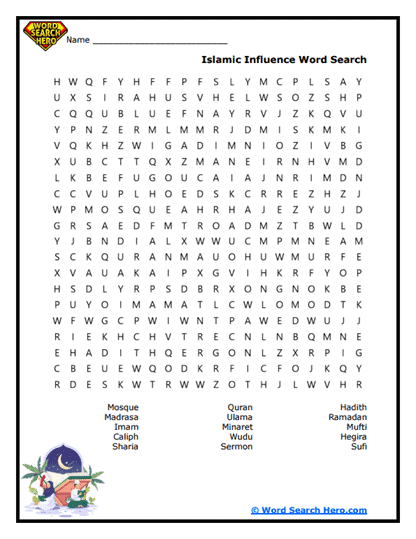
“Islamic Influence Word Search” covers important religious and cultural terms from Islamic civilization. Vocabulary includes central religious figures and practices such as “Imam,” “Caliph,” “Mosque,” and “Quran.” Ritual practices like “Wudu” and celebratory periods like “Ramadan” also appear. The inclusion of words like “Sufi,” “Minaret,” and “Sermon” rounds out the spiritual and architectural aspects of […]

View More
Ottoman Expansion Word Search

Ottoman Expansion

“Ottoman Expansion Word Search” focuses on the vocabulary of conquest and geography as the empire spread across regions. It includes areas like “Balkans,” “Asia Minor,” and “Bosnia,” showing the territorial reach. Words like “Campaign,” “Conquest,” and “Victory” reflect military achievements. It also touches on administrative and support structures like “Garrison” and “Border.” Students get a […]

View More
Ottoman Structure Word Search

Ottoman Structure

“Ottoman Structure Word Search” presents the bureaucratic and administrative vocabulary of the empire. Terms like “Vizier,” “Timar,” “Sanjak,” and “Governorship” illustrate how the Ottoman government was organized. It also covers procedural words like “Decree,” “Tax,” and “Register.” The puzzle showcases the complex systems used to control such a vast empire. It encourages students to see […]

View More
Ottoman Culture Word Search

Ottoman Culture

“Ottoman Culture Word Search” highlights the artistic and cultural contributions of the Ottoman Empire. Words like “Calligraphy,” “Miniature,” “Carpet,” and “Architect” show the importance of art and design. Others like “Poetry,” “Silk,” and “Court” represent courtly and literary traditions. Students also search for crafting-related words like “Weaving,” “Workshop,” and “Ornament.” The word bank reflects the […]

View More
Religious Diversity Word Search

Religious Diversity

“Religious Diversity Word Search” explores the mix of faiths within the Ottoman Empire. Words like “Millet,” “Tolerance,” “Synagogue,” and “Church” speak to coexistence among religious groups. It also includes legal and societal concepts such as “Jizya” (tax), “Conversion,” and “Autonomy.” This worksheet shows how the Ottomans managed religious diversity. Students will engage with terms that […]

View More
Succession Struggles Word Search

Succession Struggles

“Succession Struggles Word Search” focuses on internal conflict and power dynamics in the Ottoman court. Vocabulary includes emotionally charged words like “Treason,” “Fratricide,” and “Execution.” Students also explore structural terms like “Council,” “Claim,” and “Heir.” These words paint a picture of palace intrigue and the high stakes of leadership transitions. The word search immerses students […]

View More

About Our The Rise of the Ottoman Empire Word Searches

Welcome, dear time traveler, to the Rise of the Ottoman Empire Word Search Collection – a place where history gets tangled in letters, where “Ghazi” hides between “Chieftain” and “Fratricide,” and where educational rigor high-fives lighthearted puzzling in the margins of your workbook. This isn’t your average classroom worksheet. This is a 14th-century political thriller disguised as a vocabulary game. It’s got ambition. It’s got intrigue. It’s got so many “Sultans,” you’d think we were throwing a medieval royal reunion.

At first glance, these puzzles may look like innocent little grids. But don’t be fooled – they’re Trojan horses of knowledge. (Ironically, the Ottomans didn’t fall for that trick.) Inside these pages, you’ll find wordy relics from a time when empires rose on horseback, diplomacy came with a side of swordplay, and every brother was a potential threat to your inheritance. And all this? Right at your fingertips – or at the very least, your pencil tip. Just think: one moment you’re circling “Banner,” the next you’re contemplating the delicate politics of succession while eating a snack pack.

Think of this collection as the historical version of a multi-season drama series: it starts in the dusty steppes with tribal beginnings and ends in ornate palaces full of political chess matches, tax registers, artistic flourishes, and the occasional execution. It’s “Game of Thrones,” but the geography’s real and no dragons were harmed. Each puzzle is like an episode – short, sharp, full of unfamiliar names, and unexpectedly addictive. You’ll zigzag across subtopics like culture, conquest, and spiritual life – learning as you search, puzzling as you learn, and occasionally wondering how the word “Theodosian” ended up in a child’s activity book.

But behind the cloak of comedy and the delight of the hunt is something sneakily brilliant: actual learning. Yes, circling “Janissary” or “Wudu” may look like fun and games (because it is), but it also deepens vocabulary retention, strengthens visual processing, improves spelling, and develops the kind of historical empathy that textbooks alone rarely inspire. These aren’t just puzzles – they’re brain workouts with a world history twist. Perfect for students, teachers, homeschoolers, and curious adults with a penchant for medieval multitasking, this collection is your passport to an era of expansion, administration, and really intense family feuds.

A Look At the Word Searches

We begin our journey with Tribal Foundations, where the Ottoman origin story feels more like a campfire saga than a textbook entry. With words like “Chieftain,” “Steppe,” and “Horseman,” you’re thrust into the pastoral poetry of pre-imperial Anatolia – where alliances were made on horseback, leadership passed through campfire stories, and everything smelled faintly of goat leather. These are the roots – not of just the Ottomans, but of human organization at large – chaotic, mobile, and surprisingly effective.

From there, the puzzles evolve with Osman’s Legacy and Ottoman Military, forming a dynamic duo of ideological foundations and iron-clad expansionism. “Osman,” the founding father himself, gallops in with a vision, a banner, and a very persuasive way of recruiting followers (hint: Ghazi warriors don’t just do brunch). Then comes the rise of “Janissaries,” “Cannon,” and “Ambush” – a clear sign that the empire is no longer just dreaming big, it’s thinking strategically. These two puzzles together form the political and martial heart of early Ottoman power: belief, leadership, and firepower.

Next, we zoom out with Ottoman Expansion and Byzantine Conflict, offering two sides of the same gold coin (minted, no doubt, under “Coinage”). On one side, the Ottomans sweep across the Balkans, camping near the Danube and polishing their “Scimitars.” On the other, the Byzantines mount a desperate defense with their “Walls,” “Fleet,” and “Orthodox” faith. This rivalry wasn’t just about land – it was a cultural cage match that rewrote the boundaries of East and West. The vocabulary here gets geographical and geopolitical, asking students to think in terms of maps, borders, and that ever-elusive concept: historical perspective.

But don’t worry – we’re not all war and siege engines. Enter the radiant trio of Islamic Influence, Ottoman Culture, and Religious Diversity. These puzzles are where art, philosophy, theology, and tolerance take center stage (while still dodging the occasional “Decree”). From “Ramadan” and “Quran” to “Miniature” paintings and “Calligraphy,” these word searches reveal the softer, richer underbelly of empire: how ideas move, how religions coexist (or don’t), and how courtly poems outlast royal edicts. They offer a classroom-friendly reminder that empires are built not just on armies – but on ink, faith, and silk threads too.

And finally, we arrive at the bureaucratic and the dramatic – because no Ottoman collection would be complete without Ottoman Structure and Succession Struggles. With words like “Vizier,” “Decree,” and “Revenue,” students step into the empire’s imperial filing cabinet – a marvel of medieval organization that could rival modern spreadsheets in sheer complexity. But before they get too cozy with the admin side, they meet the palace drama of “Fratricide,” “Poison,” and “Pretender.” Because when you’re building an empire, someone always wants your job – and sometimes it’s your brother.

What Was the Rise of the Ottoman Empire?

Imagine you’re a chieftain in a tent somewhere on the edge of the collapsing Seljuk world. The Mongols have thundered past, the Byzantines are looking more cracked than Constantinople’s old mosaics, and you – a relatively minor player with a dream and a few sharp swords – are about to change history. That, dear reader, is the setting for the rise of the Ottoman Empire: a moment of opportunity born from chaos.

The Ottomans emerged in the late 13th century in what is now modern-day Turkey, then a patchwork of small beyliks (principalities). Their founder, Osman I, wasn’t born into royal pomp but earned his stripes the old-fashioned way: through grit, faith, and really good timing. His followers, known as “Ghazis,” were Islamic warriors with a crusading spirit and an entrepreneurial eye for real estate. Their mission? To expand Islam and, while they were at it, build something that looked suspiciously like an empire.

And build they did. Osman’s son, Orhan, and his successors transformed their beylik into a powerhouse through savvy alliances, careful succession planning (well, sometimes), and military innovation. The early Ottomans used flexibility as their superpower – incorporating local customs, absorbing skilled administrators, and making room for diverse religious and ethnic communities. Instead of smashing everything and starting fresh, they often asked, “What’s already working here – and how can we Ottoman-ize it?”

Their most famous moment of ascension came in 1453, when Sultan Mehmed II – a teenage genius with a love of cannons – took Constantinople. The fall of the Byzantine capital wasn’t just the end of an empire; it was the rebranding of the entire region. Constantinople became Istanbul, a jewel in the Ottoman crown and a vibrant crossroads of East and West.

Culturally, the Ottomans were polymaths in turbans. They built mosques that defied gravity, wrote poetry that sang across centuries, and crafted legal codes that balanced Sharia with administrative needs. Their bureaucracy could rival the DMV (only with better tilework), and their military, particularly the Janissaries, was a model of discipline and terrifying efficiency. Over the next few centuries, the Ottomans would become one of the most enduring empires in world history – ruling across Europe, Asia, and Africa, and influencing everything from architecture to diplomacy.

The rise of the Ottoman Empire wasn’t a straight line – more like a dramatic soap opera with shifting alliances, spiritual fervor, civil wars, and the occasional palace intrigue involving poison. But from humble beginnings in the Anatolian steppe to the gates of Vienna, the Ottomans carved their place into history with a combination of vision, strategy, adaptability, and – let’s be honest – a very effective PR campaign involving really big domes.