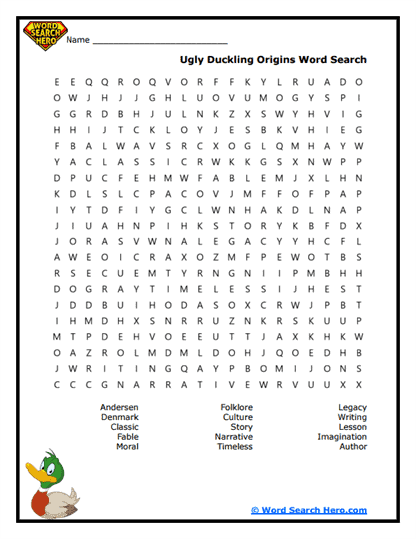
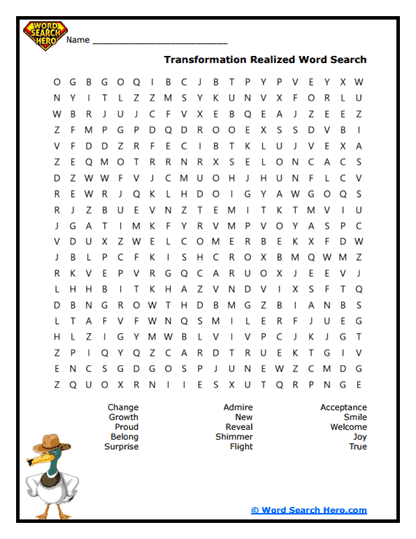
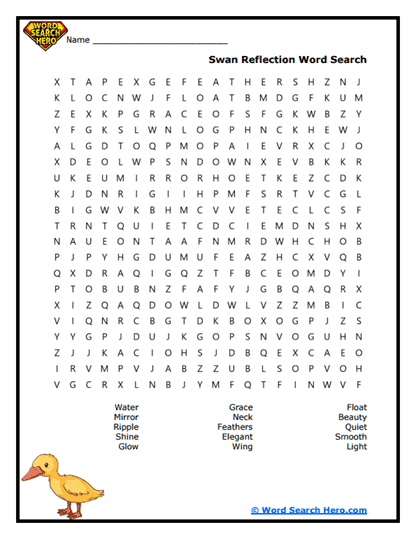
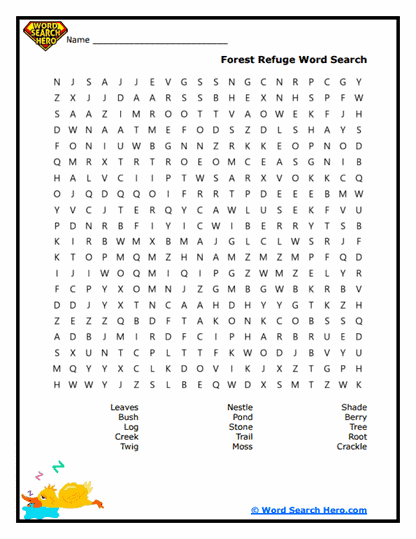
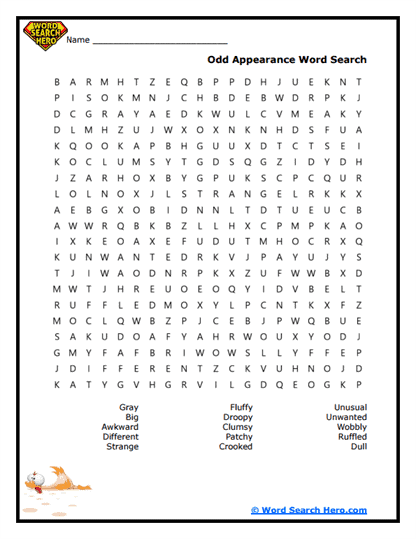
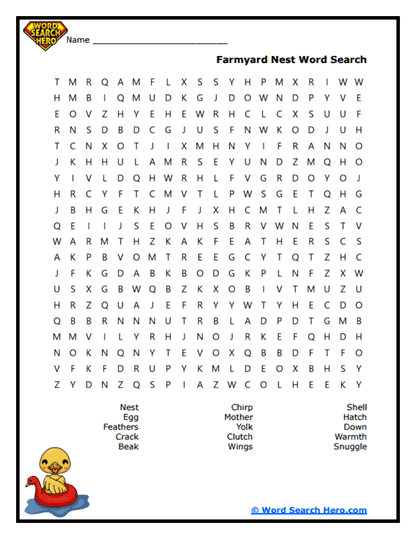
About Our The Ugly Duckling Word Searches
The Ugly Duckling word searches provide a heartwarming way to explore one of Hans Christian Andersen’s most beloved fairy tales while uncovering its meaningful narrative and timeless moral lessons. These printable puzzles introduce students to important vocabulary connected to kindness, perseverance, acceptance, identity, growth, courage, and transformation. As learners search for each word, they follow the duckling’s remarkable journey from rejection and loneliness to confidence and belonging.
The story begins with a duckling who looks different from his brothers and sisters. Because of his unusual appearance, he is mocked, excluded, and forced to leave the only home he has known. Through changing seasons, difficult hardships, and lonely travels, he continues searching for a place where he belongs. In the end, the duckling discovers that he has grown into a beautiful swan, revealing that he was never truly ugly-he was simply different. The fairy tale reminds readers that judging others by appearances can cause great harm and that true worth often takes time to reveal itself.
These word searches strengthen vocabulary, spelling, reading comprehension, and literary analysis while encouraging meaningful discussions about kindness, empathy, perseverance, and self-confidence.
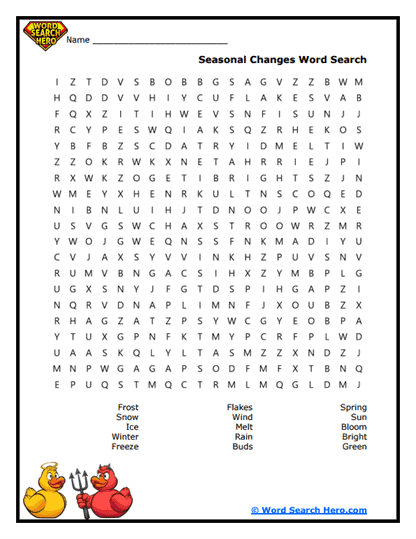
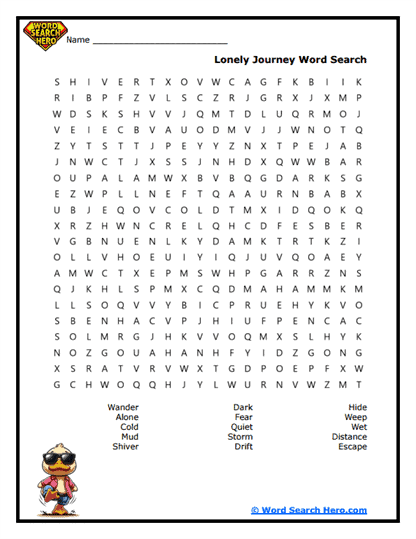
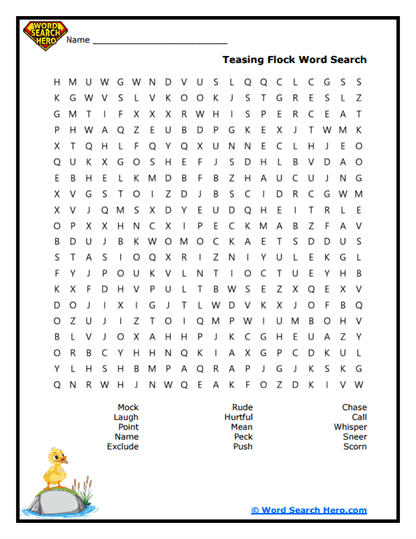
With puzzles covering the cozy nest, difficult journey, changing seasons, beautiful transformation, and Andersen’s literary legacy, this collection helps readers appreciate why The Ugly Duckling has inspired generations around the world.
The Narrative and Its Moral Lessons
The Ugly Duckling follows a character whose greatest challenge is not surviving nature, but enduring unfair judgment from others. Word searches throughout this collection introduce students to themes such as kindness, acceptance, perseverance, identity, courage, compassion, patience, belonging, resilience, and personal growth. Together, these ideas reveal how every stage of the duckling’s journey contributes to his transformation.
At its heart, the story is a cautionary tale about the dangers of judging people based on first impressions. The farm animals decide the duckling has little value simply because he looks different. Their teasing, rejection, and cruelty force him into isolation, demonstrating how harmful prejudice and bullying can be.
The fairy tale also teaches that growth takes time. The duckling does not become worthy only after changing into a swan-he always possessed value. His transformation simply reveals what was already true. This reminds readers to be patient with themselves and others because outward appearances rarely tell the whole story.
Students can deepen their understanding by discussing questions such as, “Why did the other animals treat the duckling unfairly?” and “What does becoming a swan symbolize beyond physical change?”
Paul’s Pro-Tip

One of the most effective ways to use The Ugly Duckling word searches is to create a “growth through the seasons” timeline. As students find words like awkward, winter, hope, acceptance, and belong, have them place each word at the point in the story where it becomes most important. Then ask them to explain how the duckling changes emotionally-not just physically-during each stage. This helps students recognize that confidence grows through perseverance and experience rather than overnight.
Another meaningful activity is the “appearance versus reality” challenge. After completing the puzzle, ask students to divide vocabulary words into two groups: How others saw the duckling and Who the duckling truly was. For example, words like different, awkward, or unwanted belong in the first group, while beautiful, strong, true, and belong belong in the second. This activity encourages thoughtful discussions about empathy, avoiding snap judgments, and recognizing the value in every individual.
From Story to Literary Understanding
The Ugly Duckling word searches become even more meaningful when students connect the vocabulary to the fairy tale’s larger lessons. After completing a puzzle, students can choose one word and explain how it changes the story or reveals something important about the duckling’s journey.
For example, students might explore how belonging motivates the duckling to keep searching despite rejection, how winter symbolizes hardship before growth, or how acceptance represents both self-confidence and finding a welcoming community. Others may examine how change reflects not only physical transformation but also emotional maturity and resilience.
These activities naturally support literature, character education, and social-emotional learning by encouraging discussions about bullying, kindness, empathy, perseverance, identity, and treating others with respect regardless of appearances.
By connecting vocabulary to the narrative and its moral lessons, students transform a simple word search into a deeper exploration of one of the world’s most enduring fairy tales.
Frequently Asked Questions
What is the main moral of The Ugly Duckling?
The central lesson is that outward appearances do not determine a person’s value. The duckling is treated unfairly because he looks different, yet he eventually grows into a beautiful swan. The story reminds readers to practice kindness, avoid judging others too quickly, and recognize that everyone has unique strengths.
Why do the other animals reject the duckling?
The other animals focus only on how the duckling looks instead of who he is. They assume that being different means he does not belong. Their actions illustrate how prejudice, teasing, and bullying can hurt others and why empathy is so important.
Why is the transformation into a swan so important?
The transformation symbolizes self-discovery, growth, and realizing one’s true identity. It shows that the duckling was never lacking in value-he simply had not yet grown into who he was meant to become. The ending encourages readers to be patient with themselves and others as they grow and change.
How can I make The Ugly Duckling word searches more interactive?
Have students create a timeline that connects each vocabulary word to an important stage of the duckling’s journey. Another engaging activity is asking students to compare how the duckling sees himself at the beginning of the story versus the end, using evidence from the vocabulary and narrative. These activities strengthen reading comprehension while reinforcing empathy and self-confidence.
Why is The Ugly Duckling considered a cautionary fairy tale?
The story warns against judging people based on appearances and demonstrates the lasting harm caused by exclusion, teasing, and prejudice. The animals’ unkind behavior creates unnecessary suffering, while the duckling’s perseverance ultimately reveals the truth. By showing the consequences of cruelty and the rewards of patience and acceptance, the fairy tale encourages readers to choose compassion, fairness, and kindness in their own lives.