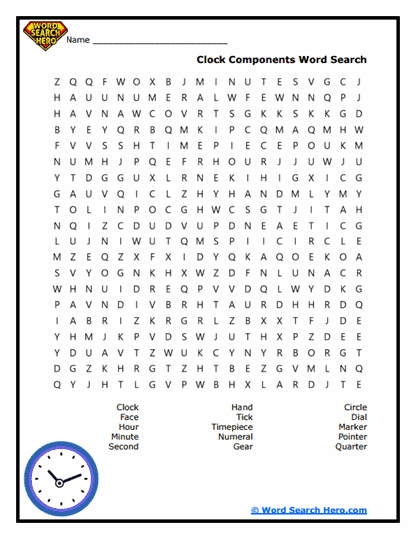
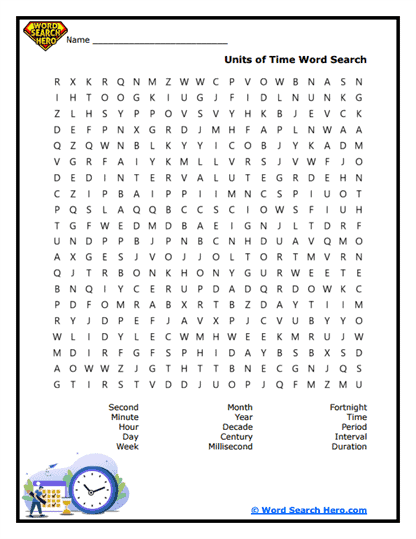
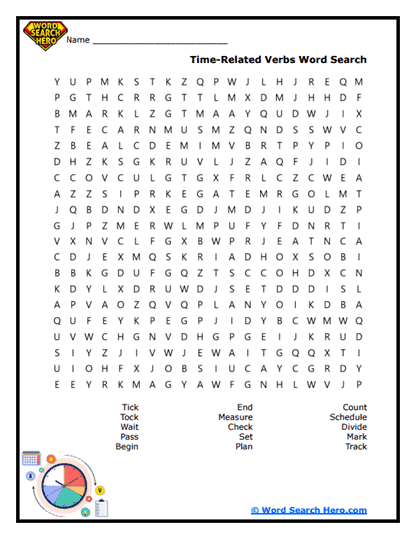
About Our Times and Dates Word Searches
Times and Dates word searches help students become more familiar with the vocabulary used to describe time, calendars, and scheduling. These printable puzzles introduce and reinforce terms connected to clocks, days, months, years, and time measurement. Before students begin solving time-related math problems or interpreting calendars and schedules, it often helps to first recognize the language used to explain these concepts.
Time is one of the most practical areas of math because students interact with it every day. They encounter words like hour, minute, second, calendar, week, month, year, and date when planning activities, reading schedules, or understanding routines. A word search offers a simple and engaging way to build familiarity with these terms before students apply them in lessons about telling time or calculating durations.
Because the activity feels like a puzzle instead of a traditional worksheet, it can make time-related vocabulary practice more enjoyable. Teachers often use these printables as warm-ups, math center activities, early finisher work, or review pages during time and calendar units. Parents and homeschool educators can also include them easily in lessons as a way to reinforce time vocabulary while keeping learning interactive and low-pressure.
As students search for the words in the puzzle grid, they strengthen concentration, visual scanning skills, and pattern recognition. At the same time, they are building the vocabulary foundation that helps them understand how time and dates are organized and measured.
Building the Language of Time and Calendars
Understanding time requires students to recognize several related vocabulary terms. Words like hour, minute, second, day, week, and month help describe how time is measured and organized. These terms appear frequently when students learn to read clocks, interpret calendars, and plan events.
Calendars introduce additional vocabulary such as date, weekday, weekend, and season. These words help students understand how time is structured over longer periods. When students recognize these terms quickly, it becomes easier for them to follow directions, interpret schedules, and explain time-related information.
Word searches support this learning by giving students repeated exposure to these key terms. As students locate the words in the puzzle grid, they become more comfortable recognizing spelling and meaning. This familiarity makes it easier for them to identify the same vocabulary when reading schedules, solving time problems, or discussing daily routines.
Using vocabulary-focused activities before beginning lessons on telling time or reading calendars can help students feel more confident as they explore these concepts.
Paul’s Pro-Tip
A highly effective way to extend this puzzle is to follow it with a “plan your day” activity. After students complete the word search, ask them to create a simple schedule for their day using time-related vocabulary from the puzzle.
Students can list activities and assign approximate times, such as when school starts, when lunch happens, or when homework begins. Encourage them to describe the schedule using words like hour, minute, morning, afternoon, or evening.
This activity adds strong instructional value because it connects vocabulary recognition with real-life planning. For teachers and homeschool educators, it also provides insight into how well students understand the structure of time and how different parts of the day are organized.
Helping Students Understand Time in Everyday Life
Time and dates play an essential role in everyday routines. Students use time to follow school schedules, plan activities, keep track of appointments, and understand daily events. Calendars help organize longer periods such as weeks, months, and seasons.
When students understand the vocabulary connected to time and dates, they are better prepared to interpret schedules, read clocks, and manage their daily routines. These skills are not only important in math class but also in everyday life.
A word search can be a simple starting point for this understanding. After completing the puzzle, educators can encourage students to look at a calendar or clock and identify examples of the vocabulary they found in the puzzle. Even a short discussion about how time structures their day can reinforce the importance of these concepts.
When students become comfortable with the language of time and dates, they are better prepared to interpret schedules, measure durations, and organize activities with confidence.
Frequently Asked Questions
When are times and dates word searches most useful?
They are especially helpful during lessons on telling time, reading calendars, and understanding how time is organized.
What grade levels benefit most from these puzzles?
They work well for elementary students who are learning about clocks, calendars, and basic time measurement.
Can homeschool educators include these puzzles in lessons?
Yes. They are easy to print and pair well with clock-reading activities, calendar practice, and daily scheduling exercises.
Do word searches help students learn time vocabulary?
They can. Repeated exposure to time-related terms helps students recognize the language used when discussing schedules and dates.
What is a good follow-up activity after completing the puzzle?
A helpful next step is asking students to create a simple daily schedule using vocabulary from the puzzle and explain how different activities fit into specific times of the day.