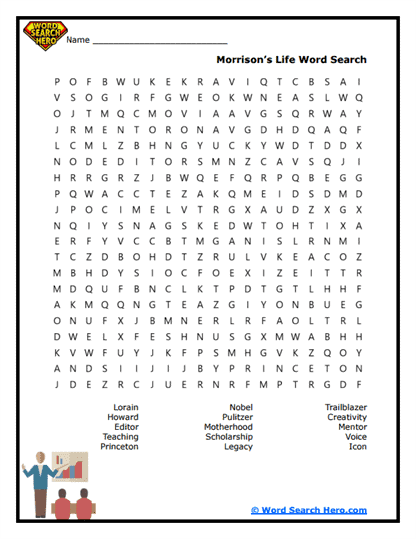
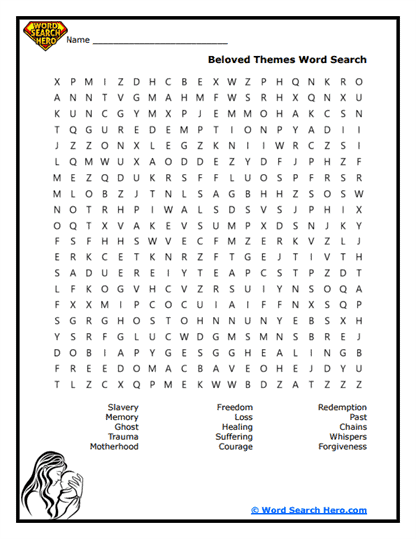
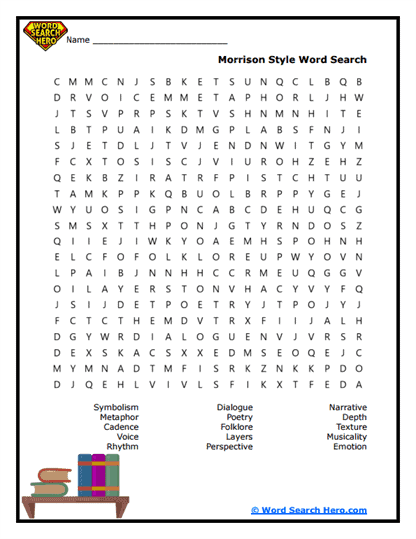
About Our Toni Morrison Word Searches
Our Toni Morrison Word Searches help students explore the work of one of the most important voices in modern American literature while strengthening vocabulary, spelling, and concentration skills. These printable puzzles introduce learners to the themes, characters, and literary ideas connected to Morrison’s influential novels.
Teachers often look for engaging ways to reinforce literary knowledge, and word searches provide a simple and effective option. As students search for words related to Toni Morrison’s books, characters, and themes, they become more familiar with the vocabulary associated with modern American literature. Repeated exposure to these terms helps learners recognize them more easily when studying novels and discussing literary ideas.
Parents and homeschool educators also appreciate activities that combine learning with entertainment. Word searches encourage visual scanning, patience, and attention to detail while quietly reinforcing reading-related concepts. Students interact with vocabulary connected to history, identity, community, and storytelling.
Toni Morrison’s writing continues to be widely studied because her stories explore complex human experiences and historical themes through powerful characters and vivid language. Through these puzzles, students gain an engaging introduction to the vocabulary associated with one of the most respected authors in contemporary literature.
The Author of Powerful American Novels
Toni Morrison was an American novelist born in 1931 in Ohio. She became known for writing novels that explore history, identity, memory, and the experiences of individuals and communities.
One of Morrison’s most famous novels is Beloved, a story that examines the lasting effects of the past on individuals and families. The novel blends historical events with deeply personal storytelling and has become one of the most widely studied works in American literature.
Morrison also wrote several other influential novels, including Song of Solomon, The Bluest Eye, and Sula. Her stories often explore themes of family, cultural identity, personal resilience, and the importance of understanding history.
Morrison’s writing style is known for its vivid imagery, emotional depth, and thoughtful exploration of complex ideas. Her work often encourages readers to reflect on the ways personal stories and historical events shape people’s lives.
Students studying Toni Morrison often discover how literature can explore history and identity while telling compelling and meaningful stories.
Paul’s Pro-Tip
After students finish the word search, try a quick “story and memory” discussion.
Ask them to circle one character-related word and one theme-related word from the puzzle.
Then ask: Why do you think stories sometimes focus on memories or past events?
Students often realize that understanding the past can help characters-and readers-better understand the present.
This simple discussion helps connect literature to the idea that stories often explore both personal experiences and historical events.
Why Toni Morrison’s Writing Is So Influential
Toni Morrison’s work has had a lasting impact on American and world literature. Her novels often explore how history, culture, and personal identity influence the lives of individuals and communities.
Morrison’s storytelling is known for its rich language and thoughtful exploration of human experiences. Her books encourage readers to consider how personal stories connect with larger historical and cultural themes.
In 1993, Toni Morrison received the Nobel Prize in Literature, recognizing her extraordinary contribution to storytelling and her influence on modern literature. Her novels continue to be widely read, studied, and discussed in classrooms around the world.
Morrison’s writing demonstrates how literature can explore complex topics while still telling engaging and meaningful stories. Her work encourages readers to think carefully about history, community, and the ways people understand themselves and others.
Word searches featuring vocabulary connected to Toni Morrison help reinforce the themes, characters, and literary ideas students encounter when studying modern literature. By recognizing these words repeatedly, learners gain a clearer understanding of why Morrison remains one of the most influential authors in contemporary storytelling.
Frequently Asked Questions
Who was Toni Morrison?
Toni Morrison was an American novelist known for writing influential works that explore history, identity, and cultural experiences.
What are Toni Morrison’s most famous books?
Some of her best-known novels include Beloved, Song of Solomon, The Bluest Eye, and Sula.
Why is Toni Morrison important to literature?
Her writing explores complex themes about identity, history, and community while using powerful storytelling and rich language.
How can teachers use Toni Morrison word searches in class?
Teachers often use them as vocabulary activities, reading warm-ups, or introductions to discussions about modern American literature.
What extension activity works well after completing the puzzle?
Students can discuss how a character’s past experiences influence their decisions and relationships within a story.