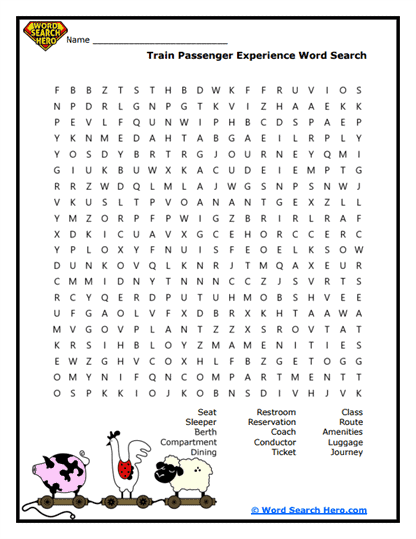
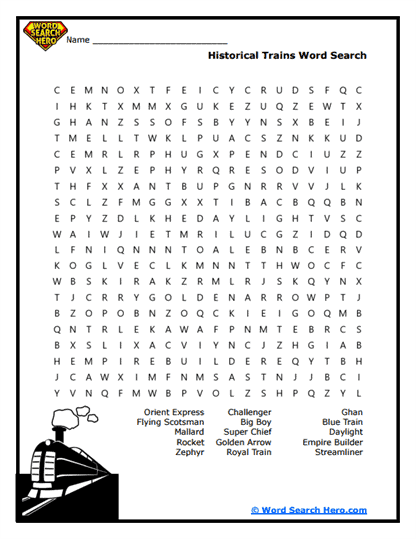
About Our Train Word Search Collection
Train word searches bring one of the most iconic and powerful transportation objects into an engaging learning format. These printable puzzles focus on trains as physical objects-highlighting everything from locomotives and railcars to tracks, engines, and stations. Because trains are large, easy-to-recognize machines, they provide a strong visual connection that helps students link vocabulary to real-world objects.
As learners search for words like “locomotive,” “track,” “cargo,” “passenger,” and “engine,” they begin to understand how trains are built and how they function. This makes the activity more than just a word hunt-it becomes an exploration of how these objects move people and goods across long distances. The familiarity of trains, whether seen in books, videos, or real life, helps students stay engaged and confident.
In the classroom, train-themed puzzles work well in transportation units, history lessons, or STEM discussions. They’re also perfect for independent work, helping students develop focus and attention to detail. At home, they offer a relaxing, screen-free activity that still supports vocabulary growth and reading skills.
Because trains are tied to travel, industry, and history, they often spark curiosity. Students may start asking how trains stay on tracks or how engines pull so many cars. This curiosity turns a simple puzzle into a deeper learning experience centered around a real, physical object.
On the Tracks: Understanding How Trains Work
Trains are made up of multiple connected parts, and each one plays an important role. When students search for words like “engine,” “railcar,” “caboose,” and “track,” they’re learning about the structure of a train and how its components work together. This makes trains an excellent object for building both vocabulary and understanding.
One way to extend the activity is by breaking down the parts of a train. The locomotive pulls the train, while the railcars carry passengers or cargo. The tracks guide the movement, keeping the train on a set path. Discussing these elements helps students connect words to function.
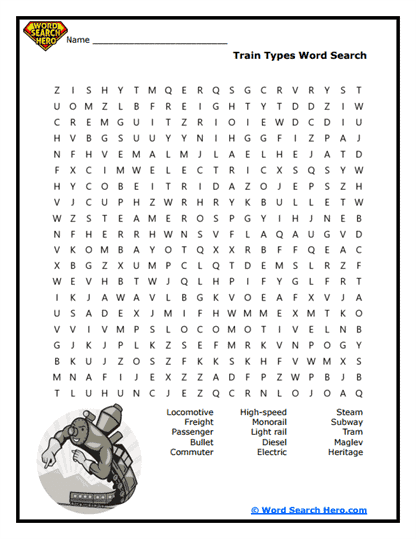
You can also explore different types of trains. Freight trains carry goods, while passenger trains transport people. High-speed trains are designed for fast travel, while older steam trains use a completely different kind of engine. These comparisons help deepen understanding and keep the topic interesting.
For a hands-on extension, students can draw a train and label its parts using the words they found. This reinforces both spelling and comprehension while adding a creative element.
By focusing on how trains are built and operate, these word searches turn vocabulary into a meaningful exploration of a powerful physical object.
Paul’s Pro-Tip

Think of the puzzle like a train route-don’t try to jump all over the map. Start at one “station” (a corner of the grid) and move in a straight line, just like a train on tracks. It keeps your search smooth and organized.
If you find a word like “track” or “car,” take a second to look right next to it. Longer words like “locomotive” often run alongside smaller ones, almost like train cars linked together.
Why Trains Make Learning Memorable
Trains are unique objects because they are made up of connected parts that all work together. This makes them especially helpful for learning, as students can break down the object into smaller pieces and understand how each part contributes to the whole. Words like “engine,” “wheel,” and “track” become easier to remember when tied to a clear mental image.
These puzzles also strengthen observation skills. Students must carefully scan for words hidden in different directions, improving attention to detail. This is similar to noticing features of a train, like the number of cars or the type of cargo being carried.
Another benefit is the introduction of functional vocabulary. Students learn not just what a train is, but how it operates and what it’s used for. This adds depth to the learning experience and connects literacy with real-world knowledge.
The process also encourages persistence. Finding all the words requires patience and strategy, and the engaging topic helps students stay motivated. Because trains are such fascinating objects, learners are more likely to stay focused and complete the task.
By connecting vocabulary to a powerful and familiar object, train word searches create a learning experience that is both engaging and lasting.
Frequently Asked Questions
What parts of a train are included in these word searches?
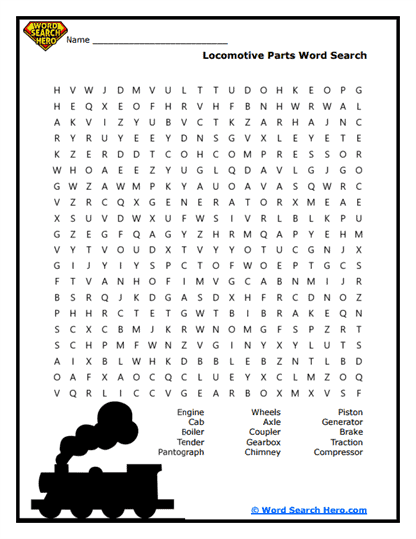
These puzzles often include parts like the locomotive, railcars, caboose, wheels, and tracks. Some also include terms like cargo or passenger sections. This helps students understand the physical structure of a train and how its parts connect.
How do train word searches help kids understand how trains work?
By including both the train and its components, students begin to see how everything fits together. For example, learning about the engine and tracks helps explain how trains move. This builds both vocabulary and practical understanding of the object.
Can these puzzles be used alongside lessons about transportation or history?
Yes, they work well with lessons about how goods and people travel or how trains have evolved over time. Teachers can use them to reinforce key vocabulary in a fun way. They also make great review or introduction activities.
How can I make train word searches more interactive at home?
You can ask your child to draw a train and label its parts using words from the puzzle. Another idea is to watch a train pass by or look at pictures and identify the parts they’ve learned. These activities help connect vocabulary to real-world objects.
Why are trains a good object for vocabulary learning?
Trains have clearly defined parts and a structure that’s easy to visualize. Their size and movement also make them memorable for students. This makes it easier to connect words to real objects and improves retention.