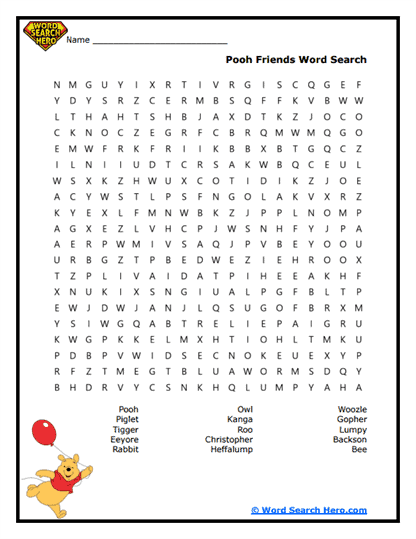
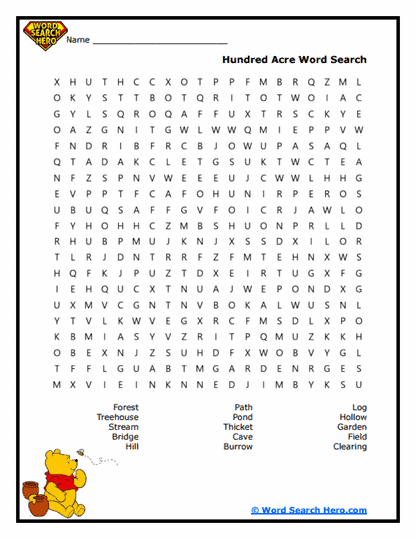
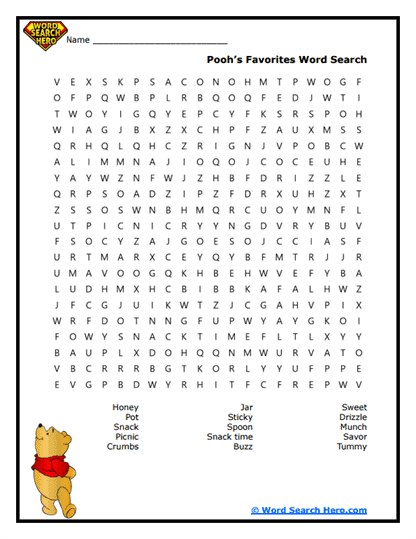
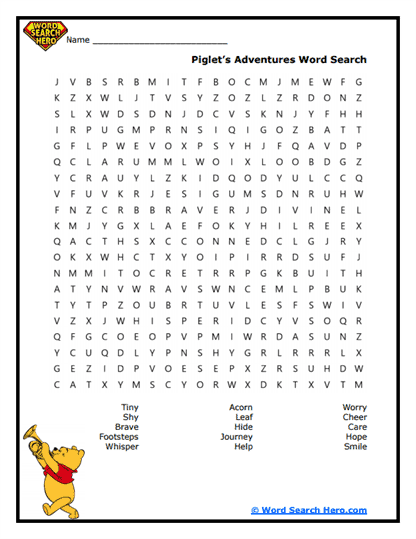
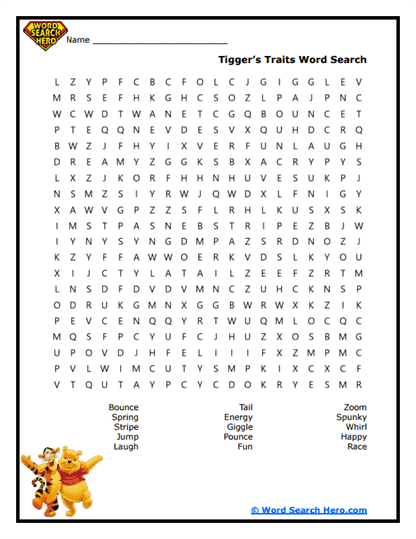
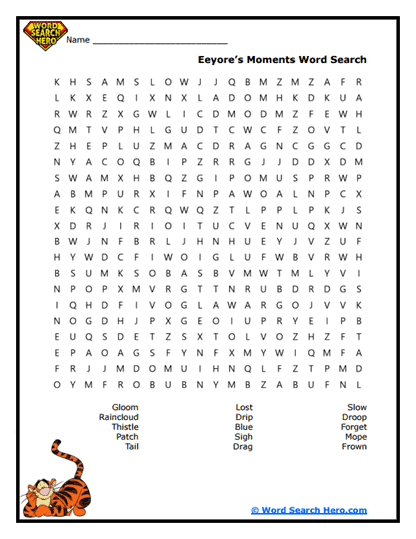
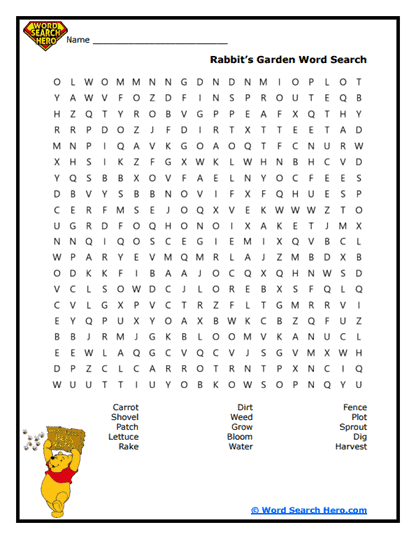
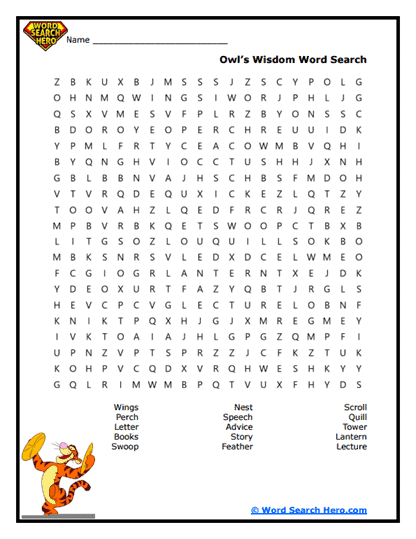
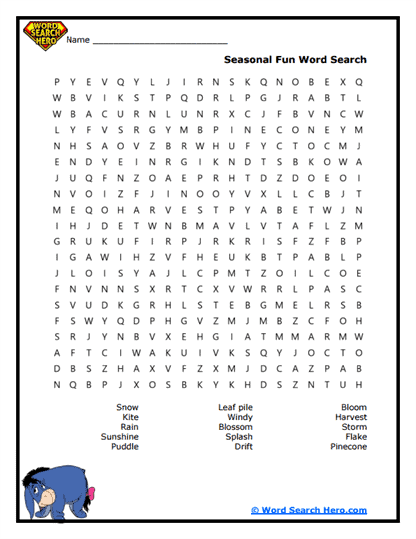
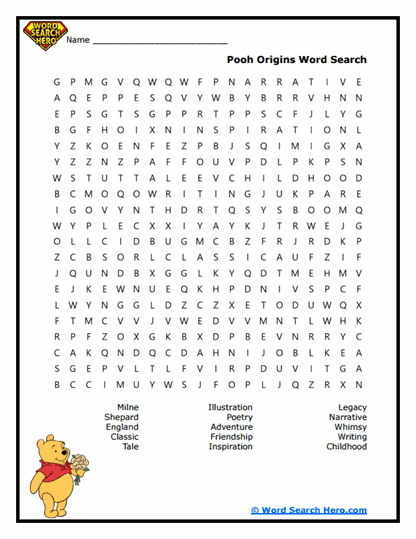
About Our Winnie the Pooh Word Searches
Our Winnie the Pooh Word Searches help students explore a beloved corner of children’s literature while strengthening vocabulary, spelling, and concentration skills. These printable puzzles introduce learners to familiar characters, gentle settings, and story elements connected to A.A. Milne’s timeless tales.
Teachers often look for activities that support literacy without feeling overly formal, and word searches are a wonderful fit. As students search for words related to Pooh, Piglet, Tigger, Eeyore, and the Hundred Acre Wood, they become more comfortable with the vocabulary connected to character-based storytelling. Repeated exposure to these names and terms helps build reading confidence, especially for younger learners who benefit from familiarity and repetition.
Parents and homeschool educators also appreciate activities that combine learning with comfort and fun. Word searches encourage visual scanning, patience, and careful attention to detail while quietly reinforcing literacy skills. Students interact with words connected to friendship, adventure, kindness, and imagination, all of which are central to Pooh stories.
The Winnie the Pooh world is especially useful for literature-themed learning because it introduces students to character traits in a clear and memorable way. Pooh is thoughtful in his own sweet way, Piglet is timid but loyal, Tigger is energetic, and Eeyore sees the world differently from the others. Those contrasts make the stories easy to discuss and enjoyable to revisit.
Whether used in classrooms, homeschool lessons, or quiet reading time at home, these printable puzzles provide an engaging way to connect vocabulary practice with one of the most cherished story worlds in children’s literature.
A Gentle Literary World Full of Memorable Characters
One reason Winnie the Pooh remains so popular is that the stories create a literary world that feels calm, cozy, and inviting. Set in the Hundred Acre Wood, the tales follow a group of friends whose adventures are often simple on the surface but meaningful underneath.
Unlike stories built around giant battles or dramatic dangers, Pooh stories focus on everyday problems, small discoveries, and friendships. A missing tail, a search for honey, a blustery day, or a misunderstanding between friends can become the center of an entire adventure. That makes these stories especially approachable for students.
The characters are also easy to remember because each has a distinct personality. Pooh is gentle and honey-loving, Piglet is small and nervous but brave when it matters, Tigger is bouncy and bold, Rabbit likes order, and Owl often sounds wiser than he really is. These differences help students identify character traits quickly and clearly.
From a literature perspective, Winnie the Pooh is a great topic because it helps learners notice how authors make characters memorable. A.A. Milne gave each character a clear voice, recognizable behavior, and a role within the group. That is a valuable lesson for young readers and writers alike.
A word search tied to this topic helps students become even more familiar with those names and ideas, making later reading, discussion, and writing activities feel much easier.
Paul’s Pro-Tip
If you want to squeeze a little extra learning out of a Pooh puzzle, ask students to pick one character name and one personality word after they finish.
Then ask: Does that word really fit the character?
You’ll get great answers. Somebody will say Piglet is brave even though he feels scared. Somebody else will defend Eeyore like a courtroom lawyer. And at least one student will insist Pooh is a genius because he always finds the honey.
That is the magic of character work. Once students start matching traits to story actions, they are doing real literature thinking without even noticing it.
Why Winnie the Pooh Works So Well for Early Literature Study
Winnie the Pooh is especially helpful in literature study because it introduces important reading concepts in a way that feels warm and manageable. Students can explore character, setting, tone, and theme without needing to untangle a complicated plot.
The stories also encourage thoughtful discussion. Friendship is one of the strongest themes in the Pooh books, but students can also notice patience, kindness, problem-solving, and emotional understanding. Because each character responds differently to situations, readers can compare perspectives in a natural way.
This topic also supports beginning writers. After working with Pooh vocabulary, students can create their own woodland character, imagine a gentle adventure, or write dialogue that matches a character’s personality. The stories show that not every meaningful plot needs a giant villain or dramatic twist. Sometimes a simple idea handled well makes the best story.
For classrooms, these puzzles work nicely as literacy centers, book-unit warm-ups, or quiet independent work. For home learning, they pair beautifully with read-aloud time, drawing prompts, and simple character discussions.
That is part of the lasting charm of Winnie the Pooh. The stories are soft and playful, but they still give students plenty to think about as readers.
Frequently Asked Questions
How can Winnie the Pooh word searches support reading lessons?
They help students become more familiar with character names, setting vocabulary, and story-related terms, which makes read-alouds and follow-up discussions easier.
Are these puzzles useful for early elementary learners?
Yes. The familiar characters and gentle story world make them especially appealing for younger students who are building reading confidence.
What literary skills connect well to this topic?
This topic works especially well with character traits, setting, theme, friendship in literature, and comparing how different characters respond to the same event.
Can these puzzles be used in homeschool language arts?
Absolutely. They make a great companion to read-aloud time, character journals, drawing activities, or simple creative writing lessons.
What is a good extension activity after the puzzle?
Have students choose one Pooh character and describe that character using three traits, then explain which story actions support those choices.