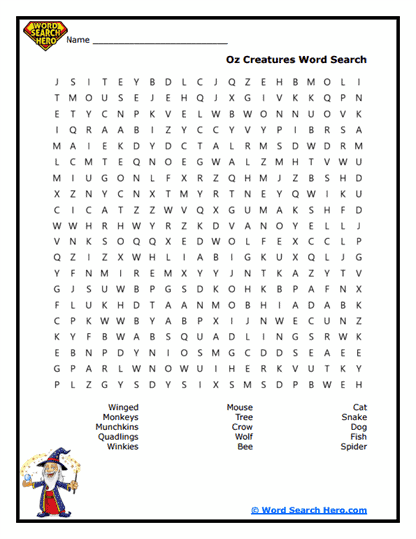
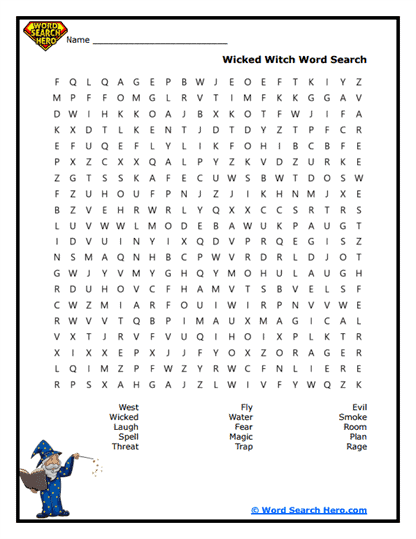
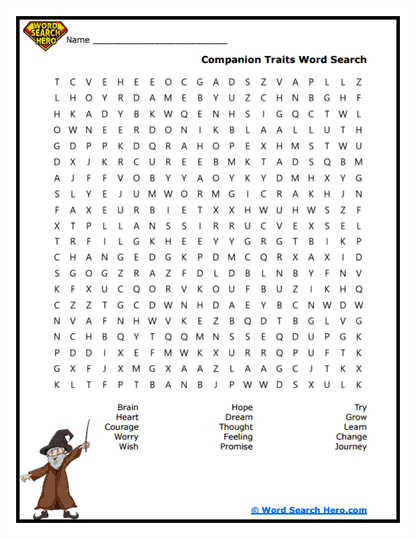
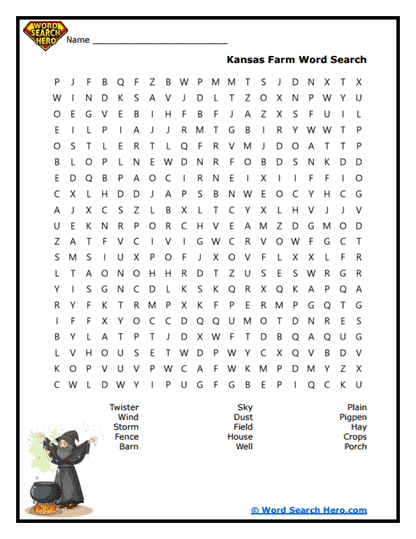
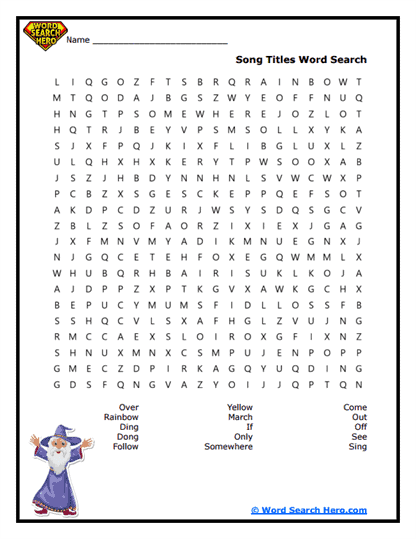
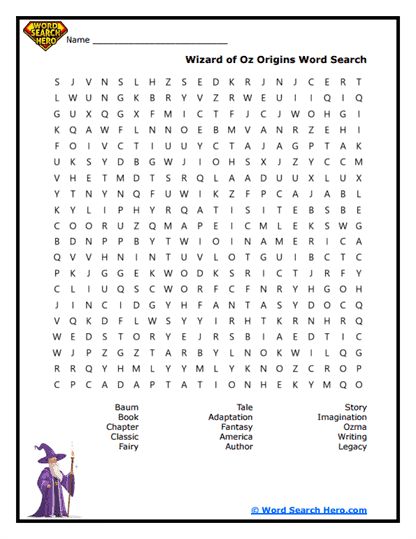
About Our Wizard of Oz Word Searches
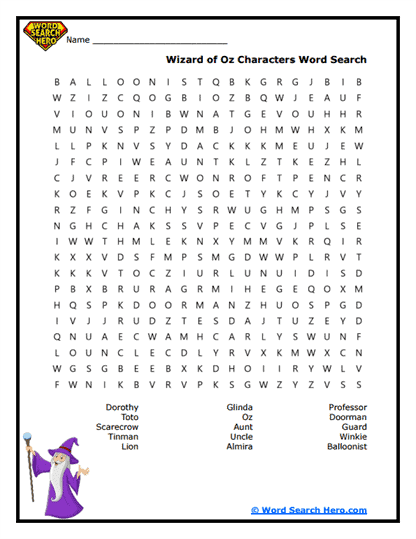
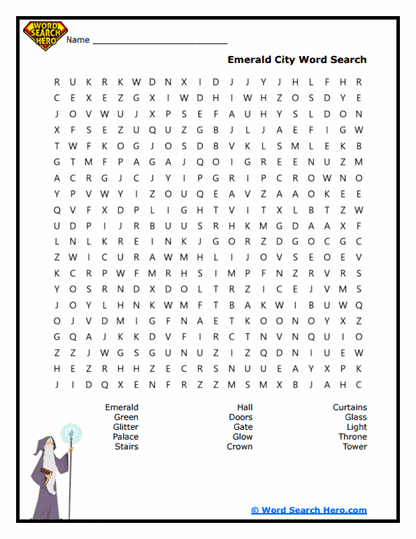
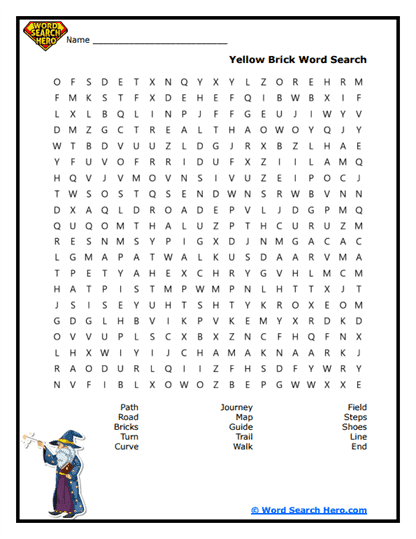
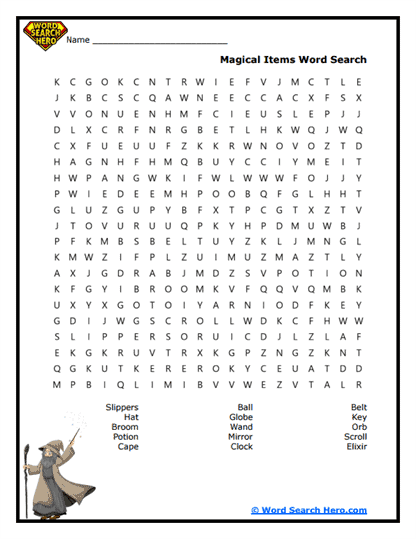
Our Wizard of Oz Word Searches help students explore one of the most beloved fantasy stories in children’s literature while strengthening vocabulary, spelling, and concentration skills. These printable puzzles introduce learners to the characters, settings, and story elements connected to L. Frank Baum’s classic tale.
Teachers often look for engaging ways to reinforce literary knowledge, and word searches provide a simple and effective option. As students search for words related to Dorothy, Oz, the Yellow Brick Road, and other familiar parts of the story, they become more comfortable with the vocabulary connected to fantasy adventures and classic children’s books. Repeated exposure to these terms helps learners recognize them more easily during reading activities and classroom discussion.
Parents and homeschool educators also appreciate activities that combine learning with fun. Word searches encourage visual scanning, patience, and attention to detail while quietly reinforcing literacy skills. Students interact with vocabulary connected to courage, friendship, imagination, and problem-solving.
The Wizard of Oz is especially useful for literature-themed learning because it introduces memorable characters with clear personalities and goals. Dorothy wants to get home, the Scarecrow wants a brain, the Tin Woodman wants a heart, and the Cowardly Lion wants courage. Those goals make the story easy for students to follow and discuss.
Whether used in the classroom, during homeschool lessons, or as part of quiet reading time at home, these printable puzzles provide an engaging way to connect vocabulary practice with a classic literary adventure that has charmed readers for generations.
Following the Yellow Brick Road
One reason The Wonderful Wizard of Oz remains such a strong teaching text is that it combines a simple quest structure with imaginative world-building. Written by L. Frank Baum, the story begins when Dorothy is swept away from Kansas and carried into the magical land of Oz.
From there, the story becomes a journey. Dorothy travels along the Yellow Brick Road in hopes of reaching the Wizard, who she believes can help her return home. Along the way, she meets companions who each think they are missing something important. The Scarecrow wants intelligence, the Tin Woodman wants emotion, and the Lion wants bravery.
Students often connect with this structure because it feels clear and purposeful. The characters are heading somewhere, each person has a goal, and every stop along the road adds a new challenge. That makes the story especially approachable for young readers.
The setting also makes the book memorable. Oz is full of unusual places, magical beings, and striking imagery, from Munchkin Country to Emerald City. These details help students see how authors build fantasy worlds that feel colorful and distinctive.
A word search tied to this story helps students become comfortable with the names and places that matter most. Once those words feel familiar, the larger literary ideas in the book become easier to discuss and enjoy.
Paul’s Pro-Tip
After students finish the puzzle, ask them to choose one character and one wish or goal from the story.
Then ask: Did that character really need to find that quality, or did they already have it?
That question works every time. Students start arguing, in the best possible way, about whether the Lion was already brave or the Scarecrow was already smart.
That is when you know the puzzle did more than fill five quiet minutes. It got students thinking about character growth, and that is a very nice little victory for one sheet of paper.
Why This Story Works So Well in Literature Lessons
The Wizard of Oz is a strong literature topic because it gives students a chance to explore character development, setting, symbolism, and theme in a story that feels inviting rather than intimidating. The plot is easy to follow, but the ideas underneath it are rich enough for meaningful discussion.
Students can talk about friendship, perseverance, self-belief, and the difference between what characters think they lack and what they actually show through their actions. That makes the story especially helpful for discussions about theme and personal growth.
The novel also works well when teaching fantasy as a genre. It includes a clear separation between the ordinary world and the magical world, a quest, unusual companions, and imaginative settings. These familiar fantasy elements help students recognize broader storytelling patterns they may see in other books.
For writing activities, the story offers lots of possibilities. Students can invent their own magical land, create a companion character, or imagine what they would ask the Wizard for. Because the world of Oz is so vivid, it naturally encourages creativity.
These word searches support all of that by giving students a comfortable entry point into the vocabulary of the story. Once they know the names, places, and objects, they are better prepared to talk, write, and think more deeply about the book.
Frequently Asked Questions
How can Wizard of Oz word searches support a literature unit?
They work well as pre-reading activities, bell ringers, literacy center tasks, or review exercises that help students become more familiar with important names and terms from the story.
What reading skills connect well to this topic?
This story pairs especially well with character traits, setting, theme, fantasy elements, and tracking how characters grow during a journey.
Are these puzzles useful for younger readers?
Yes. The clear characters and memorable settings make them especially approachable for elementary and middle grade learners.
Can these word searches lead into creative writing?
Absolutely. Students can use the story as inspiration to invent a magical place, create a new travel companion, or imagine their own quest.
What is a strong follow-up activity after the puzzle?
Have students choose one character from the story and explain what that character wanted, what they learned, and how they changed by the end.