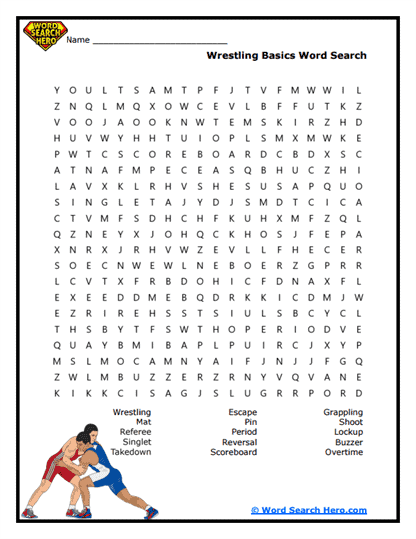
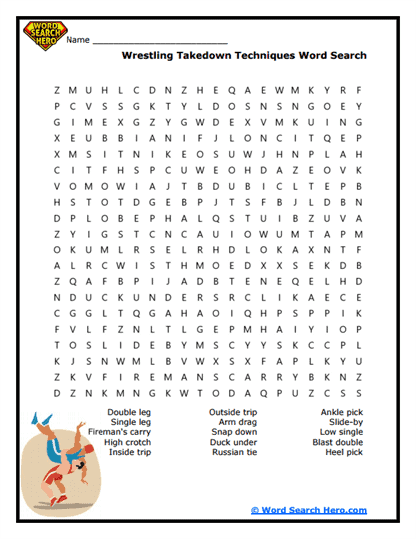
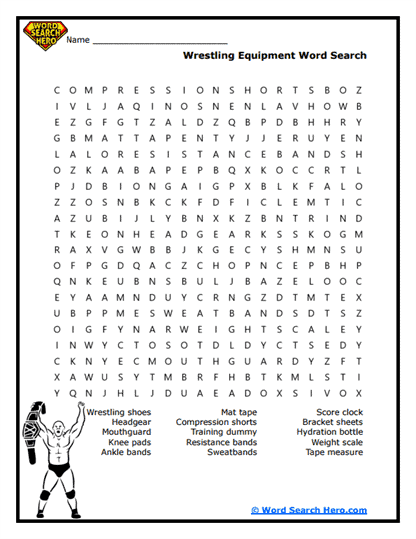
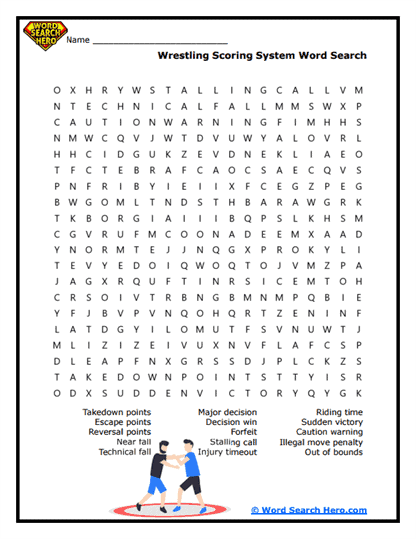
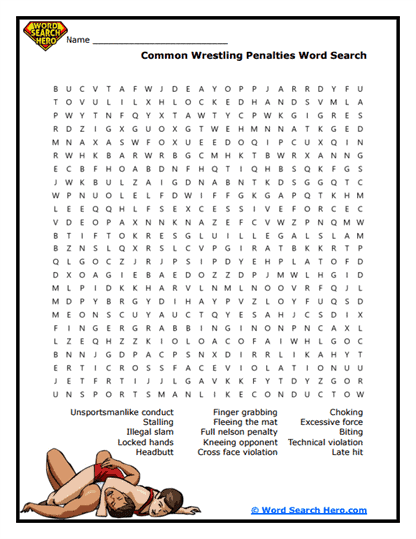
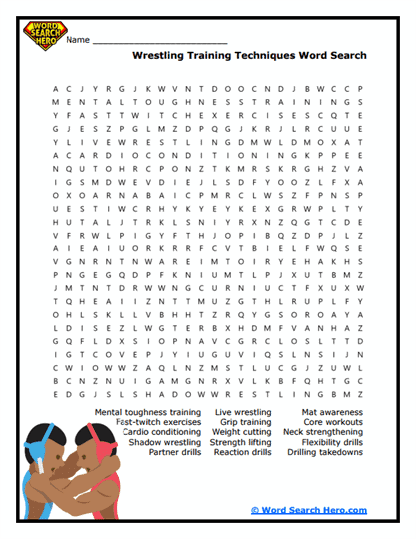
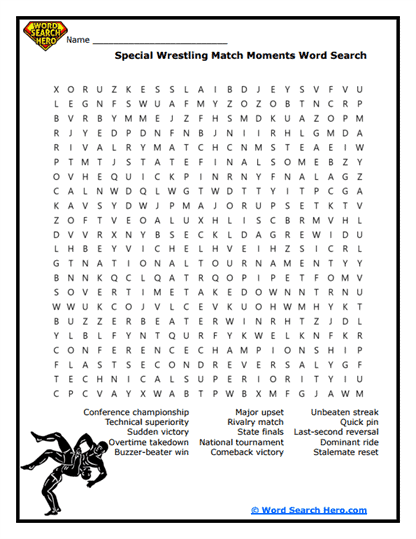
About Our Wrestling Word Searches
Wrestling word searches are a powerful and engaging way to explore one of the oldest and most disciplined sports while focusing on the people and positions that define each match. These printable puzzles introduce learners to key terms such as takedown, pin, reversal, mat, and hold, along with roles like wrestler, referee, coach, and official. By emphasizing both the sport and the individuals involved, students gain a clearer understanding of how wrestling works.
As students search for words, they begin to connect wrestling with responsibility and position. Wrestlers take on the central role of competing using strength, technique, and strategy. Referees ensure rules are followed and safety is maintained, while coaches prepare athletes through training and match planning. This helps learners move beyond just recognizing terms and into understanding how each role contributes to the match.
These puzzles also support essential academic skills like vocabulary development, spelling, and focus. They can be used in classrooms, physical education settings, or at home as interactive learning tools.
With a range of difficulty levels, Wrestling word searches are accessible for many learners. They provide an exciting way to explore the sport while focusing on the people and positions that shape every match.
Key Positions on the Mat
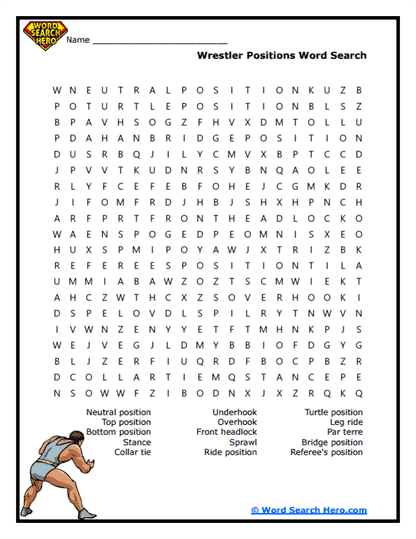
Wrestling becomes much clearer when students focus on the positions that define control and movement during a match. Word searches centered on this topic often include positions like neutral, top, and bottom, along with roles like wrestler and referee. Each of these reflects a responsibility tied to a specific situation on the mat.
The wrestler in the neutral position is working to gain control through takedowns. In the top position, the wrestler focuses on maintaining control and attempting to pin their opponent. In the bottom position, the goal is to escape or reverse control. The referee watches closely to ensure rules are followed and points are awarded correctly. Each position shows how responsibility shifts throughout the match.
Encouraging students to think about these positions helps deepen understanding. They can ask questions like, “What makes a strong top position?” and “How does a wrestler escape from the bottom?” This kind of thinking builds stronger comprehension of technique and strategy.
By focusing on positions, students begin to see wrestling not just as a match, but as a sequence of controlled situations where each role has a clear purpose.
Paul’s Pro-Tip

One of the most effective ways to use a Wrestling word search is to turn it into a “position transition tracker.” As students find words like “neutral,” “top,” or “bottom,” have them map out how a wrestler moves between these positions during a match. For example, what action leads from neutral to top? What does a successful escape look like? This helps students understand that wrestling is all about transitions and control, not just isolated moves.
Another powerful strategy is the “referee perspective breakdown.” After completing the puzzle, have students focus on what the referee is watching for during different moments-such as a takedown, a near fall, or a pin attempt. What determines scoring? When does the referee stop the match? This builds deeper understanding by showing that the referee plays a critical role in interpreting action and ensuring fairness. It also helps students appreciate the rules and structure of the sport.
From Positions to Match Control
Wrestling word searches can lead to deeper learning when students focus on how each position connects to match control and outcomes. After completing a puzzle, students can choose one position-such as neutral, top, or bottom-and describe what that role involves. This helps connect vocabulary to understanding.
For example, a student might explore how a wrestler secures a takedown from the neutral position or how they maintain control from the top. Another might examine how escapes and reversals change momentum during a match. These reflections help students understand how individual actions impact the overall result.
This approach also supports cross-curricular learning. It can connect with critical thinking by analyzing match situations or with writing by asking students to describe a position in detail. Group discussions can deepen understanding by comparing strategies.
By focusing on people and positions, students gain a clearer picture of wrestling. It transforms a simple puzzle into a meaningful exploration of control, strategy, and responsibility.
Frequently Asked Questions
What positions are commonly included in wrestling word searches?
These word searches often include positions like neutral, top, and bottom, along with roles like wrestler and referee. Each of these reflects a different situation during a match. Understanding these positions helps students see how wrestling is structured. It also makes the sport easier to follow.
What is the difference between the top and bottom positions in wrestling?
The top position involves controlling the opponent and attempting to score points or secure a pin. The bottom position focuses on escaping or reversing control. Each position requires different techniques and strategies. Understanding this contrast is key to learning wrestling.
What does a referee do during a wrestling match?
The referee enforces rules, awards points, and ensures the safety of both wrestlers. They watch closely for control, legal moves, and scoring opportunities. This role requires attention and quick decision-making. Understanding this shows how matches are kept fair and organized.
How can I make wrestling word searches more interactive?
You can have students map out how wrestlers transition between positions during a match. Another effective activity is analyzing what the referee looks for during key moments. These strategies deepen understanding and engagement. They also connect the puzzle to real match situations.
What can students learn by focusing on positions in wrestling?
Students can learn how control, technique, and strategy are connected. By examining each position, they see how wrestlers gain advantages and score points. This creates a clearer understanding of the sport. It also encourages appreciation for every role on the mat.