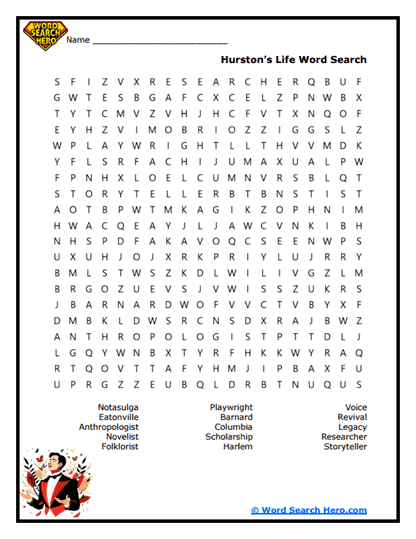
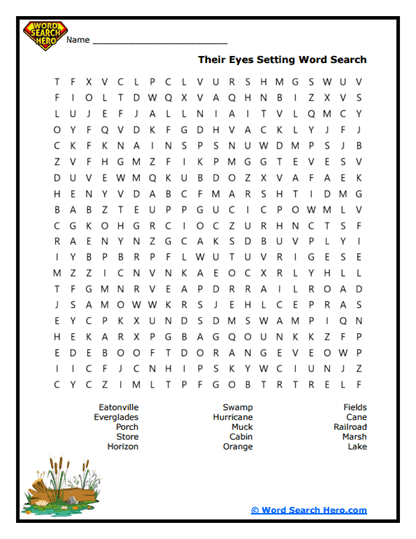
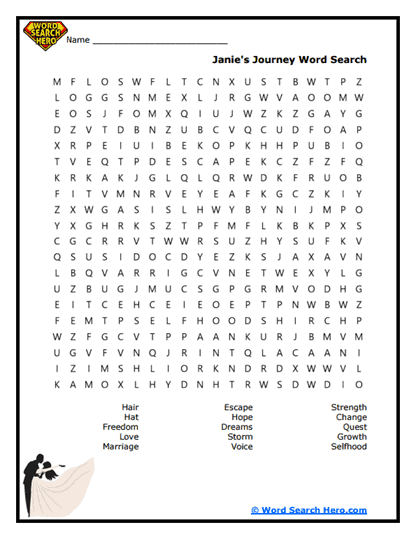
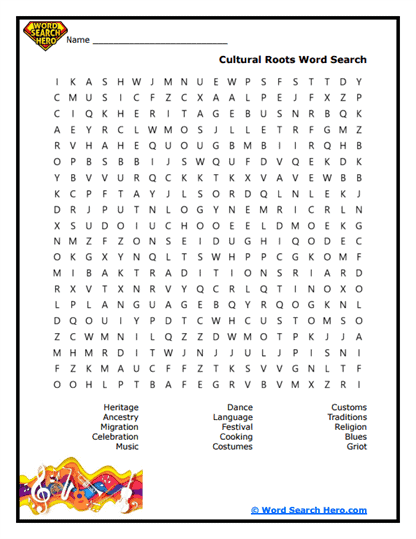
About Our Zora Neale Hurston Word Searches
Our Zora Neale Hurston Word Searches help students explore the work of an influential American author while strengthening vocabulary, spelling, and concentration skills. These printable puzzles introduce learners to the themes, characters, and cultural ideas connected to Hurston’s writing and storytelling.
Teachers often look for engaging ways to reinforce literary knowledge, and word searches provide a simple and effective option. As students search for words related to Zora Neale Hurston’s works, characters, and literary themes, they become more familiar with the vocabulary associated with American literature and cultural storytelling. Repeated exposure to these terms helps learners recognize them more easily during reading assignments and classroom discussions.
Parents and homeschool educators also appreciate activities that combine learning with entertainment. Word searches encourage visual scanning, patience, and attention to detail while quietly reinforcing reading-related concepts. Students interact with vocabulary connected to community, culture, storytelling, and personal independence.
Zora Neale Hurston’s writing continues to be widely studied because her stories capture the voices, traditions, and everyday experiences of the communities she wrote about. Through these puzzles, students gain an engaging introduction to the vocabulary associated with one of the most important literary figures of the 20th century.
A Voice of the Harlem Renaissance
Zora Neale Hurston was an American author and anthropologist born in 1891 in Alabama and raised in Eatonville, Florida, one of the first self-governing African American towns in the United States. Her upbringing in Eatonville greatly influenced her writing and the communities she portrayed in her stories.
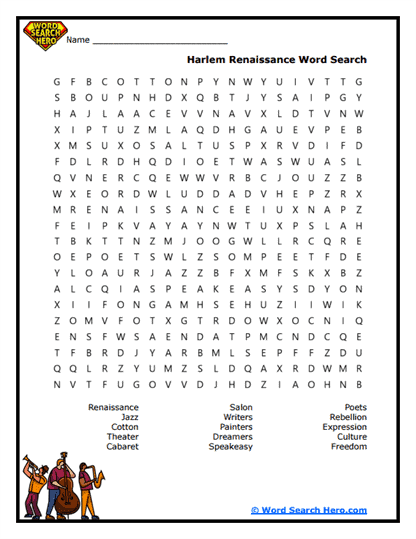
Hurston became an important figure in the Harlem Renaissance, a cultural movement during the 1920s and 1930s that celebrated African American literature, music, and art. Many writers, poets, and artists during this time explored themes of cultural identity and creativity.
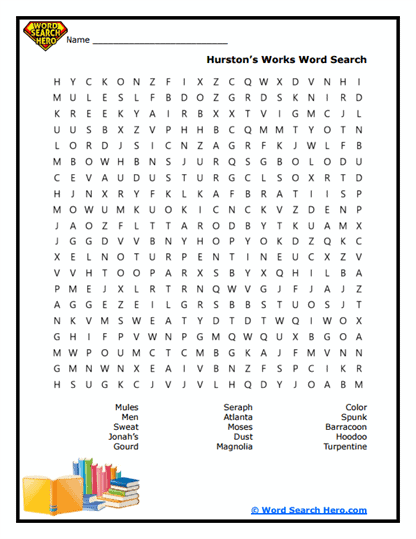
Hurston’s most famous novel is Their Eyes Were Watching God, which tells the story of Janie Crawford, a woman searching for independence, self-understanding, and meaningful relationships. The novel follows Janie’s journey as she navigates life, love, and personal growth.
In addition to writing fiction, Hurston also studied folklore and cultural traditions. She traveled through communities collecting stories, songs, and oral traditions, helping preserve important cultural histories through her research and writing.
Students studying Zora Neale Hurston often discover how literature can reflect community life, cultural traditions, and the power of personal voice.
Paul’s Pro-Tip
After students finish the word search, try a quick “storytelling traditions” activity.
Ask them to circle one character-related word and one community-related word from the puzzle.
Then ask: Why do you think storytelling is important in many cultures?
Students often recognize that stories help people share experiences, preserve traditions, and teach lessons across generations.
It’s a great way to show that literature is connected to real-life communities and shared histories.
Why Zora Neale Hurston’s Writing Is Influential
Zora Neale Hurston’s work has had a lasting impact on American literature because of her unique storytelling style and her focus on cultural identity and community experiences. Her novels often highlight the voices, traditions, and daily lives of people in the communities she studied and grew up in.
Hurston’s writing style is notable for its use of dialogue and regional speech patterns, which helped bring her characters and settings to life. This approach allowed readers to experience the rhythm and personality of the communities she portrayed.
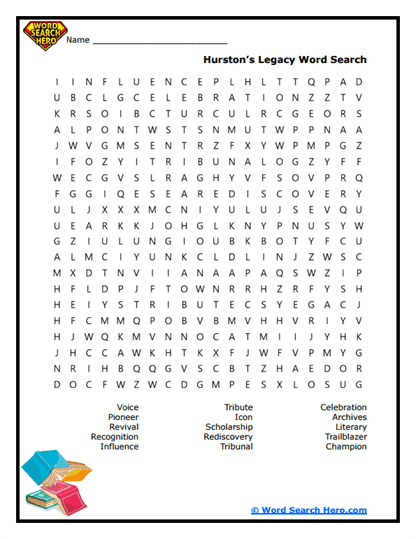
Her work also gained renewed recognition in the late 20th century as scholars and readers began to rediscover the importance of her contributions to literature and cultural studies.
Today, Hurston’s books are widely read in schools and universities. Her storytelling continues to influence writers who seek to explore cultural identity, community traditions, and personal journeys through literature.
Word searches featuring vocabulary connected to Zora Neale Hurston help reinforce the themes, characters, and cultural ideas students encounter when studying American literature. By recognizing these words repeatedly, learners gain a clearer understanding of why Hurston remains an important voice in literary history.
Frequently Asked Questions
Who was Zora Neale Hurston?
Zora Neale Hurston was an American author and anthropologist known for her novels and her contributions to the Harlem Renaissance.
What is Zora Neale Hurston’s most famous book?
Her best-known novel is Their Eyes Were Watching God, which follows the life and personal journey of the character Janie Crawford.
What themes appear in Hurston’s writing?
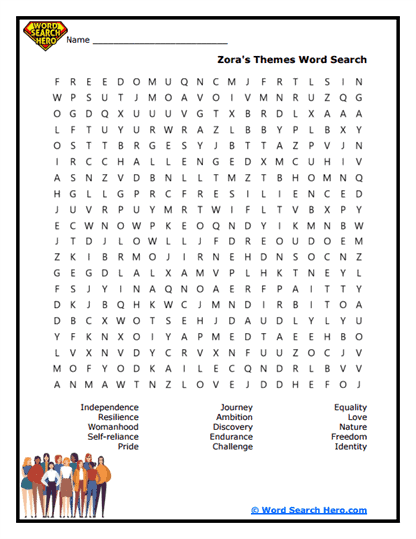
Her stories often explore themes such as identity, independence, community life, and cultural traditions.
How can teachers use Zora Neale Hurston word searches in class?
Teachers often use them as vocabulary activities, reading warm-ups, or introductions to lessons about the Harlem Renaissance and American literature.
What extension activity works well after completing the puzzle?
Students can discuss how storytelling traditions help preserve culture and share experiences within communities.