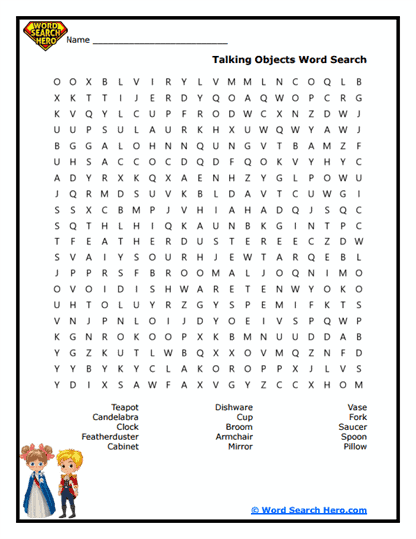
About Our Beauty and the Beast Word Searches
Our Beauty and the Beast Word Searches help students explore one of the most beloved fairy tales in world literature while strengthening vocabulary, spelling, and concentration skills. These printable puzzles introduce learners to the characters, settings, and story elements connected to this timeless tale.
Teachers often look for engaging ways to reinforce reading skills, and word searches provide a simple and effective option. As students search for words related to Belle, the Beast, enchanted castles, and magical transformations, they become more familiar with the vocabulary associated with classic fairy tale storytelling. Repeated exposure to these terms helps learners recognize them more easily during reading activities and classroom discussions.
Parents and homeschool educators also appreciate activities that combine learning with imagination. Word searches encourage visual scanning, patience, and careful attention to detail while quietly reinforcing literacy skills. Students interact with vocabulary connected to courage, kindness, friendship, and transformation.
Because Beauty and the Beast is such a well-known story, these puzzles can help students feel comfortable with the characters and ideas before exploring the story in more detail. Whether used as a warm-up activity, a literacy center task, or a quiet challenge at home, these printable puzzles offer an enjoyable way to connect vocabulary practice with a classic fairy tale adventure.
A Classic Tale of Kindness and Transformation
Beauty and the Beast is a famous fairy tale that has been told in many versions for centuries. The story is often associated with the French writer Gabrielle-Suzanne Barbot de Villeneuve, who published an early version of the tale in the 18th century. A later retelling by Jeanne-Marie Leprince de Beaumont helped popularize the story and make it widely known.
The story follows a young woman named Belle, who is known for her intelligence and kindness. She eventually finds herself living in a mysterious castle with a creature known as the Beast, who appears frightening at first but reveals a much more complicated personality as the story unfolds.
Over time, Belle discovers that the Beast is under a magical spell and that his true nature depends on how others see and treat him. As the characters spend time together, they learn important lessons about understanding, compassion, and looking beyond appearances.
Students often connect with this story because it explores how kindness, patience, and empathy can change the way people see one another. Even though the setting is magical, the emotional lessons in the story remain meaningful for readers of all ages.
Paul’s Pro-Tip
After students finish the puzzle, try a quick “look beyond appearances” activity.
Ask them to circle one character word and one personality trait from the puzzle.
Then ask: How might that trait change the way another character sees them?
Students often realize that characters who seem frightening, awkward, or different may actually be kind, brave, or thoughtful once others get to know them. This simple activity helps connect the puzzle to one of the story’s most important themes.
Sometimes the biggest lesson in a fairy tale is learning to look past the surface.
Why Beauty and the Beast Remains a Popular Story
Beauty and the Beast has remained popular for generations because it combines magical storytelling with meaningful themes. The story explores ideas about kindness, understanding, and personal growth in a way that is easy for readers to understand.
The tale also includes many classic fairy tale elements, such as enchanted settings, mysterious spells, and dramatic transformations. These imaginative details help capture readers’ attention while also supporting the deeper message of the story.
Another reason the story continues to be widely retold is its strong characters. Belle is often portrayed as thoughtful, curious, and independent, while the Beast represents the idea that people can change when they learn compassion and humility.
Because of these themes, Beauty and the Beast has inspired numerous adaptations in books, theater productions, and films. Each version highlights different aspects of the story while preserving the core message about kindness and transformation.
Word searches featuring vocabulary connected to Beauty and the Beast help reinforce the characters, settings, and themes students encounter when exploring this classic fairy tale. By recognizing these words repeatedly, learners gain a clearer understanding of the story and why it continues to resonate with readers around the world.
Frequently Asked Questions
What is the story of Beauty and the Beast about?
The story follows Belle and the Beast as they learn important lessons about kindness, compassion, and looking beyond appearances.
Who wrote the original Beauty and the Beast story?
One of the earliest versions was written by Gabrielle-Suzanne Barbot de Villeneuve in the 1700s, and a later retelling by Jeanne-Marie Leprince de Beaumont helped make the story widely known.
Why is Beauty and the Beast considered a classic fairy tale?
It combines magical elements with meaningful themes about empathy, personal growth, and understanding others.
How can teachers use Beauty and the Beast word searches in class?
Teachers often use them as vocabulary warm-ups, literacy center activities, or introductions to lessons about fairy tales and storytelling themes.
What extension activity works well after completing the puzzle?
Students can discuss how Belle and the Beast change throughout the story and explain how those changes influence the outcome of the tale.