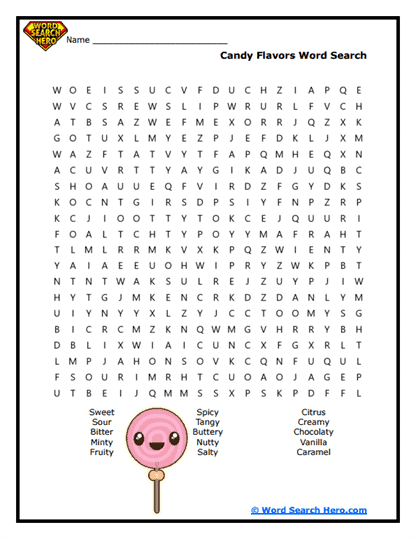
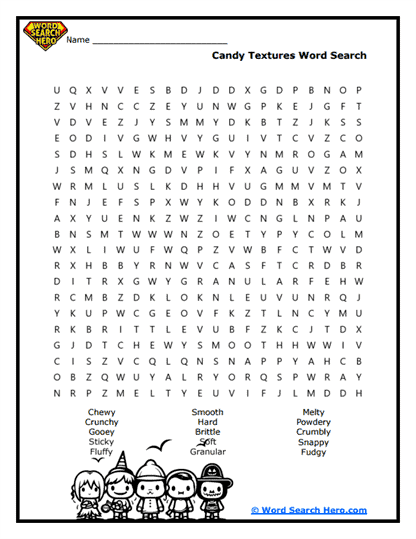
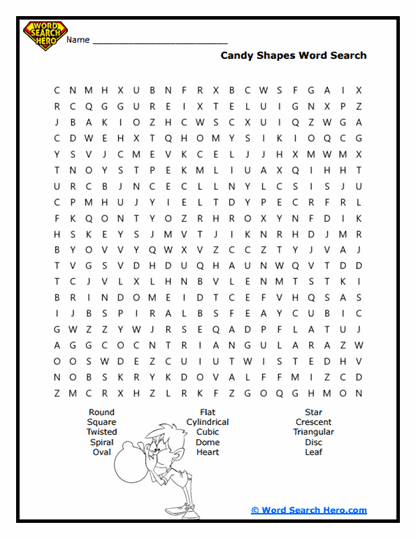
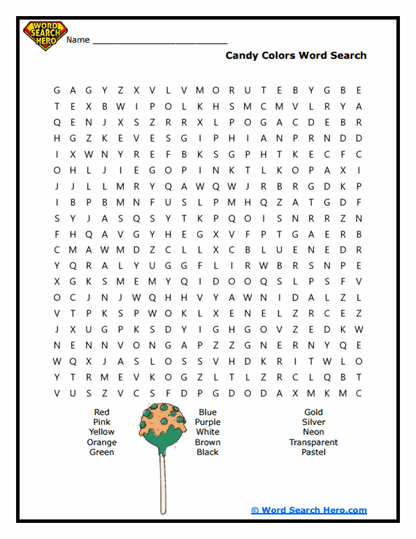
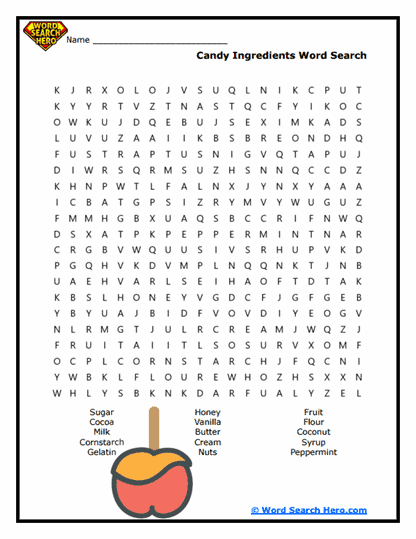
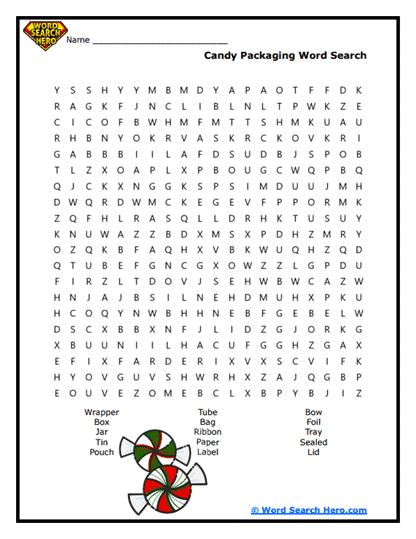
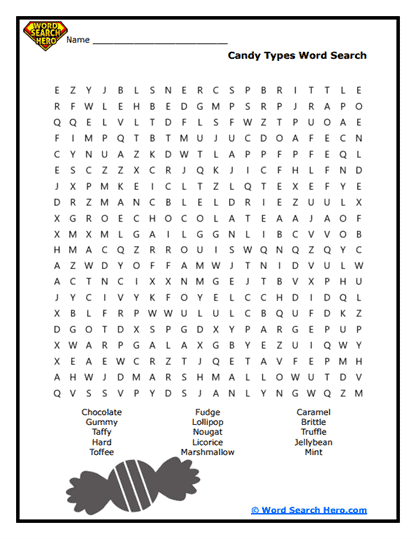
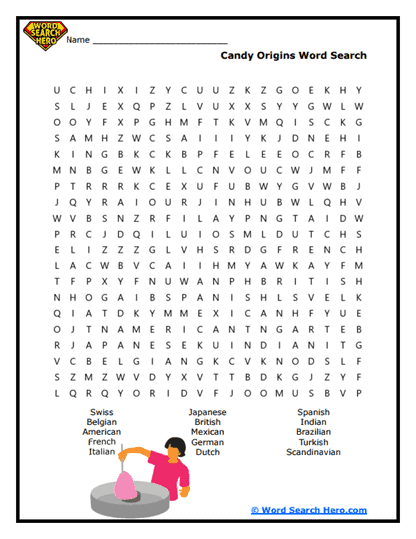
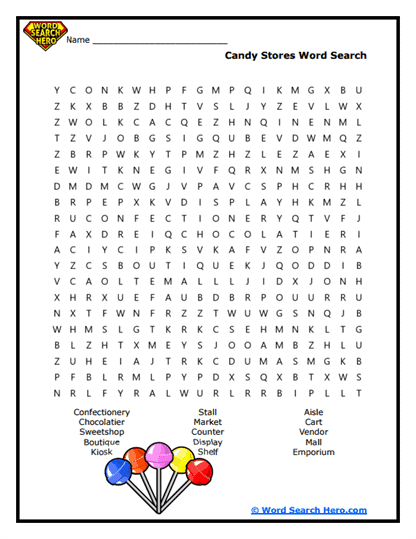
About Our Candy Word Searches
Candy is bright, playful, and full of variety-making it one of the most exciting themes for word search puzzles. Our Candy Word Searches collection is packed with sweet treats like chocolate, gummies, lollipops, caramels, and more. The colorful and familiar vocabulary makes these puzzles instantly appealing, especially for younger learners.
Because candy is often associated with fun moments like holidays, parties, and rewards, this theme naturally grabs attention. Kids love spotting their favorite treats, which gives them quick wins and builds confidence as they work through the puzzle. At the same time, older learners can explore a wider range of candy types and related terms, making the activity flexible for different ages.
These printables are perfect for classrooms, homeschool activities, and at-home fun. They work well as brain breaks, reward activities, or themed puzzles during holidays like Halloween or Valentine’s Day. The candy theme adds energy and excitement while still supporting important learning skills.
A Sweet Boost for Learning
Candy word searches help learners build essential literacy skills in a way that feels like play. As they search for words, they strengthen spelling, pattern recognition, and visual scanning abilities. The high-interest topic keeps learners engaged, even those who may not usually enjoy traditional worksheets.
This theme also opens the door to simple, meaningful discussions. Teachers and parents can use the puzzle to talk about moderation and balance-helping learners understand that candy is a treat to enjoy occasionally. Because the conversation starts from a fun place, it feels natural rather than instructional.
In group settings, candy puzzles often lead to lively conversations. Learners enjoy sharing their favorite sweets, comparing choices, and even debating which candy is the best. These interactions help build communication skills while keeping the activity fun and social.
Paul’s Pro-Tip

Turn your candy word search into a “candy creator challenge.” After completing the puzzle, have learners combine words they found to invent a brand-new candy-like a chocolate caramel swirl or a fruity gummy mix-and describe it.
If someone gets stuck, suggest starting with bold, easy-to-find words like “candy,” “chocolate,” or “gum.” These familiar favorites are often the quickest to spot and help build momentum.
A Colorful Way to Spark Conversation
Candy-themed puzzles naturally get people talking because everyone has a favorite treat. After finishing the puzzle, you can ask questions like: What’s your favorite candy? Do you like chocolate or fruity sweets? When do you usually eat candy?
These conversations help learners practice descriptive language using words like sweet, chewy, crunchy, sticky, or sugary. They also encourage learners to explain preferences and share experiences, strengthening communication skills.
At home, these puzzles can easily connect to real-life activities. Families might sort candy by type, plan a themed party, or even create their own pretend candy shop. These small extensions make learning feel interactive and memorable.
Frequently Asked Questions
What types of candy are included in candy word search puzzles?
Candy word searches usually include a wide variety of treats such as chocolate bars, gummies, lollipops, caramels, hard candy, jellybeans, and licorice. Some puzzles may also include specific candy types or categories like sour candy, chewy candy, or chocolate-based treats.
Are candy word searches suitable for kids?
Yes, they are very engaging for kids because the topic is fun and familiar. The recognizable vocabulary helps younger learners feel confident, while older students can enjoy more variety and slightly more complex terms.
Do candy word searches have educational value?
Absolutely. They help build spelling, word recognition, visual scanning, and concentration skills. They also provide a natural opportunity to talk about moderation and making balanced food choices.
How are candy word searches different from general sweets puzzles?
Candy word searches focus specifically on packaged or bite-sized treats, while sweets puzzles may include a broader range of desserts like cakes, cookies, and pastries. This makes candy puzzles more focused and often more playful.
Can candy word searches be used for holidays or events?
Yes, they are perfect for holidays like Halloween, Christmas, Easter, and Valentine’s Day, where candy is a big part of the celebration. They also work well for parties or themed classroom days.
Why do kids enjoy candy-themed word searches so much?
Kids enjoy them because candy is associated with fun, rewards, and excitement. Recognizing favorite treats makes the puzzle feel easy and enjoyable, which keeps them motivated.
Can candy word searches be used to teach healthy habits?
Yes. After completing the puzzle, learners can discuss how candy fits into a balanced diet and the importance of enjoying treats in moderation. This makes the activity both fun and thoughtful.
How can I extend a candy word search activity?
After finishing the puzzle, learners can design their own candy, create a menu for a candy shop, sort candies into categories, or plan a themed event. These extensions add creativity and make the activity more interactive.