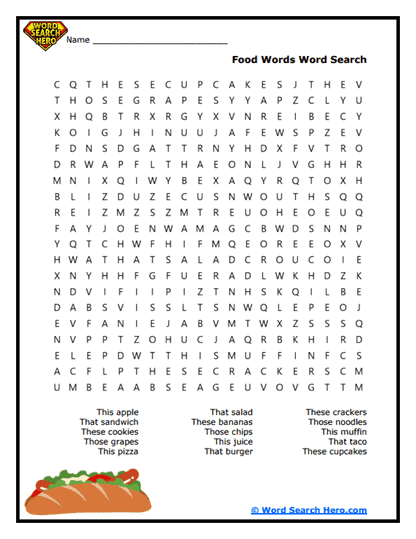
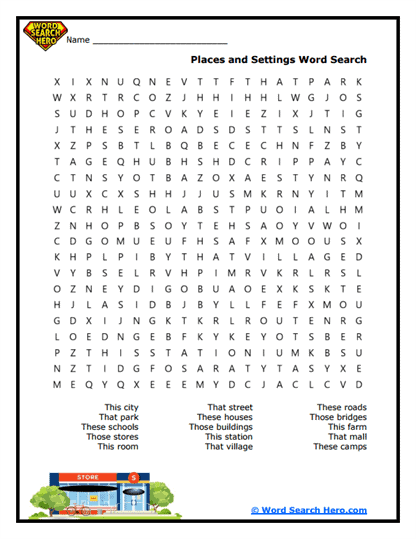
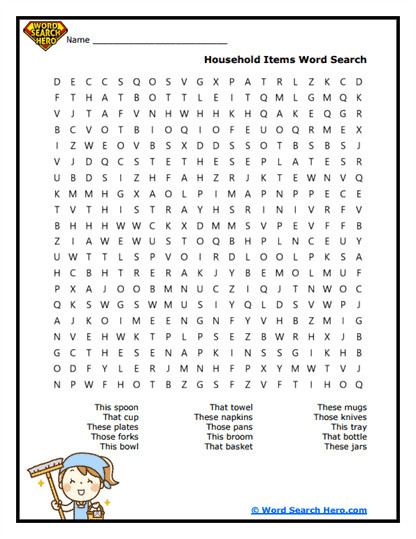
About Our Demonstrative Adjectives Word Searches
Our Demonstrative Adjectives word searches focus on a small set of words that do a very important job-helping kids point to exactly what they mean. Words like this, that, these, and those may be short, but they play a big role in making sentences clear and easy to understand.
What makes this collection unique is the mix of real-world vocabulary inside each puzzle. Students aren’t just seeing grammar in isolation-they’re connecting it to everyday topics like classrooms, food, animals, clothing, and even technology. That connection helps the concept stick because learners can picture what they’re talking about while they practice.
As students work through these puzzles, they begin to notice how these pointing words always come before a noun and help answer the question, “Which one?” This builds a strong foundation for understanding parts of speech and supports clearer sentence building alongside skills like nouns and basic sentence structure.
These puzzles turn a simple grammar idea into something visual, practical, and easy to apply in real life.
Teaching Kids to Be Clear: The Power of Pointing Words
Demonstrative adjectives are all about clarity. They help kids move from vague language to specific communication. Instead of saying “book,” students learn to say “this book” or “that book,” which instantly makes their meaning clearer.
That might seem like a small change, but it’s actually a big step in language development. When kids understand how to point out exactly what they mean, their speaking and writing become easier to follow. This is especially important when they’re describing things in busy settings-like a classroom full of supplies or a table full of snacks.
These puzzles reinforce that idea by pairing demonstrative adjectives with familiar categories. A student might search for “chair” or “apple,” but the real learning happens when they start thinking, “Would I say this chair or that chair?” That mental connection builds stronger communication habits.
Over time, students begin to naturally choose more precise language. This supports growth in areas like writing and grammar, where being specific makes a big difference in how well ideas are understood.
Paul’s Pro-Tip
 When I teach demonstrative adjectives, I always tell students: “If you can point to it, you can probably name it better.”
Have them physically point to something in the room and say a sentence out loud-“this desk,” “those books,” “that poster.” The movement helps the meaning click almost instantly.
If you want to level it up, give them two similar objects and ask them to explain the difference using demonstratives. It turns a simple grammar idea into something active and memorable.
Use Your Surroundings to Teach Demonstrative Adjectives
These puzzles are a great starting point-but the real magic happens when you connect them to the world around you.
After finishing a puzzle, have students look around the room or their home and describe what they see. Encourage them to use full phrases like “this chair,” “those toys,” or “that window.” The goal is to move from recognizing the words to actually using them in context.
You can also turn this into a quick game. Call out an object and have students respond with the correct phrase based on distance. For example, if something is close, they should say “this” or “these.” If it’s farther away, they switch to “that” or “those.” It builds quick thinking and reinforces the concept without feeling like a formal lesson.
This works especially well when paired with everyday categories like objects, animals, or places, since students can easily spot examples around them.
By using real surroundings, students start to see that demonstrative adjectives aren’t just grammar terms-they’re tools they use every day to communicate clearly.
Frequently Asked Questions
What is a demonstrative adjective?
A demonstrative adjective is a word that points to a specific noun, like this, that, these, or those. It helps the listener or reader know exactly which thing you are talking about, instead of leaving it unclear.
How are demonstrative adjectives used in sentences?
They are placed right before a noun to describe it more clearly. For example, saying “this book” or “those trees” tells us exactly which items are being discussed. This makes communication more precise and easier to understand.
Are demonstrative adjectives the same as demonstrative pronouns?
They use the same words, but they are used differently. Demonstrative adjectives come before a noun (like “this car”), while demonstrative pronouns replace the noun entirely (like “this is mine”). Seeing both in action helps students understand the difference more clearly.
Why are demonstrative adjectives important in grammar?
They help remove confusion by clearly identifying what someone is talking about. Without them, sentences can feel incomplete or vague, especially when there are multiple objects involved. Learning to use them correctly makes both speaking and writing more effective.
What is a good follow-up activity after the puzzle?
A great next step is to have students walk around and describe items they see using demonstrative adjectives. You can also challenge them to compare two objects using phrases like “this one” and “that one.” These simple activities help turn recognition into real-world usage.