


Biogeochemistry
Without even realizing it, you’re learning why microbes matter, how clouds carry sulfur, and what happens when humans start paving everything. It’s the most fun you’ll ever have accidentally mastering biogeochemical vocabulary.

Without even realizing it, you’re learning why microbes matter, how clouds carry sulfur, and what happens when humans start paving everything. It’s the most fun you’ll ever have accidentally mastering biogeochemical vocabulary.

It delivers the raw materials of scientific literacy: precise, process-driven terms like oxidize, chlorophyll, fossil, and peat that actually matter when talking about ecosystems, climate, and biochemistry.
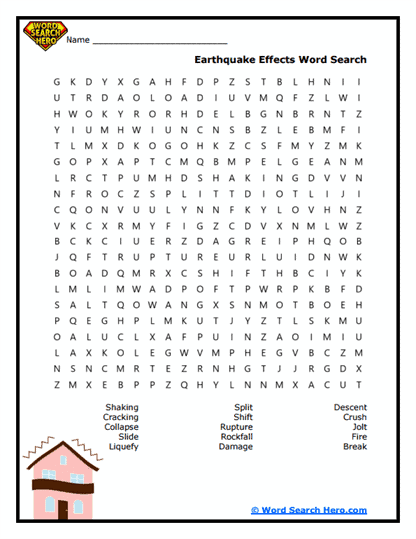
From seismic wave types that sound like indie bands to warning systems that quietly keep entire coastlines alive, every puzzle demands more than a sharp eye-it asks for conceptual engagement.

Across puzzles packed with conceptual heavyweights like Dynamo, Incline, Magnetometer, and Churn, learners aren’t just circling terms-they’re tracing the logic of planetary mechanics, internal structure, solar disruption, and navigational precision, one meticulously placed syllable at a time.

It’s a crash course in scientific pattern recognition disguised as a letter grid. You’ll go from circling phosphorus to decoding bioavailability without even realizing your brain just mapped the periodic table onto tectonic systems and hydrological cycles. It’s educational subterfuge at its finest-one fractionation at a time.

You’ll trace seismic waves from trembling fault lines to distant sensors, calculate the gravitational wobbles of buried anomalies, follow the tortured paths of heat rising from the mantle, and detect magnetic murmurs frozen in ancient rocks.
Earth’s Processes word searches introduce students to the vocabulary used to describe the natural forces that shape and change our planet over time. These printable puzzles help learners become familiar with important earth science terms related to geological activity, surface changes, and environmental systems. Before students explore Earth’s dynamic systems in detail, it often helps to first recognize the language used to describe these powerful processes.
Students studying Earth’s processes may encounter words such as erosion, weathering, tectonics, volcano, earthquake, sediment, and landform. These terms frequently appear in earth science and geology lessons and help students understand how natural forces reshape the surface of the planet. A word search provides an engaging way to reinforce this vocabulary while strengthening reading, spelling, and observation skills.
Because the activity feels like a puzzle rather than a traditional worksheet, it can make scientific vocabulary easier and more enjoyable to learn. Teachers often use these printables during science centers, independent practice, review sessions, or early finisher activities. Parents and homeschool educators can also include them in lessons as a way to introduce earth science vocabulary in an interactive format.
As students search for the words in the puzzle grid, they strengthen concentration, visual scanning, and pattern recognition skills. At the same time, they build familiarity with the scientific language used to describe how Earth’s surface changes.
Earth’s processes are the natural activities that shape the planet’s surface and interior over time. These processes include movements within the Earth’s crust, interactions between land and water, and forces such as wind, ice, and gravity.
Some processes occur slowly over long periods of time. For example, erosion and weathering gradually break down rocks and reshape landscapes. Other processes can happen more quickly, such as earthquakes and volcanic eruptions that dramatically alter landforms.
Plate tectonics is another important Earth process that involves the movement of large sections of the Earth’s crust. These movements can create mountains, trigger earthquakes, and form volcanoes.
By studying Earth’s processes, scientists gain a better understanding of how landscapes develop and how natural events shape the environment.
Learning the vocabulary associated with Earth’s processes helps students understand the forces that continually reshape the planet.
Word searches reinforce this learning by giving students repeated exposure to the key terms used when studying geological change.

A powerful extension activity is a “process sorting challenge.” After students complete the word search, provide them with a list of Earth processes and ask them to group them into categories such as fast processes and slow processes.
Students might place earthquakes and volcanic eruptions in the fast category, while erosion and weathering belong in the slow category. Encourage them to explain their reasoning using vocabulary from the puzzle.
This activity adds strong instructional value because it helps students understand that Earth’s surface is shaped by both gradual and sudden changes. Teachers and homeschool educators can also quickly assess whether students recognize how different processes operate over different time scales.
Earth’s processes are responsible for the formation of mountains, valleys, coastlines, and many other landforms found across the planet. These processes also influence natural hazards, ecosystems, and environmental changes.
Understanding Earth process vocabulary helps students interpret maps, diagrams, and science lessons about geology and environmental change. These ideas connect to broader topics such as plate tectonics, erosion, climate systems, and natural disasters.
A word search can serve as an introduction to a lesson about how Earth changes or as a review after students have studied geological processes in class. After completing the puzzle, educators can encourage students to connect the vocabulary with real-world examples of landscapes and natural events.
When students become familiar with Earth’s processes vocabulary, they gain the language and understanding needed to explore how natural forces continuously reshape our dynamic planet.
Earth’s processes are the natural forces and activities that shape and change the planet’s surface and interior.
Examples include erosion, weathering, plate tectonics, volcanic activity, and earthquakes.
Scientists study these processes to understand how landscapes form and how natural events affect the environment.
No, some processes happen gradually over long periods of time, while others occur suddenly, such as earthquakes or volcanic eruptions.
Students can sort different Earth processes into categories based on whether they happen quickly or slowly and discuss how each process shapes the planet.