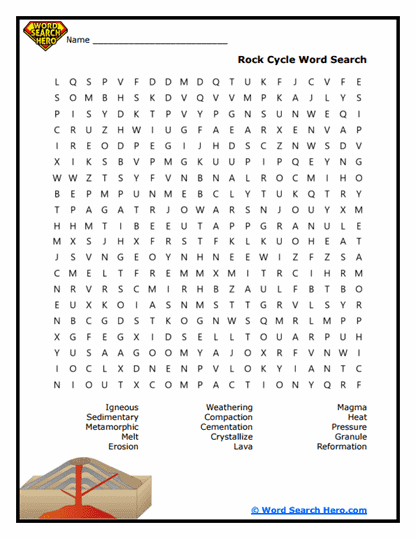
About Our Earth Word Searches
Earth word searches introduce students to the vocabulary used to study our home planet and the systems that make life possible. These printable puzzles help learners become familiar with scientific terms related to land, water, atmosphere, and the natural processes that shape Earth over time. Before students explore Earth science topics in depth, it often helps to first recognize the language scientists use to describe the planet’s structure and environments.
Students studying Earth may encounter words such as planet, continent, ocean, atmosphere, crust, climate, and ecosystem. These terms frequently appear in earth science lessons and help students understand how different parts of the planet interact. A word search provides an engaging way to reinforce this vocabulary while strengthening reading, spelling, and observation skills.
Because the activity feels like a puzzle rather than a traditional worksheet, it can make science vocabulary easier and more engaging to learn. Teachers often use these printables during science centers, independent practice, review sessions, or early finisher activities. Parents and homeschool educators can also include them in lessons as a way to introduce Earth science vocabulary in an interactive format.
As students search for the words in the puzzle grid, they strengthen concentration, visual scanning, and pattern recognition skills. At the same time, they build familiarity with the scientific language used to describe the planet we live on.
Understanding Earth
Earth is the third planet from the Sun and the only known planet that supports life. It contains a wide variety of environments including oceans, forests, deserts, mountains, and polar regions. These environments are shaped by natural processes such as weather, erosion, volcanic activity, and the movement of tectonic plates.
Scientists often study Earth as a system made up of several interacting parts. The geosphere includes rocks, soil, and landforms. The hydrosphere includes all of Earth’s water, such as oceans, lakes, and rivers. The atmosphere is the layer of gases surrounding the planet, and the biosphere includes all living organisms.
These systems interact constantly. For example, water from the oceans evaporates into the atmosphere, forms clouds, and later falls as precipitation that shapes landscapes and supports life.
Learning the vocabulary associated with Earth helps students understand how these systems work together to create the environments we experience every day.
Word searches reinforce this learning by giving students repeated exposure to the key terms used when studying Earth and its natural processes.
Paul’s Pro-Tip
A powerful extension activity is a “local Earth systems observation.” After students complete the word search, ask them to observe the environment around their school or home.
Students can identify examples of Earth’s systems such as soil or rocks (geosphere), bodies of water or rain (hydrosphere), clouds or wind (atmosphere), and plants or animals (biosphere). Encourage them to record what they see and discuss how these systems interact.
This activity helps students realize that Earth science concepts are not just abstract ideas in textbooks-they are visible in the world around them every day.
Helping Students Understand Our Planet
Earth science helps scientists understand how the planet formed, how natural systems operate, and how environments change over time. These studies allow researchers to better understand natural hazards, climate patterns, and the resources humans rely on.
Understanding Earth vocabulary helps students interpret maps, weather reports, satellite images, and scientific diagrams about our planet. These concepts also connect to broader topics such as geology, meteorology, ecology, and environmental science.
A word search can serve as an introduction to a lesson about Earth systems or as a review after students have studied the planet’s environments in class. After completing the puzzle, educators can encourage students to connect the vocabulary with real-world examples such as landforms, weather patterns, or ecosystems they observe.
When students become familiar with Earth science vocabulary, they gain the language and understanding needed to explore how our planet works and how its systems support life.
Frequently Asked Questions
What is Earth?
Earth is the third planet from the Sun and the only known planet that supports life.
What are the main systems of Earth?
The major Earth systems include the geosphere, hydrosphere, atmosphere, and biosphere.
Why is Earth unique among planets?
Earth has liquid water, a protective atmosphere, and environmental conditions that support a wide variety of life.
What do Earth scientists study?
Earth scientists study rocks, oceans, weather, ecosystems, and the natural processes that shape the planet.
What classroom activity pairs well with this puzzle?
Students can observe their surroundings and identify examples of Earth’s major systems such as soil, water, air, and living organisms.