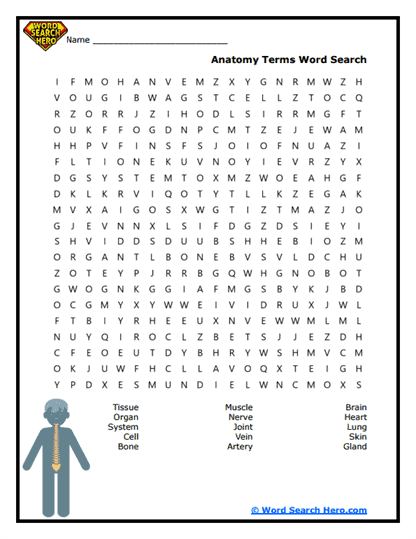
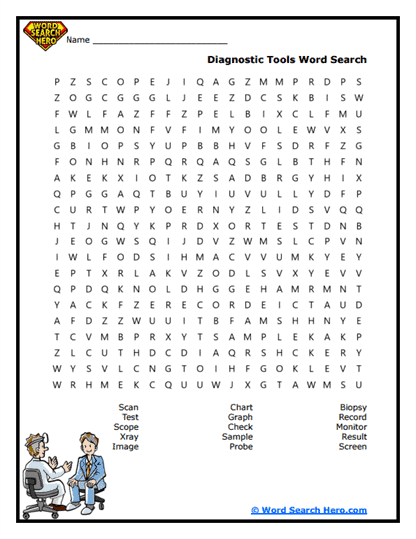
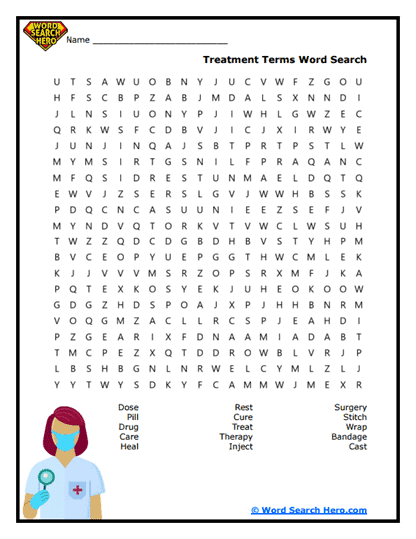
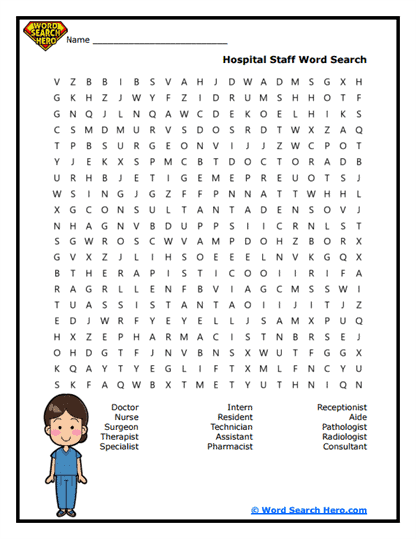
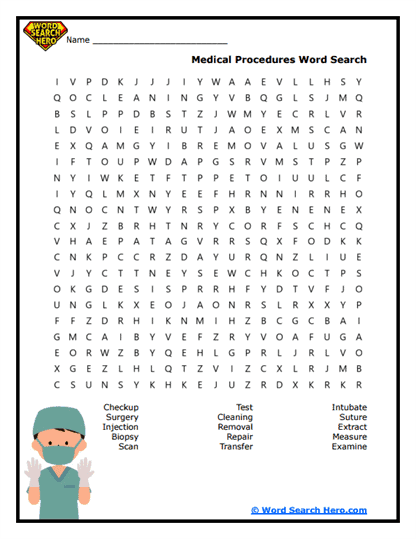
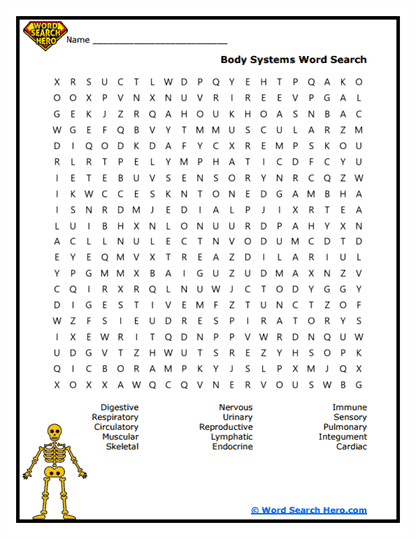
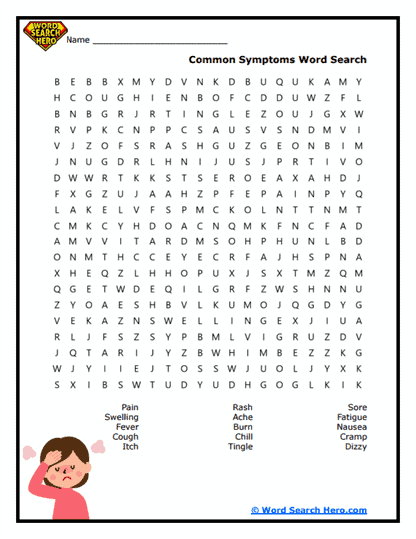
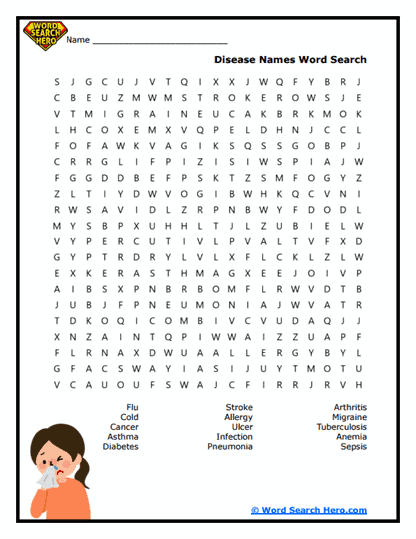
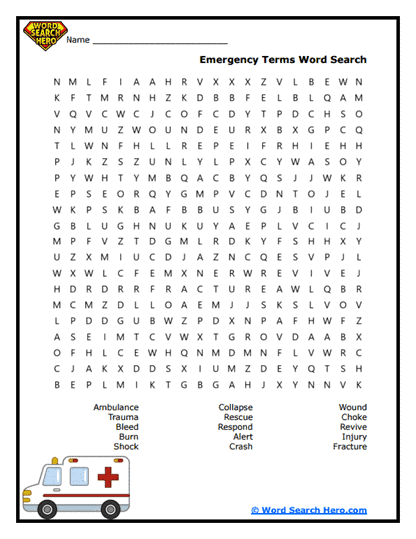
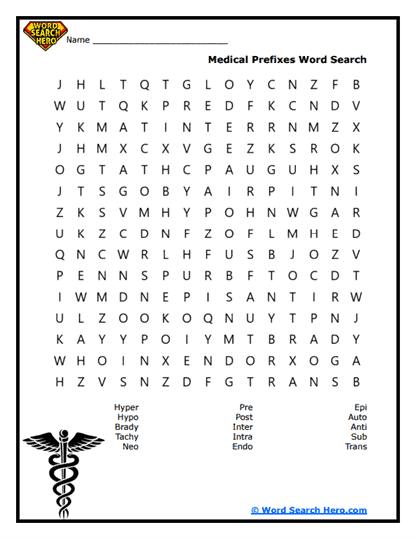
About Our Medical Terminology Word Searches
Medical Terminology word searches introduce students to the vocabulary used in healthcare, biology, and medical science. These printable puzzles help learners become familiar with the words doctors, nurses, and researchers use to describe the body, diseases, treatments, and medical procedures. Before students explore advanced topics in health science or medicine, it often helps to first recognize the language used in the field.
Medical terminology includes words such as diagnosis, symptom, treatment, infection, anatomy, and therapy. Many of these terms appear in health classes, biology lessons, and discussions about medicine. Understanding these words helps students follow explanations about how the body works and how healthcare professionals diagnose and treat illnesses. A word search provides a fun and engaging way to reinforce this vocabulary while strengthening spelling and observation skills.
Because the activity feels like a puzzle rather than a traditional worksheet, it can make complex vocabulary more approachable. Teachers often use these printables during science centers, health units, independent practice, or early finisher activities. Parents and homeschool educators can also include them in lessons to introduce health science vocabulary in an interactive way.
As students search for the words in the puzzle grid, they strengthen concentration, visual scanning, and pattern recognition skills. At the same time, they are building familiarity with the language commonly used in medicine and healthcare.
Understanding the Language of Medicine
Medical terminology is the specialized language used to describe the human body, its conditions, and the treatments used to maintain health. Many medical terms are built from Greek and Latin roots, prefixes, and suffixes that combine to create specific meanings.
For example, parts of words may refer to body structures, conditions, or procedures. Learning these patterns helps students understand how complex medical terms are constructed and how they relate to the body.
Recognizing medical vocabulary also helps students understand health information they may encounter in everyday life. Terms used in doctor visits, health articles, and science lessons become easier to understand when students are familiar with the underlying language.
Word searches reinforce this learning by giving students repeated exposure to the terminology used in medical science.
Paul’s Pro-Tip
A powerful way to extend this puzzle is to introduce a “word parts explorer” activity. After students complete the word search, choose a few medical terms and break them into smaller parts such as prefixes, roots, or suffixes.
Students can discuss what each part means and how those pieces combine to form the overall meaning of the word. For example, a root word may refer to a body part, while a suffix may describe a condition or procedure.
This activity adds strong instructional value because it helps students see patterns in medical language rather than memorizing individual terms. Teachers and homeschool educators can also use this approach to introduce how many scientific terms are formed.
Helping Students Understand Health and Science Vocabulary
Medical terminology helps students interpret the language used in health and science discussions. Understanding these terms allows learners to better follow explanations about the body, illnesses, and medical treatments.
This knowledge also supports learning in fields such as biology, nursing, medicine, and public health. Students who become comfortable with medical vocabulary often find it easier to understand advanced science topics later in their education.
A word search can serve as an introduction to a health science unit or as a review activity after students have studied body systems or medical topics. After completing the puzzle, educators can encourage students to connect the vocabulary with real-world examples related to health and healthcare.
When students build confidence with medical terminology, they gain the language and understanding needed to explore the science of medicine and the study of human health.
Frequently Asked Questions
What is medical terminology?
Medical terminology is the specialized vocabulary used to describe the human body, diseases, treatments, and healthcare procedures.
Why do many medical terms sound complex?
Many medical terms are built from Greek and Latin word parts that combine to describe specific conditions or structures.
How does learning medical vocabulary help students?
It helps students understand health information, biology lessons, and scientific discussions about the body and medicine.
Are medical terminology puzzles useful for career exploration?
Yes. They can introduce students to the vocabulary used in healthcare fields such as nursing, medicine, and medical research.
What activity works well with a medical terminology word search?
Students can choose a medical word from the puzzle and research what it means, then explain how it relates to the human body or healthcare.