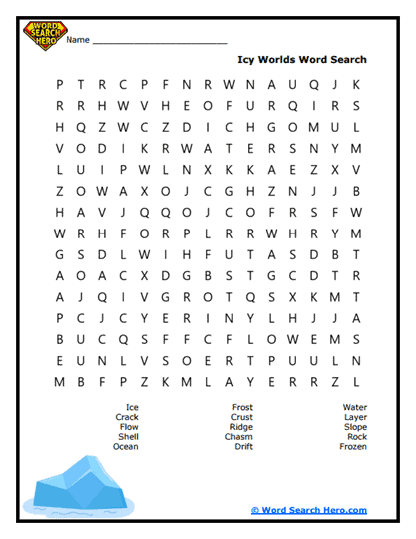
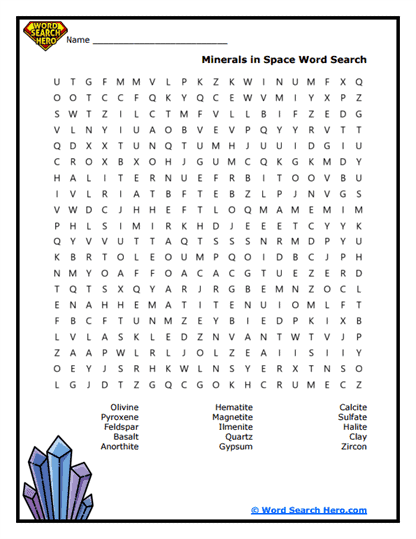
About Our Planetary Geology Word Searches
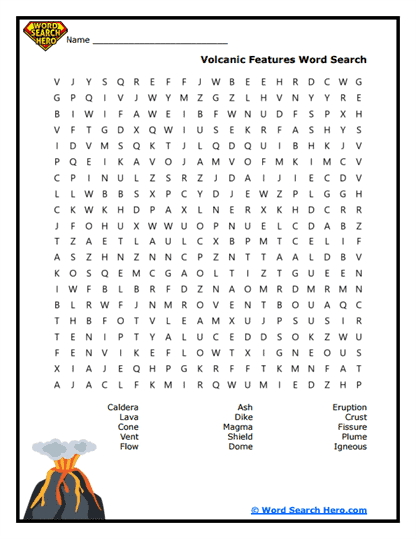
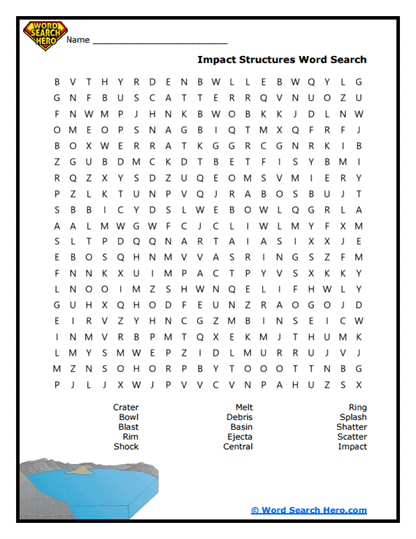
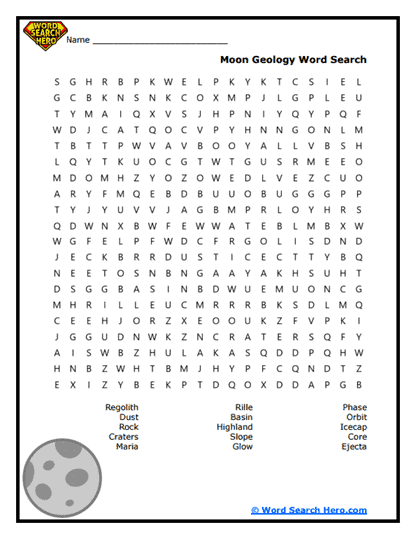
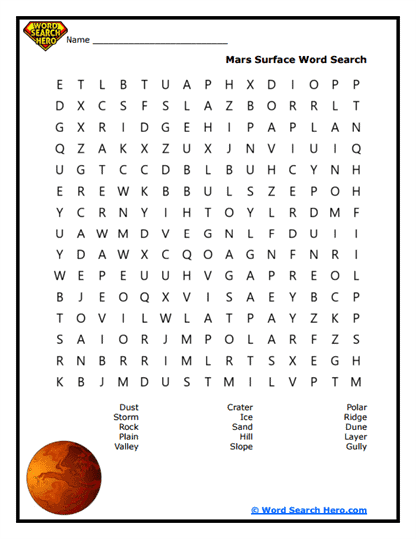
Planetary Geology word searches introduce students to the vocabulary used to study the surfaces, structures, and geological features of planets and other bodies in our solar system. These printable puzzles help learners become familiar with scientific terms related to craters, volcanoes, mountains, valleys, and other features found on planets and moons. Before students explore planetary surfaces and space exploration in depth, it often helps to first recognize the language scientists use to describe the geology of worlds beyond Earth.
Students studying planetary geology may encounter words such as crater, surface, planet, moon, volcano, lava, impact, and terrain. These terms frequently appear in earth science, astronomy, and planetary science lessons and help students understand how scientists study the landscapes of planets and moons using spacecraft and telescopes. A word search provides an engaging way to reinforce this vocabulary while strengthening reading, spelling, and observation skills.
Because the activity feels like a puzzle rather than a traditional worksheet, it can make scientific vocabulary easier and more engaging to learn. Teachers often use these printables during science centers, independent practice, review sessions, or early finisher activities. Parents and homeschool educators can also include them in lessons as a way to introduce planetary geology vocabulary in an interactive format.
As students search for the words in the puzzle grid, they strengthen concentration, visual scanning, and pattern recognition skills. At the same time, they build familiarity with the scientific language used to describe the geological features of other worlds.
Understanding Planetary Geology
Planetary geology is the study of the surface features, materials, and geological processes of planets, moons, asteroids, and other bodies in space. Scientists in this field examine landscapes beyond Earth to learn how different worlds formed and how they have changed over time.
Many geological processes found on Earth also occur on other planetary bodies. For example, volcanoes, mountains, and valleys can form through internal forces, while impacts from space objects can create large craters on planetary surfaces.
Scientists study images and data collected by spacecraft, satellites, and rovers to analyze the terrain of distant worlds. These observations help researchers understand how planets developed and why their landscapes look different from Earth’s.
Planetary geology also helps scientists compare geological processes across the solar system and learn more about the formation of planets and moons.
Learning the vocabulary associated with planetary geology helps students understand how scientists study the landscapes of distant worlds.
Word searches reinforce this learning by giving students repeated exposure to the key terms used when studying planetary surfaces and space exploration.
Paul’s Pro-Tip
A powerful extension activity is a “planet surface comparison.” After students complete the word search, show them images of different planetary surfaces such as the Moon, Mars, and Earth.
Ask students to identify visible features like craters, mountains, valleys, and plains. Encourage them to compare how these features differ from one world to another and describe what might have caused those differences.
This activity adds strong instructional value because it helps students understand that geological processes can vary across planets. Teachers and homeschool educators can guide students in connecting vocabulary from the puzzle with real images captured by space missions.
Helping Students Explore the Geology of Other Worlds
Planetary geology helps scientists understand how planets and moons formed and how their surfaces have changed over time. By studying landscapes beyond Earth, researchers can learn more about the history of our solar system.
Understanding planetary geology vocabulary helps students interpret spacecraft images, planetary maps, and science lessons about space exploration. These ideas also connect to broader topics such as astronomy, impact craters, volcanic activity, and planetary formation.
A word search can serve as an introduction to a lesson about planetary exploration or as a review after students have studied the surfaces of planets and moons. After completing the puzzle, educators can encourage students to connect the vocabulary with real images from space missions.
When students become familiar with planetary geology vocabulary, they gain the language and understanding needed to explore how scientists study the landscapes and geological processes of worlds across the solar system.
Frequently Asked Questions
What is planetary geology?
Planetary geology is the study of the surface features and geological processes of planets, moons, and other bodies in space.
What kinds of features do planetary geologists study?
Scientists study craters, volcanoes, mountains, valleys, and other surface features on planets and moons.
How do scientists study the geology of other planets?
Scientists analyze images and data collected by spacecraft, satellites, telescopes, and robotic rovers.
Why is planetary geology important?
Planetary geology helps scientists understand how planets formed and how their surfaces have changed over time.
What classroom activity pairs well with this puzzle?
Students can compare images of planetary surfaces such as the Moon and Mars to identify geological features like craters and volcanic regions.