


The Albigensian Crusade
We’ve packed this set tighter than a catapult basket with everything from Cathar theology and papal decrees to trench warfare, regional rebellions, and awkward peace treaties no one really honored.

We’ve packed this set tighter than a catapult basket with everything from Cathar theology and papal decrees to trench warfare, regional rebellions, and awkward peace treaties no one really honored.

Imagine a world where popes pack their bags like moody rockstars, French kings moonlight as church managers, mystics send flaming holy fan mail, and bureaucrats debate over parchments with more drama than a season of “The Real Curia of Avignon”-that’s the delightful chaos hidden in every word of this epic Avignon Papacy word search collection.

Prepare to embark on the holiest homework ever conceived, where “Indulgence” isn’t a snack, “Catapult” isn’t a typo for “cat nap,” and “Saladin” isn’t a trendy new salad dressing.

If you’ve ever wished church history came with less incense and more intense word hunting, this is your moment: our Great Schism word search collection is the divine comedy you didn’t know your vocabulary needed. From tracing “Caesaropapism” like it’s hiding from you in the catacombs, to locating “Filioque” while questioning all your theological assumptions, this set is where liturgical terms and ecclesiastical drama collide in a glorious grid of crossword-worthy chaos.

Dive into this delightfully disturbing word search collection where heresy meets literacy and torture devices double as vocabulary tools! From decoding the papal paperwork in Papal Authorization to wincing your way through Methods of Torture, these puzzles are like medieval flashcards with a flair for the dramatic.

From Luther throwing shade at indulgences in “Luther Leap,” to Calvin meticulously organizing God’s seating chart in “Calvin Code,” to Henry VIII saying, “It’s not you, it’s Rome” in “Anglican Roots,” every puzzle is packed tighter than a monk’s schedule with theological mayhem, holy pamphlet warfare, and just enough censorship to make Gutenberg sweat ink.
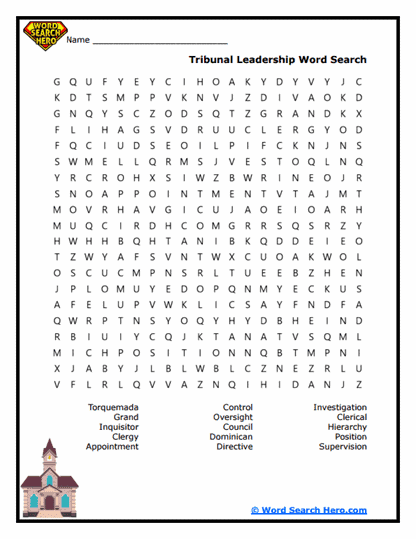
You’ll hunt down monarchs with control issues, inquisitors with job titles that scream “not a people person,” and torture devices that double as medieval gym equipment. Whether you’re tracing your way through Crypto Jews and Torquemada, or circling Thumbscrew like it’s the medieval version of “spa day,” every grid is a deliciously disturbing blend of vocabulary and villainy.
Our Religious Movements Word Searches help students explore important faith-based movements that have shaped cultures and societies throughout history while strengthening vocabulary, spelling, and concentration skills. These printable puzzles introduce learners to key terms, ideas, and groups connected to religious change, reform, and spiritual traditions across different time periods.
Teachers often look for activities that reinforce historical vocabulary while keeping students engaged. Word searches provide a simple and effective way to help learners become familiar with the language associated with major religious developments. As students search for words related to beliefs, communities, leaders, and reform movements, they gain a better understanding of how religion has influenced history.
Parents and homeschool educators also appreciate learning activities that combine education with entertainment. Word searches encourage attention to detail, visual scanning, and persistence while quietly reinforcing important historical concepts. Students may encounter vocabulary connected to spiritual traditions, religious leadership, reform movements, and cultural practices.
Religious movements have played a major role in shaping societies around the world. These movements have influenced education, art, government, social structures, and daily life in many cultures.
By interacting with these terms through puzzles, students gain an engaging introduction to the vocabulary associated with religious developments and how these movements have influenced human history.
Throughout history, religious movements have emerged when groups of people sought to strengthen, reform, or reinterpret spiritual beliefs and traditions. Some movements focused on renewing existing practices, while others introduced new interpretations or communities centered around shared faith.
Religious movements often spread through teaching, travel, and communication between communities. Leaders, scholars, and missionaries sometimes played important roles in sharing ideas and encouraging others to adopt new beliefs or practices.
In many cases, these movements influenced more than just religious life. They could shape education, inspire artistic traditions, affect laws and governance, and influence cultural values. Communities sometimes organized around religious institutions such as temples, churches, mosques, or monasteries.
Some religious movements also sparked debates or reforms within existing traditions. These discussions sometimes led to new denominations, changes in religious practices, or the formation of new spiritual communities.
Students studying world history often discover that religion has been a powerful force shaping societies across centuries. Learning the vocabulary connected to religious movements helps students better understand how beliefs and traditions influence cultural development.

When teaching about religious movements, I like to turn the puzzle into a quick “ideas that spread” activity.
After students finish the word search, ask them to circle three words connected to beliefs or teachings.
Then ask: How do ideas spread from one community to another?
Students usually suggest travel, storytelling, books, and teaching. It helps them realize that religious movements often grow because people share ideas across regions and generations.
A simple puzzle can quickly lead to a conversation about how powerful ideas travel through history.
Religious movements have influenced many aspects of human civilization. They have shaped moral traditions, inspired cultural achievements, and guided communities through times of change and uncertainty.
In some periods, religious movements encouraged social reforms or promoted new interpretations of long-standing traditions. In other cases, they helped preserve cultural practices and community identity during times of political or economic change.
These movements often brought people together through shared beliefs and practices. Religious institutions frequently served as centers of education, charity, and community support.
Historians study religious movements because they reveal how societies respond to spiritual questions, ethical concerns, and cultural shifts. By examining how these movements developed and spread, students gain insight into the forces that influence historical change.
Word searches featuring vocabulary connected to religious movements help reinforce the language students encounter when studying global history, cultural traditions, and spiritual developments.
By recognizing these terms repeatedly, learners gain a clearer understanding of how religious ideas and communities have shaped societies throughout history.
Religious movements are organized efforts by individuals or groups to promote, reform, or spread particular spiritual beliefs, traditions, or practices.
Teachers often use them as warm-up activities, vocabulary reinforcement exercises, or review tools during lessons about world religions and cultural history.
They work well for upper elementary and middle school students studying world history or religious traditions, though older learners may also use them as review activities.
Yes. Homeschool educators often use printable word searches as independent learning activities that reinforce vocabulary while keeping students engaged.
Students can select several words from the puzzle and explain how those ideas connect to a specific religious movement or historical development they are studying.