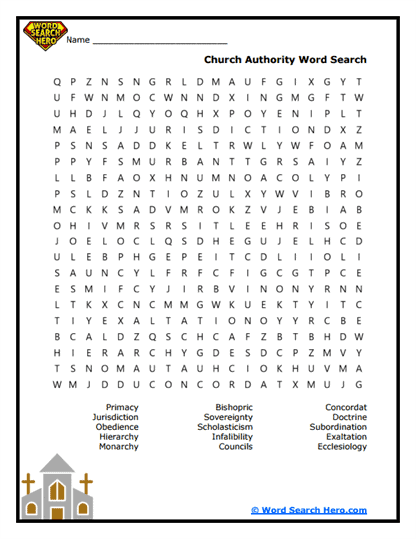
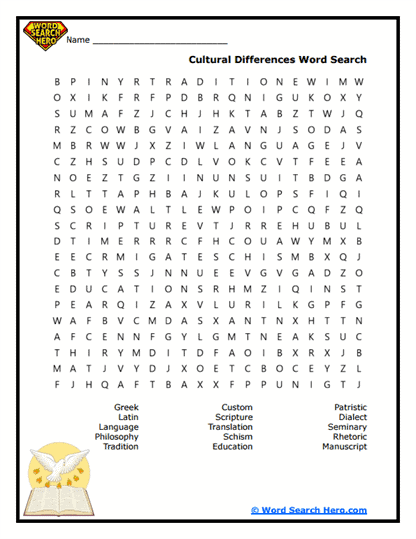
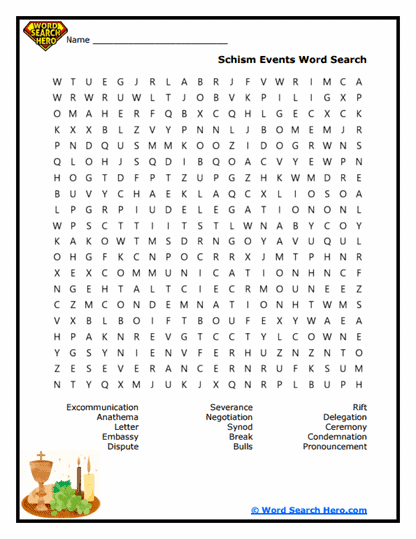
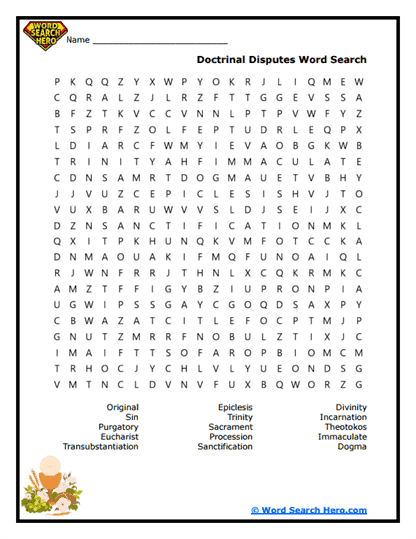
About Our The Great Schism Word Searches
Our The Great Schism Word Searches help students explore a major turning point in religious history while strengthening vocabulary, spelling, and concentration skills. These printable puzzles introduce learners to the people, places, and ideas connected to the division within the Christian church that occurred during the Middle Ages.
Teachers often look for activities that reinforce historical vocabulary in an engaging and accessible way. Word searches provide a helpful option because students can interact with important terms while developing familiarity with the language used when studying medieval religion and European history. As learners search for words related to church leaders, cities, and religious traditions, they gain greater confidence recognizing these terms in readings and classroom discussions.
Parents and homeschool educators also appreciate activities that combine learning with fun. Word searches encourage visual scanning, persistence, and attention to detail while quietly reinforcing historical knowledge. Students encounter meaningful vocabulary connected to religious authority, cultural differences, and the development of Christian traditions.
The Great Schism is a particularly interesting topic because it highlights how disagreements about leadership, authority, and traditions can shape the history of religious institutions. Through these puzzles, students gain an engaging introduction to one of the most significant divisions in Christian history.
The Division Between Eastern and Western Christianity
The Great Schism refers to the formal split between the Eastern Orthodox Church and the Roman Catholic Church, which occurred in 1054. For centuries before this event, tensions had been growing between church leaders in the eastern and western parts of the Christian world.
One of the main centers of the Western Church was Rome, where the pope served as the highest religious authority. In the eastern regions, particularly in the city of Constantinople, church leaders known as patriarchs held significant influence.
Differences between the two sides included language, culture, and certain religious practices. The Western Church mainly used Latin, while the Eastern Church often used Greek in religious services and writings. These cultural differences gradually contributed to misunderstandings and disagreements.
Disputes about authority and theological interpretations eventually led to a major break between the two churches. In 1054, church leaders from Rome and Constantinople formally excommunicated one another, marking the official separation between the two branches of Christianity.
Students studying the Great Schism often discover how historical events can be influenced by a combination of religious beliefs, cultural traditions, and political tensions.
Paul’s Pro-Tip
Here’s a simple activity I liked using with this topic.
After students finish the word search, ask them to circle two words connected to the Western Church and two words connected to the Eastern Church.
Then ask: What differences might exist between communities that live far apart and speak different languages?
Students quickly realize that geography and culture can influence traditions and leadership structures. It helps them understand that historical divisions often grow gradually over time.
Sometimes a small difference-like language or leadership-can eventually lead to a major historical split.
Why the Great Schism Still Matters
The Great Schism had long-lasting consequences for Christianity and for the cultural history of Europe and the eastern Mediterranean. After the split, the Roman Catholic Church and the Eastern Orthodox Church developed as separate institutions with their own traditions, leadership structures, and regional influence.
The Western Church continued to be led by the pope in Rome, while the Eastern Orthodox Church was guided by a group of patriarchs representing different regions. Over time, both traditions developed unique forms of worship, art, architecture, and religious practices.
The division also reflected broader cultural differences between eastern and western parts of Europe. These differences included language, political systems, and historical experiences that shaped how each region approached religion and leadership.
Today, the Roman Catholic and Eastern Orthodox churches remain separate traditions within Christianity, each with millions of followers around the world.
Students studying the Great Schism gain insight into how religious institutions evolve and how historical disagreements can influence traditions for centuries. Word searches featuring vocabulary connected to this event help reinforce the key terms students encounter when learning about medieval religious history.
By recognizing these words repeatedly, learners gain a clearer understanding of how the Great Schism shaped the development of Christian traditions and the history of Europe.
Frequently Asked Questions
What was the Great Schism?
The Great Schism was the division in 1054 between the Roman Catholic Church in the West and the Eastern Orthodox Church in the East.
Why did the Great Schism happen?
The split developed over time due to differences in leadership authority, language, religious practices, and cultural traditions between eastern and western Christian communities.
How can teachers use Great Schism word searches in class?
Teachers often use them as warm-up activities, vocabulary reinforcement exercises, or review tools during lessons about medieval religion and European history.
What grade levels are these puzzles best suited for?
They work well for upper elementary and middle school students studying medieval history, though older learners may also use them as quick review activities.
What extension activity works well after completing the puzzle?
Students can locate important cities such as Rome and Constantinople on a map and discuss how geography and culture contributed to the historical division between the churches.