Choose a topic !

Self Care Word Searches

Daily Hygiene Word Search

Daily Hygiene

The “Daily Hygiene” focuses on important daily cleanliness habits. The words included in the puzzle relate to actions and tools we use to keep our bodies clean and healthy. From brushing and flossing to bathing and scrubbing, each word reinforces personal hygiene routines. Students should search horizontally, vertically, and diagonally to find all the listed […]

View More
Healthier Habits Word Search

Healthier Habits

The “Healthier Habits” includes vocabulary that encourages good daily practices for physical and mental well-being. These words are related to movement, nutrition, hydration, and mindfulness. Terms like “Eat”, “Sleep”, “Move”, and “Balance” remind students of the choices they can make each day to feel better and stay energized. The puzzle engages them in reviewing and […]

View More
Emotional Health Word Search

Emotional Health

The “Emotional Health” focuses on vocabulary related to feelings and emotional well-being. Words such as “Smile”, “Think”, “Hope”, and “Trust” are included to help students identify and understand a wide range of emotions and mental health practices. It also highlights important actions like “Listen”, “Grow”, and “Cope”, which encourage positive emotional management. This word search […]

View More
Mental Wellness Word Search

Mental Wellness

The “Mental Wellness” explores vocabulary tied to emotional resilience, mental clarity, and self-awareness. Words like “Stress”, “Anxiety”, “Peace”, and “Focus” help students identify emotions and strategies for handling them. The puzzle also includes uplifting words like “Joy” and “Support” to encourage positivity and coping. Students will search through the grid to discover terms that reflect […]

View More
Fitness Routine Word Search

Fitness Routine

The “Fitness Routine” focuses on physical activity and exercise-related vocabulary. Words like “Run”, “Jump”, “Squat”, and “Lunge” guide students through various fitness moves and routines. This puzzle is designed to familiarize learners with verbs and terms associated with staying active. It emphasizes movement and strength-building actions in a fun and educational way. By working on […]

View More
Nutrition Knowhow Word Search

Nutrition Knowhow

The “Nutrition Knowhow” introduces vocabulary centered around healthy eating habits and food groups. It includes words like “Fruit”, “Grain”, “Protein”, and “Snack” to promote knowledge of balanced meals. Students will also encounter terms such as “Limit”, “Cook”, and “Fresh” to learn how choices impact nutrition. The puzzle supports education about making informed food decisions. Students […]

View More
Sleep Hygiene Word Search

Sleep Hygiene

The “Sleep Hygiene” features vocabulary connected to getting good quality rest. It includes cozy and calming words like “Pillow”, “Blanket”, “Dream”, and “Nap” that are associated with bedtime routines. Students will explore terms that support winding down and building habits for better sleep. This puzzle is a gentle reminder of the importance of sleep and […]

View More
Skin Savvy Word Search

Skin Savvy

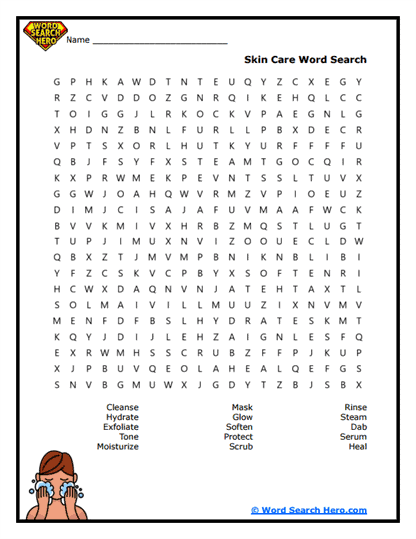
The “Skin Savvy” is all about healthy skin routines and self-care practices. It includes vocabulary such as “Cleanse”, “Exfoliate”, “Hydrate”, and “Moisturize”, which are key steps in personal grooming. The puzzle also features words like “Glow”, “Protect”, “Steam”, and “Serum”, connecting students to both science and wellness. It encourages students to become familiar with terms […]

View More
Mindfulness Practice Word Search

Mindfulness Practice

The “Mindfulness Practice” explores concepts related to staying present and emotionally grounded. Words such as “Breathe”, “Focus”, “Still”, and “Accept” help students reflect on calm and intentional behaviors. The puzzle incorporates actions and ideas that encourage peace of mind and self-awareness. It supports a meditative learning experience through vocabulary tied to mindfulness. Engaging with mindfulness […]

View More
Digital Balance Word Search

Digital Balance

The “Digital Balance” promotes vocabulary focused on managing screen time and maintaining a healthy tech-life balance. It includes terms like “Unplug”, “Scroll”, “Mute”, “Filter”, and “Refresh” to encourage responsible technology use. The word list also features emotional and cognitive actions such as “Read”, “Rest”, and “Balance”. This worksheet helps students become mindful of their digital […]

View More

About Our Self Care Word Searches

Word searches tend to live in the quieter corners of the classroom. They’re orderly, visual, and often underestimated. But these particular word searches are doing more than passing time-they’re structuring a scientifically grounded vocabulary around one of the most essential and often overlooked subjects in health education: Self Care. Each grid is a scaffold for learning how the body maintains homeostasis, how behavior shapes wellness, and how language can sharpen the way we understand both.

At the core of these puzzles is the principle of vocabulary acquisition as a neurological and cognitive enhancer. Scientific literacy is built word by word, and Self Care is a topic rich in terms with both clinical significance and everyday relevance. Emotional regulation, hygiene, nutrition, rest, stress response, and sensory processing are all tied to systems studied in biology, psychology, and public health. These word searches serve not only to strengthen pattern recognition and spelling, but also to reinforce the connection between language, behavior, and physiological systems.

This collection organizes vocabulary into domains that align with real-world processes. Each puzzle supports multiple types of encoding-visual, spatial, semantic-creating durable learning through search-and-recognition tasks. These aren’t idle games. They are vocabulary labs for exploring the science of how humans function.

Physical Maintenance and Bodily Routines

In Daily Hygiene, students encounter the lexicon of cleanliness. “Brush,” “Floss,” “Sanitize,” and “Trim” are more than chores-they are preventive health behaviors. Personal hygiene is directly tied to the immune system and disease transmission, and these terms provide access to the biological underpinnings of cleanliness. Scanning the puzzle for these words encourages attention to detail while reinforcing neural pathways related to procedural memory and habit formation.

Fitness Routine turns motion into literacy. The verbs-“Run,” “Squat,” “Plank,” “Lunge”-relate to biomechanics, muscular systems, and kinesthetic awareness. Muscle groups and cardiovascular function are at play here, and students engaging with this puzzle absorb more than fitness language. They’re subtly mapping the vocabulary of strength, coordination, and body awareness into long-term memory, using movement-oriented terms that correlate with motor neuron activity.

Skin Savvy focuses on the body’s largest organ. Words such as “Cleanse,” “Exfoliate,” “Hydrate,” and “Protect” point toward epidermal function, cellular turnover, barrier protection, and hydration regulation. The skin is a sensory interface, an immune defense system, and a chemical communication zone. This puzzle introduces terminology that supports the understanding of integumentary science, while simultaneously promoting hygienic literacy.

Health Behavior and Internal Regulation

Nutrition Knowhow delivers the foundational language of dietary science. “Protein,” “Fiber,” “Grain,” and “Fresh” align with macronutrient categorization, digestive function, and food processing. Learning these words in puzzle form encourages retention while engaging the parts of the brain involved in categorization and nutritional decision-making. This vocabulary helps translate the biochemical language of food into actionable knowledge.

In Healthier Habits, words like “Move,” “Eat,” “Sleep,” and “Focus” point toward behavioral patterns that influence long-term health outcomes. These are terms used across public health literature, cognitive development research, and physiology education. The language of behavioral regulation is a first step in teaching health literacy that goes beyond slogans and into decision-making frameworks. Each word in the grid becomes a cue for deeper conversation about physical energy, biological cycles, and environmental triggers.

Sleep Hygiene explores circadian rhythms through words like “Routine,” “Dark,” “Calm,” and “Nap.” These terms correspond with melatonin production, sleep architecture, and neurological recovery cycles. Sleep is not simply rest-it is a critical maintenance period for the brain, immune system, and endocrine system. Developing a vocabulary around it gives learners the tools to recognize, describe, and improve this essential biological process.

Mental Processing and Emotional Fluency

In Emotional Health, terms like “Trust,” “Grow,” “Cope,” and “Listen” highlight psychosocial mechanisms involved in emotional processing. These are not abstract ideas; they are tied to hormone regulation (e.g., cortisol, oxytocin), neural circuitry, and social learning theory. A word like “Feel” or “Hope” may seem simple, but recognizing it in a puzzle requires internal categorization of affective states-an exercise in both metacognition and emotional labeling.

Mental Wellness extends this vocabulary with clinical and neurobiological relevance. “Anxiety,” “Focus,” “Stress,” “Relief”-each one relates to brain regions such as the amygdala, prefrontal cortex, and hippocampus. This puzzle supports vocabulary that allows learners to express internal states with accuracy, an ability associated with emotional intelligence, social resilience, and improved communication across developmental stages.

Mindfulness Practice narrows attention to the language of self-regulation and cognitive slowing. Words like “Pause,” “Center,” “Present,” and “Repeat” correspond with techniques shown to reduce amygdala activity, improve attention span, and increase activation in the anterior cingulate cortex. The act of searching for these calming words becomes a low-stakes entry into understanding the neuroscience of mindfulness-based stress reduction.

Cognitive Boundaries and Digital Discipline

In Digital Balance, vocabulary such as “Unplug,” “Scroll,” “Filter,” and “Mute” addresses digital hygiene-the behavioral counterpart to immune system protection. Studies in screen time and neuroplasticity show that overexposure to fast-switching stimuli impacts attention regulation and working memory. Introducing this terminology encourages students to conceptualize digital behavior as something observable, describable, and therefore manageable. The puzzle becomes a prompt for identifying patterns in tech use and establishing boundaries grounded in cognitive science.