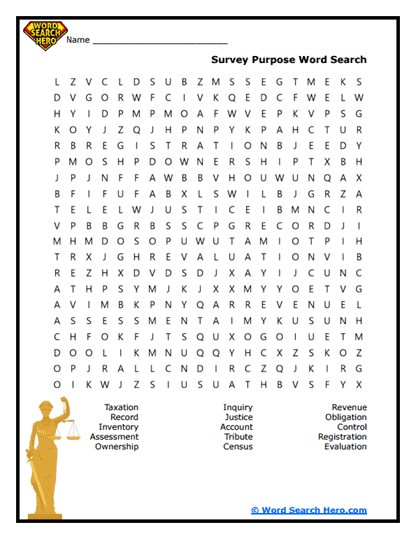
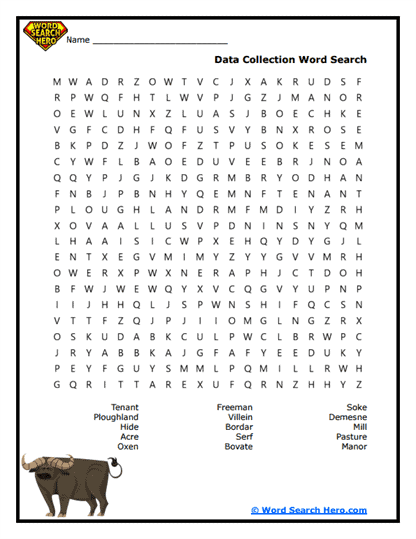
About Our The Domesday Book Word Searches
Our The Domesday Book Word Searches introduce students to one of the most important historical records from medieval England while strengthening vocabulary, spelling, and concentration skills. These printable puzzles help learners explore the people, places, and ideas connected to the famous survey ordered by William the Conqueror in the 11th century.
Teachers often look for engaging ways to reinforce historical vocabulary, and word searches provide a simple and effective option. As students search for terms related to land, villages, taxes, and medieval government, they become more familiar with the language used when studying early English history. Seeing these words repeatedly helps learners recognize them more easily in classroom readings and discussions.
Parents and homeschool educators also appreciate activities that combine learning with entertainment. Word searches encourage attention to detail, visual scanning, and patience while quietly reinforcing important historical concepts. Students interact with vocabulary connected to how medieval rulers managed land, recorded resources, and organized their kingdoms.
The Domesday Book is a particularly interesting topic because it shows how rulers gathered detailed information about land and property in order to govern effectively. Students may encounter words related to villages, landowners, resources, and officials who helped collect information across the kingdom.
These puzzles provide an engaging introduction to a historical record that still helps historians understand life in medieval England today.
A Survey of an Entire Kingdom
The Domesday Book was created in 1086 during the reign of William the Conqueror, the Norman ruler who became king of England after the Battle of Hastings in 1066. William ordered a massive survey of his kingdom to learn exactly who owned land and what resources were available throughout England.
Royal officials traveled across towns and villages gathering information about farmland, forests, animals, mills, and buildings. They also recorded who controlled the land and how much it was worth. This information helped the king understand the wealth and resources of his kingdom.
The survey was extremely detailed for its time. It documented thousands of settlements and included records of landowners, peasants, livestock, and agricultural production. The information was compiled into what later became known as the Domesday Book.
Historians believe the name came from the idea that the record was final and unquestionable, much like the concept of a final judgment. Once information was recorded, it became an official statement of land ownership and value.
Today, the Domesday Book remains one of the most valuable historical documents for understanding medieval England. It offers insight into how land was used, how communities were organized, and how rulers managed their territories during the Middle Ages.
Paul’s Pro-Tip
When students finish the puzzle, try turning it into a quick medieval survey challenge.
Ask them to imagine they are royal officials sent by William the Conqueror to record information about a village. What would they need to count? Land? Animals? Houses?
Then have them look back at the puzzle and circle words that might appear in such a survey.
Students suddenly realize the Domesday Book wasn’t just a book-it was a huge information-gathering project. And they usually start wondering how anyone managed to collect all that data without computers!
Why the Domesday Book Still Matters Today
The Domesday Book remains one of the most important historical sources for understanding medieval England. Because it recorded detailed information about land ownership and resources, historians can use it to learn how communities were organized nearly a thousand years ago.
One of the most valuable aspects of the record is how it shows the structure of medieval society. It lists powerful landowners, local officials, and the peasants who worked the land. These details help historians understand how feudal relationships functioned during the Norman period.
The document also provides insight into the economy of the time. By recording farmland, livestock, mills, and other resources, the survey reveals what communities produced and how wealth was distributed.
In many cases, the Domesday Book provides the earliest written record of specific towns and villages. This information allows historians to trace how communities developed over centuries.
For students, learning about the Domesday Book shows how historical records can help us understand the past. Word searches featuring vocabulary related to this famous survey help reinforce the language connected to medieval government, land ownership, and record keeping.
By recognizing these terms repeatedly, learners gain a clearer picture of how rulers gathered information and organized their kingdoms during the Middle Ages.
Frequently Asked Questions
What was the Domesday Book?
The Domesday Book was a detailed survey of land and resources in England ordered by William the Conqueror in 1086 to help him understand and manage his kingdom.
How can teachers use Domesday Book word searches in class?
Teachers often use them as bell ringers, vocabulary reinforcement activities, or review tools during lessons about medieval England and the Norman period.
What grade levels are these puzzles best suited for?
They work well for upper elementary and middle school students studying medieval history, though older students may also use them as quick review activities.
Are these puzzles helpful for homeschool history lessons?
Yes. Homeschool educators frequently use printable word searches as independent learning activities that reinforce vocabulary and historical understanding.
What extension activity works well after completing the puzzle?
Students can choose several words from the puzzle and explain how those people, places, or resources might have been recorded in the Domesday survey of medieval England.