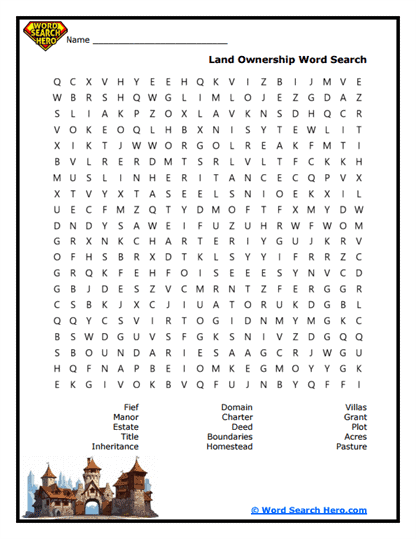
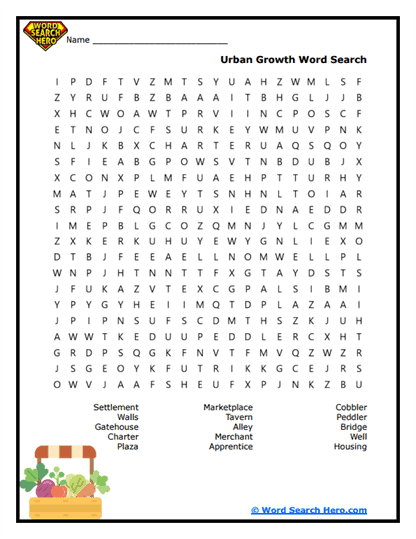
About Our Medieval Europe Word Searches
Our Medieval Europe Word Searches help students explore one of the most fascinating periods in world history while building vocabulary, focus, and reading skills. These printable puzzles introduce learners to important people, places, and ideas connected to life in Europe during the Middle Ages.
Teachers often look for ways to reinforce historical vocabulary without adding extra pressure to lessons. Word searches provide a simple and engaging option. As students search for hidden words related to kings, knights, castles, trade, and everyday life, they become more familiar with the terms commonly used in medieval history units. Seeing these words repeatedly helps students recognize them more easily in readings and classroom discussions.
Parents and homeschool educators also appreciate activities that combine learning with entertainment. Word searches encourage patience, visual scanning, and attention to detail. While students search through the puzzle grid, they are quietly reinforcing their understanding of the vocabulary associated with medieval society.
Medieval Europe includes many interesting themes that capture student curiosity. Learners may encounter words related to feudalism, castles, knights, villages, monarchies, and important cultural developments of the time. These terms help paint a picture of how people lived, governed, traded, and defended their lands during the Middle Ages.
Whether used as classroom warm-ups, review activities, or independent learning tools, these puzzles provide an enjoyable way for students to strengthen their vocabulary while discovering the people and institutions that shaped medieval Europe.
Daily Life in the Medieval World
Life in medieval Europe was very different from life today. Most people lived in small villages and worked as farmers, producing food for their families and for the local lord who controlled the land. This system was part of a larger social structure known as feudalism, where land ownership and loyalty helped organize society.
At the top of this structure were kings and powerful nobles who controlled large territories. Beneath them were knights and vassals who pledged loyalty in exchange for land or protection. At the base of the system were peasants and farmers who worked the fields and supported the local economy.
Castles played an important role in medieval life. These fortified structures served as homes for nobles and as defensive strongholds during times of conflict. Castles often became the center of local communities, providing protection and a place where people could gather during emergencies.
Religion also influenced nearly every aspect of daily life. Churches and monasteries served as centers of learning, culture, and spiritual guidance. Many medieval towns grew around important religious institutions.
Students often find it interesting that while life could be difficult for many people during the Middle Ages, the period also produced impressive architecture, literature, and cultural traditions. Learning vocabulary connected to these ideas helps students better understand how medieval society functioned.
Paul’s Pro-Tip
Whenever we studied the Middle Ages, I liked to turn the puzzle into a quick “build a medieval world” challenge.
After students finish the word search, ask them to find words that represent three different parts of medieval society-maybe a person, a place, and a job.
For example, they might find knight, castle, and farmer. Then ask them how those things might connect in daily life.
Students quickly start imagining what a medieval village looked like. Before long, they’re describing who lived there, who worked the land, and who protected the community.
It’s a fun way to turn a simple puzzle into a mini history scene.
Why the Middle Ages Still Capture Our Imagination
The Middle Ages continue to fascinate students and historians because the period combines dramatic events, powerful leaders, and memorable cultural traditions. From towering castles to traveling merchants and armored knights, medieval Europe provides vivid images that capture the imagination.
Part of the appeal comes from the contrast between medieval life and modern society. Without modern technology, transportation, or communication systems, people relied on local communities and strong social relationships. Villages, markets, and religious institutions formed the backbone of daily life.
The medieval period also saw the development of many traditions that influenced later European history. Systems of government evolved, trade networks expanded, and universities began to appear in major cities. Over time, these developments helped shape the transition into the Renaissance and the early modern world.
Students often connect strongly with this era because of its storytelling potential. Tales of knights, royal courts, epic battles, and growing cities create vivid historical narratives that make the past feel alive.
Word search puzzles that feature vocabulary connected to medieval Europe help students recognize these important themes. As learners repeatedly encounter these terms, they gain a clearer understanding of how the medieval world was organized and why it remains such an important period in history.
Frequently Asked Questions
How can teachers use Medieval Europe word searches in class?
Teachers often use them as bell ringers, vocabulary review activities, or early finisher assignments during units on medieval history.
What grade levels are these puzzles best suited for?
They work well for upper elementary and middle school students studying world history, though they can also be used as quick review activities for older learners.
Can word searches help students remember historical vocabulary?
Yes. Repeated exposure to important names and concepts helps students recognize and recall vocabulary during lessons and discussions.
Are these puzzles helpful for homeschool history lessons?
Absolutely. Homeschool families frequently include printable puzzles as independent activities that reinforce vocabulary and keep students engaged with historical topics.
What is a good extension activity after completing the puzzle?
Students can select several words from the puzzle and explain how those ideas connect to life in medieval Europe, such as social roles, government systems, or daily activities.