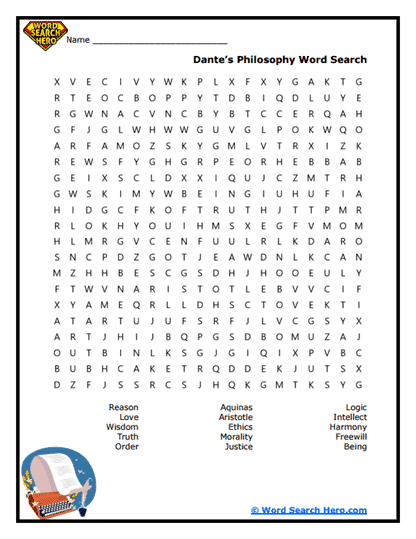
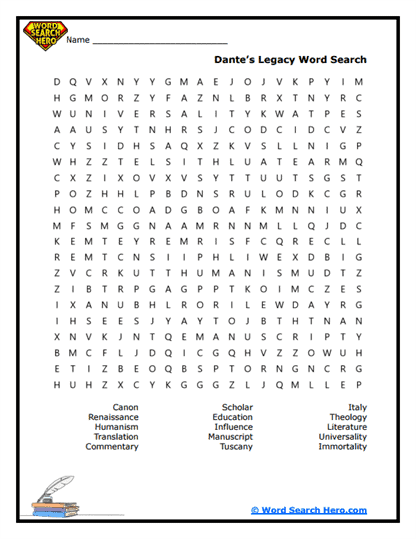
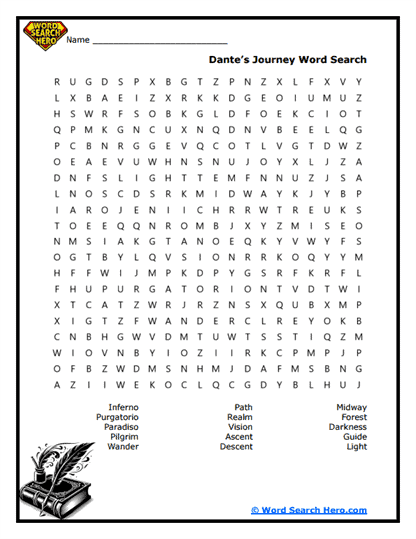
About Our Dante Alighieri Word Searches
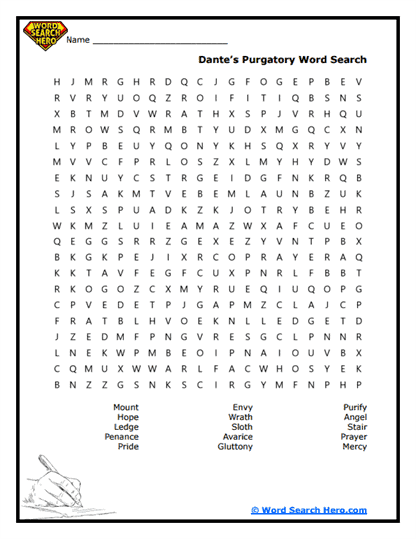
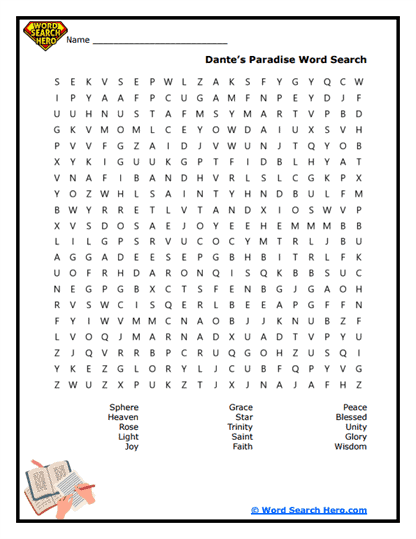
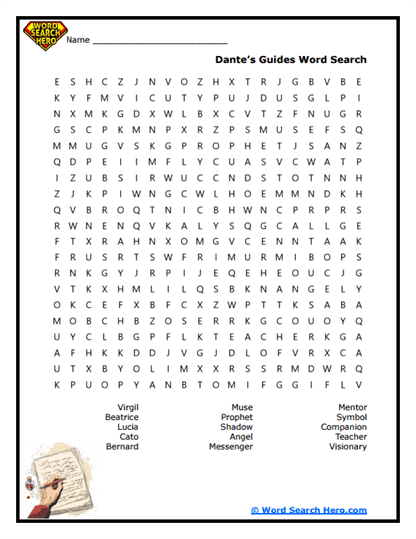
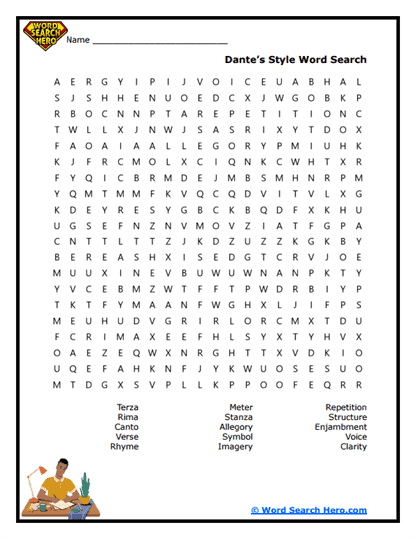
Our Dante Alighieri Word Searches help students explore the life and works of one of the most influential writers in world literature while strengthening vocabulary, spelling, and concentration skills. These printable puzzles introduce learners to important names, places, and concepts connected to Dante’s writing and the literary world of medieval Italy.
Teachers often look for engaging ways to reinforce literary knowledge, and word searches provide a simple and effective option. As students search for words related to Dante, his famous works, and the historical world in which he lived, they become more familiar with the vocabulary associated with classical and medieval literature. Repeated exposure to these terms helps learners recognize them more easily when reading or discussing Dante’s writing.
Parents and homeschool educators also appreciate activities that combine learning with entertainment. Word searches encourage visual scanning, patience, and attention to detail while quietly reinforcing important literary ideas. Students interact with vocabulary connected to epic poetry, symbolism, mythology, and medieval culture.
Dante Alighieri remains an important figure in literature because his writing influenced poetry, philosophy, and storytelling for centuries. Through these puzzles, students gain an engaging introduction to the vocabulary associated with one of the greatest authors of the medieval period.
The Author of The Divine Comedy
Dante Alighieri was an Italian poet born in Florence in 1265. He is best known for writing the epic poem The Divine Comedy, which is widely considered one of the greatest works of world literature.
The poem is divided into three major sections: Inferno, Purgatorio, and Paradiso. Together, they describe a symbolic journey through the afterlife. In the story, Dante travels through Hell, Purgatory, and Heaven while encountering historical figures, mythological characters, and religious symbols along the way.
One of the most famous parts of the poem is Inferno, which describes the structure of Hell and the punishments faced by different souls. Throughout the journey, Dante is guided by the ancient Roman poet Virgil, who represents reason and wisdom.
Dante wrote The Divine Comedy in the Italian language rather than Latin, which helped make literature more accessible to everyday readers. This choice also contributed to the development of the modern Italian language.
Students studying Dante often find it fascinating how poetry, religion, philosophy, and storytelling all come together in a single literary masterpiece.
Paul’s Pro-Tip
When students finish the word search, try a quick “journey through the afterlife” discussion.
Ask them to circle two locations and one character from the puzzle.
Then ask: Why do you think writers use journeys as a way to tell stories?
Students often realize that a journey allows characters to face challenges, meet different people, and learn important lessons along the way.
It helps them see that Dante’s poem is not just about places-it’s about personal growth and understanding.
Why Dante’s Writing Is So Influential
Dante’s work had a major impact on literature, language, and storytelling traditions. The Divine Comedy combined poetry, philosophy, religion, and political commentary in ways that influenced many later writers.
The poem also helped establish the importance of writing in everyday spoken languages rather than only in Latin. By writing in Italian, Dante helped shape the development of Italian literature and made his work accessible to a wider audience.
Dante’s vivid descriptions, symbolic characters, and structured storytelling inspired writers and artists across Europe. His work influenced authors, painters, musicians, and filmmakers for centuries.
The poem also introduced readers to a detailed and imaginative vision of the afterlife that continues to appear in literature and popular culture today.
Word searches featuring vocabulary related to Dante Alighieri help reinforce the names, characters, and themes students encounter when studying medieval literature. By recognizing these words repeatedly, learners gain a clearer understanding of why Dante’s writing remains one of the most celebrated achievements in literary history.
Frequently Asked Questions
Who was Dante Alighieri?
Dante Alighieri was an Italian poet from Florence who wrote The Divine Comedy, one of the most famous works of medieval literature.
What is The Divine Comedy about?
The poem describes a symbolic journey through the afterlife, including Hell (Inferno), Purgatory (Purgatorio), and Heaven (Paradiso).
Why is Dante important to literature?
His writing influenced poetry, storytelling, and the development of the Italian language, and his work continues to be studied around the world.
How can teachers use Dante Alighieri word searches in class?
Teachers often use them as warm-up activities, vocabulary reinforcement exercises, or introductory activities before reading excerpts from The Divine Comedy.
What extension activity works well after completing the puzzle?
Students can choose one part of The Divine Comedy-Inferno, Purgatorio, or Paradiso-and briefly describe what happens in that section of Dante’s journey.