Choose a topic !

Horses Word Searches

Creature Design Word Search

Creature Design

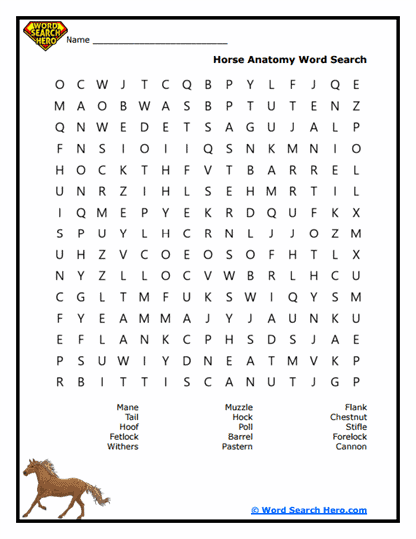
This word search centers around horse anatomy, highlighting different body parts that are crucial to understanding how horses move and function. Words such as “Mane,” “Hoof,” “Poll,” and “Barrel” offer students insight into both visible and structural horse parts. This type of vocabulary helps learners connect terminology to real-world anatomy. The inclusion of varied terms […]

View More
Breed Bash Word Search

Breed Bash

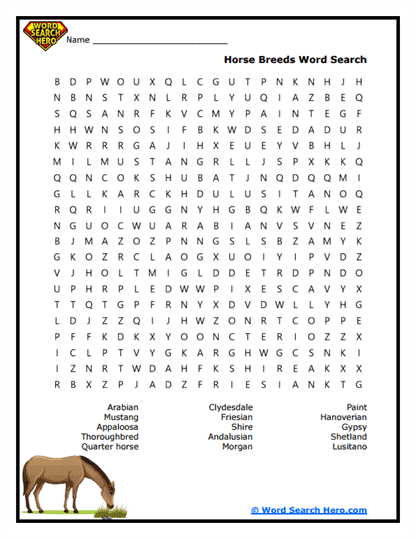
This word search focuses on horse breeds from around the world, including iconic types like the Mustang, Arabian, and Clydesdale. Each breed has a unique history and physical characteristic that differentiates it. The search includes both light and heavy breeds, and gives a peek into equestrian diversity. Students should find each breed hidden in the […]

View More
Furry Find Word Search

Furry Find

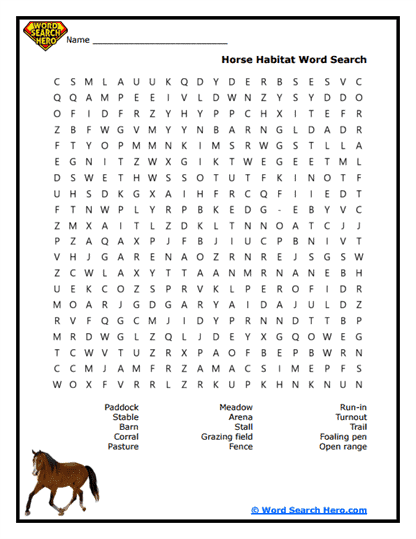
This word search explores where horses live and the types of environments or structures they are housed in. From “Barn” and “Paddock” to “Grazing field” and “Open range,” students learn essential terminology related to horse care spaces. The words range from natural settings to man-made enclosures. It encourages learners to consider the relationship between animals […]

View More
Snack Safari Word Search

Snack Safari

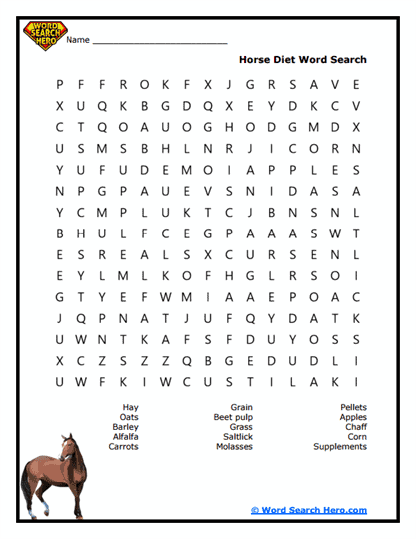
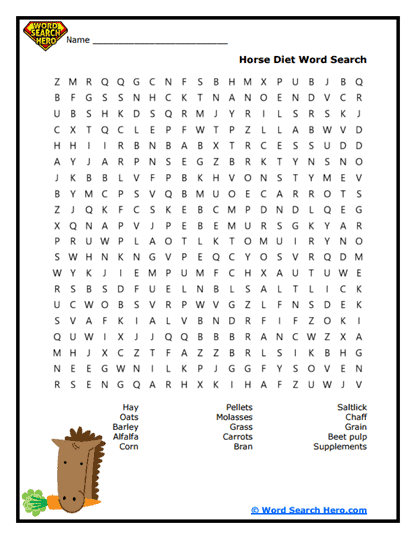
The Horse Diet Word Search helps students understand what horses eat to stay healthy. This includes common feed options like “Hay,” “Oats,” and “Alfalfa,” as well as less common but equally important items like “Saltlick” and “Beet pulp.” It introduces both natural and supplemental dietary items. Students will uncover these hidden nutritional terms in the […]

View More
Behavior Beyond Word Search

Behavior Beyond

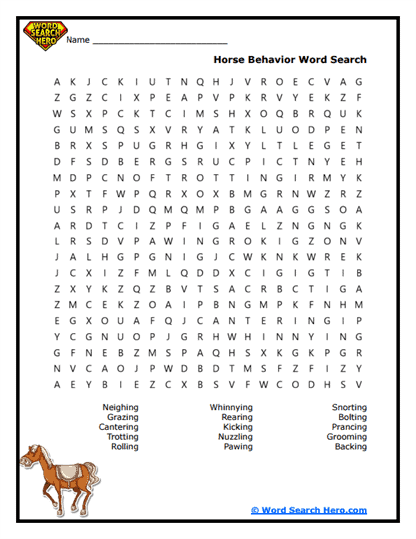
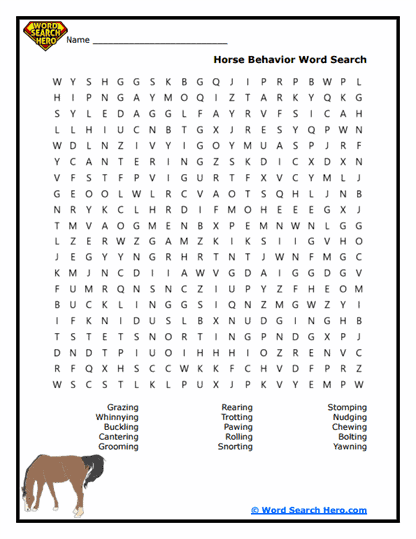
This worksheet covers various behaviors horses exhibit, both natural and responsive. Words like “Neighing,” “Cantering,” “Rearing,” and “Grooming” help learners understand how horses communicate and act in different situations. The puzzle teaches terms that describe emotional, physical, and social horse behaviors. Students must identify each action word hidden in the grid and highlight them clearly. […]

View More
Care Chart Word Search

Care Chart

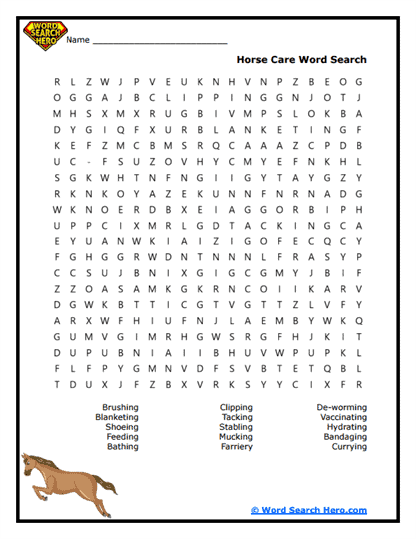
This word search highlights essential horse care routines and procedures. From “Brushing” and “Feeding” to more advanced tasks like “Vaccinating” and “Farriery,” the vocabulary reflects daily and long-term care responsibilities. It shows the full scope of maintaining a horse’s health and hygiene. Learners are encouraged to locate each care term and become familiar with the […]

View More
Tack Tracker Word Search

Tack Tracker

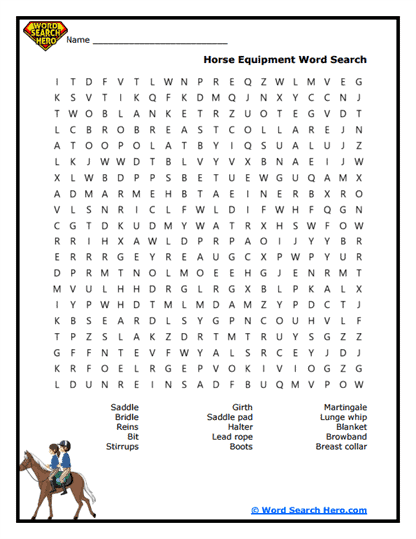
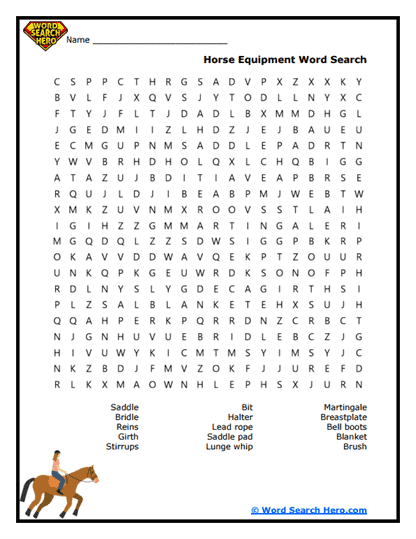
The Horse Equipment Word Search introduces students to the tools and gear used in horse riding and care. From “Saddle” and “Bridle” to specialized items like “Martingale” and “Breast collar,” the vocabulary covers a wide range of tack. The search is ideal for learners interested in equestrian sports or grooming. As students find and circle […]

View More
Sensory Trail Word Search

Sensory Trail

The Horse Senses Word Search includes terms that explain how horses perceive the world. Words such as “Smell,” “Touch,” “Awareness,” and “Peripheral vision” help learners understand horse biology and response systems. It explores how horses use their five senses along with special sensory traits. Students must identify these sense-related terms hidden in the puzzle. It’s […]

View More
Training Time Word Search

Training Time

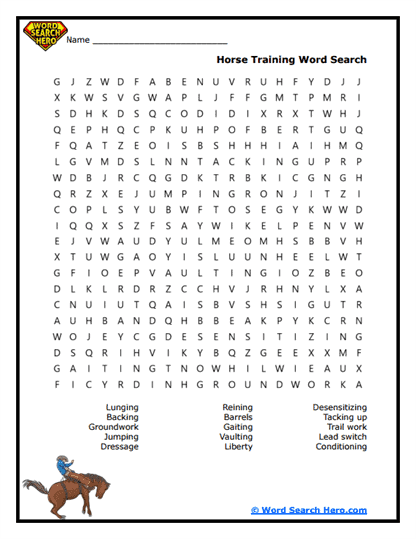
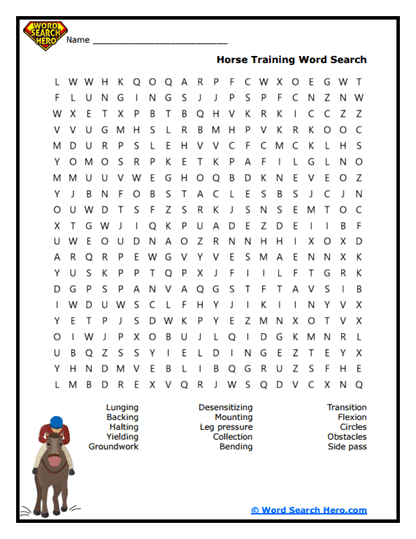
The Horse Training Word Search features terminology associated with how horses are trained. It includes basic training methods like “Backing” and “Lunging,” as well as more advanced techniques such as “Dressage” and “Vaulting.” This helps learners get familiar with key equestrian disciplines. Students find and circle each term to reinforce their understanding of training vocabulary. […]

View More
Contest Craze Word Search

Contest Craze

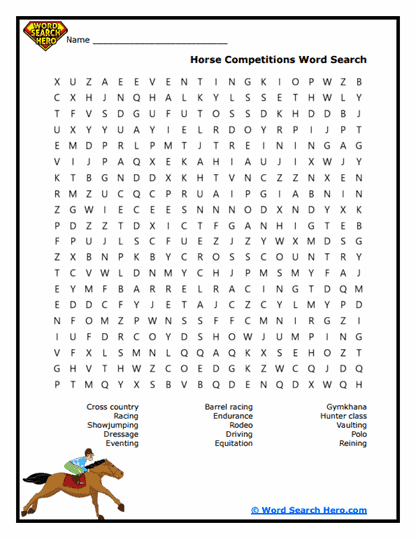
This word search covers various types of horse competitions, from “Dressage” and “Eventing” to “Racing” and “Gymkhana.” It introduces both traditional and modern contests that test speed, skill, and control. Students search for each event name and think about how horses perform in competitive settings. It highlights the breadth of equestrian sports and encourages curiosity. […]

View More
Whinny Words Word Search

Whinny Words

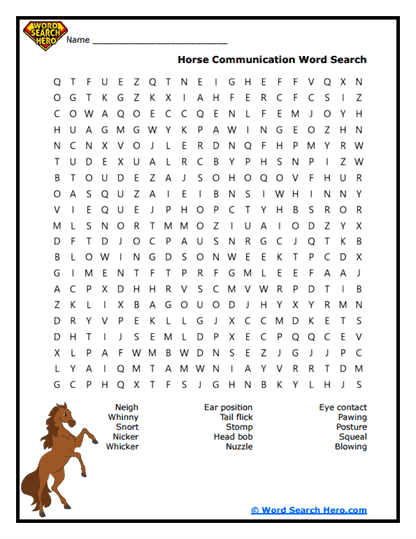
The “Horse Communication Word Search” introduces students to different ways horses express themselves. It highlights terms related to horse sounds, body language, and actions. Students will search for communication-related words like “Neigh” and “Nuzzle” hidden within the grid. Completing this puzzle will help students better understand the various ways horses communicate non-verbally and vocally. Working […]

View More
Grooming Grid Word Search

Grooming Grid

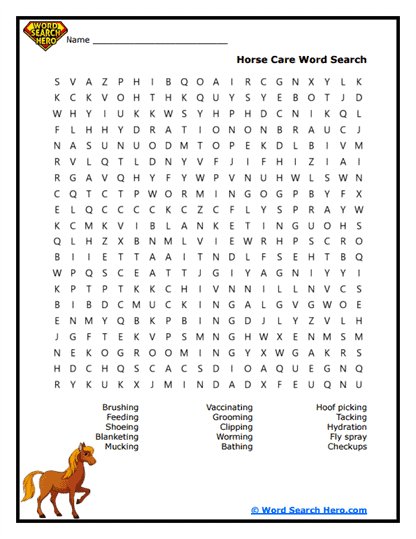
The “Horse Care Word Search” focuses on activities and routines essential for horse maintenance and wellness. It covers grooming tasks, feeding, mucking, and even medical care like vaccinations. Students will hunt for words related to daily horse care practices. This puzzle gives a clear view into the responsibilities involved in taking care of a horse. […]

View More
Tack Tracker Word Search

Tack Tracker

The “Horse Equipment Word Search” teaches students about the different tools and gear used in riding and caring for horses. From saddles to lead ropes and martingales, students encounter vocabulary about horse tack. They will find each term hidden across the puzzle, becoming more familiar with necessary equipment. This puzzle helps link the names of […]

View More
Training Trails Word Search

Training Trails

The “Horse Training Word Search” introduces students to techniques and exercises used to train horses. Words like “Lunging,” “Groundwork,” and “Bending” fill the grid, offering insight into the process of developing horse skills. Students will track down important training terminology that is critical to horse handling. Completing the puzzle gives them a deeper understanding of […]

View More
Sporty Saddles Word Search

Sporty Saddles

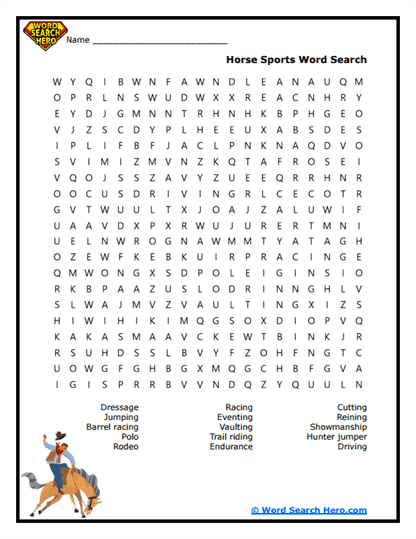
The “Horse Sports Word Search” features vocabulary associated with competitive horse activities. From “Jumping” to “Showmanship,” it introduces a wide range of equestrian sports. Students will uncover these exciting events hidden in the puzzle. It’s a great way for students to learn about the variety of ways people and horses team up in competition. Finding […]

View More
Horn Node Word Search

Horn Node

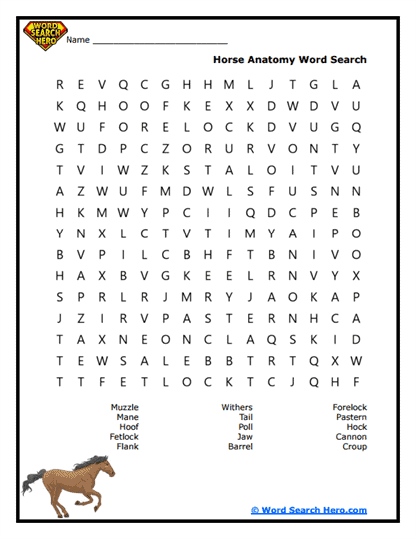
The “Horse Anatomy Word Search” helps students explore parts of a horse’s body. Vocabulary like “Muzzle,” “Poll,” and “Withers” are included to familiarize learners with anatomical terms. Students will locate each term in the letter grid, reinforcing their understanding of horse structure. This activity serves as a fun intro to basic animal anatomy. Solving the […]

View More
Breed Blitz Word Search

Breed Blitz

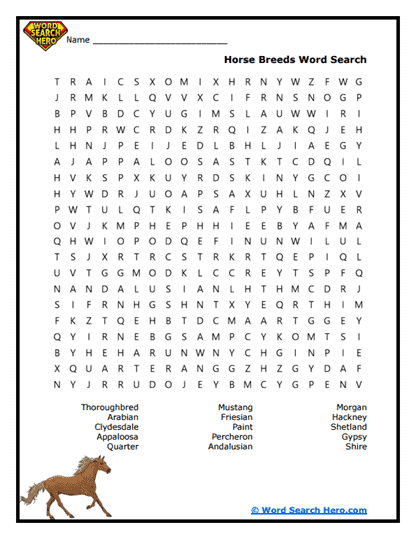
The “Horse Breeds Word Search” familiarizes students with famous horse breeds from around the world. Students will uncover names like “Thoroughbred,” “Mustang,” and “Appaloosa.” Finding these breeds will teach students about the diversity within the horse world. This fun exploration celebrates the variety of horse types and their characteristics. Finding breed names strengthens vocabulary and […]

View More
Zibble Zone Word Search

Zibble Zone

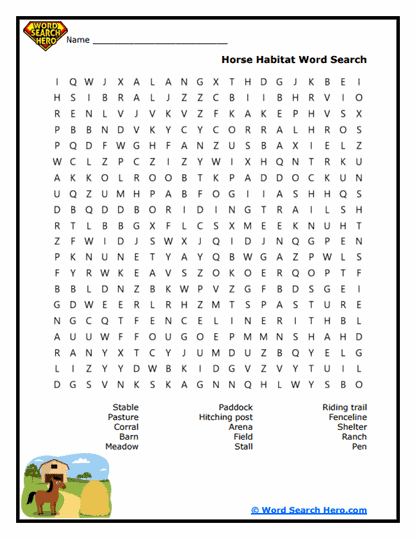
The “Horse Habitat Word Search” introduces terms related to where horses live and spend their time. Students will find words like “Stable,” “Pasture,” and “Ranch.” This puzzle builds understanding about the environments that horses need for comfort and health. It ties geography and environment studies into a horse-themed word challenge. Vocabulary development is strengthened by […]

View More
Chew Chalet Word Search

Chew Chalet

The “Horse Diet Word Search” focuses on foods and supplements that horses eat. Students will find terms like “Hay,” “Oats,” “Molasses,” and “Beet pulp.” Completing the puzzle provides knowledge about what it takes to keep a horse healthy and energetic. This activity is a creative way to teach nutrition vocabulary tied to animal care. Working […]

View More
Behavior Safari Word Search

Behavior Safari

The “Horse Behavior Word Search” highlights actions and emotional responses of horses. Vocabulary includes terms like “Grazing,” “Rearing,” “Snorting,” and “Chewing.” Students will identify each behavior word hidden in the puzzle grid. This worksheet helps young learners understand how horses act in different situations. It builds vocabulary relating to behavior and emotional expression. It strengthens […]

View More

About Our Horse Word Searches

Welcome to the ultimate corral of horse-themed word search puzzles! Each puzzle in our collection is a tribute to the world of horses, featuring terms that span from the barn to the racetrack. You’ll encounter words like “saddle,” “gallop,” “mane,” and “hoof,” each carefully chosen to immerse you in the equine experience. It’s like a rodeo for your brain-no cowboy hat required!

But hold your horses-there’s more! These puzzles aren’t just about finding words; they’re about discovering the rich tapestry of horse-related life. From “foal” to “pasture,” “bridle” to “neigh,” each term offers a glimpse into the daily life and lore of these magnificent creatures. It’s an engaging way to learn while having fun, perfect for kids and adults alike.
goodheartanimalsanctuaries.com

And the best part? These puzzles are printable and free, making them an excellent resource for teachers, parents, or anyone looking to add a dash of horse-powered excitement to their day. So, whether you’re looking to lasso some learning or just enjoy a leisurely trot through vocabulary, our horse word searches are ready to ride!

A Little Bit About Horses

Let’s start with the basics-what is a horse, really? Scientifically speaking, the horse (Equus ferus caballus) is a large, hoofed mammal that’s been hanging out with humans for about 5,000 years. Known for their strength, speed, and spirited personalities, horses have long been icons of freedom, power, and adventure. Picture a tall creature with a flowing mane, expressive eyes, four sturdy legs, and a tail that could double as a fly swatter. That’s your average horse-beautiful, bold, and built for motion.

These magnificent creatures thrive in diverse habitats all around the globe. From the grassy plains of Mongolia to sprawling farms in Kentucky, horses have adapted to everything from dry deserts to chilly mountain ranges. Domesticated horses live in stables, paddocks, and pastures, often pampered with soft bedding and regular grooming sessions. Wild horses, like the famous mustangs of the American West, roam in herds across open landscapes, proving that freedom still has four legs and a mane.

When it comes to behavior, horses are highly social, intelligent, and surprisingly emotional. They form strong bonds with both herd members and humans, and they communicate using everything from subtle ear flicks to full-body movements. A horse can express excitement, fear, curiosity-or even grumpiness-with just a twitch of its tail or a flick of its ears. And yes, they absolutely recognize their favorite people. (Feeling special yet?)

Diet-wise, horses are herbivores with a love for grass, hay, oats, and the occasional crunchy carrot. Their digestive systems are fine-tuned to handle lots of small meals throughout the day. With the right care, horses can live into their late 20s or even 30s, aging gracefully with the right mix of diet, exercise, and vet checkups. From wild herds shaping ecosystems to racehorses breaking speed records, horses have made their hoofprints all over history-and our hearts.

Fun Facts About Horses

1. Horses Can Sleep Standing Up

Thanks to a special system of tendons and ligaments called the “stay apparatus,” horses can lock their legs and doze off without falling over. This ability allows them to rest while remaining alert to potential dangers. However, for deep sleep, they need to lie down, which they do when they feel safe and secure.

2. Horses Have Exceptional Memories

Horses possess remarkable memory capabilities. They can remember people, places, and even specific tasks for years. This trait makes them excellent companions and learners, as they can recall training and experiences over long periods.

3. Horses Communicate Through Facial Expressions

Just like humans, horses use facial expressions to convey their feelings. They can display emotions such as fear, anger, and joy through movements of their eyes, ears, and mouths. Observing these expressions helps handlers understand and respond to their needs effectively.

4. Horses Have a Unique Digestive System

Horses have a one-way digestive system, meaning food moves in only one direction through their bodies. This design prevents them from vomiting, which is why it’s crucial to monitor their diet carefully to avoid digestive issues. Their large cecum helps ferment and break down fibrous plant material, aiding in nutrient absorption.

5. Horses Can Recognize Human Emotions

Studies have shown that horses can distinguish between positive and negative human facial expressions. They respond differently to smiling versus angry faces, indicating their sensitivity to human emotions. This ability enhances the bond between horses and their handlers, fostering better communication and trust.

6. Horses Have a Wide Field of Vision

With eyes positioned on the sides of their heads, horses have a nearly 360-degree field of vision. This wide range allows them to detect movement from almost any direction, an essential trait for spotting predators in the wild. However, they have a small blind spot directly in front of and behind them, so it’s important to approach them from the side to avoid startling them.