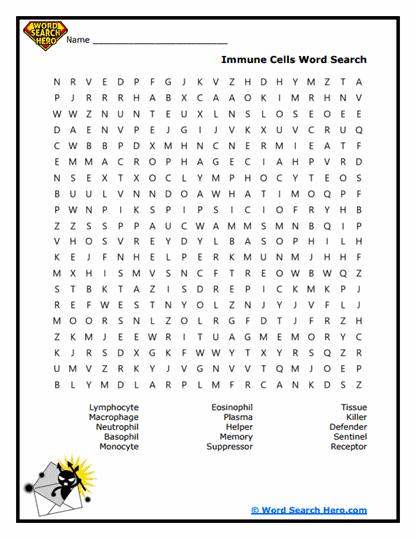
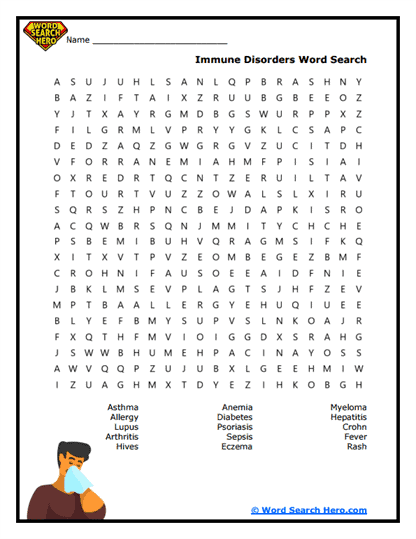
About Our Immune System Word Searches
Immune System word searches introduce students to the vocabulary used to describe how the body protects itself from harmful organisms and diseases. These printable puzzles help learners become familiar with key terms related to immunity, defense mechanisms, and the cells and organs involved in fighting infections. Before students explore how the immune system works in detail, it often helps to first recognize the language used to describe this important body system.
Students studying the immune system may encounter words such as antibody, virus, bacteria, infection, white blood cells, defense, and immunity. These terms appear frequently in life science and health lessons, and understanding them helps students better grasp how the body identifies and responds to harmful invaders. A word search provides an engaging way to reinforce this vocabulary while strengthening spelling and observation skills.
Because the activity feels like a puzzle rather than a traditional worksheet, it can make complex science vocabulary more approachable. Teachers often use these printables during science centers, review sessions, independent practice, or early finisher time. Parents and homeschool educators can also include them in lessons as a way to introduce immune system vocabulary in an interactive format.
As students search for the words in the puzzle grid, they strengthen concentration, visual scanning, and pattern recognition skills. At the same time, they are building familiarity with the scientific language used to describe the body’s natural defense system.
Understanding the Immune System
The immune system is the body’s defense network that protects against harmful organisms such as bacteria, viruses, and other pathogens. It works by recognizing these invaders and responding in ways that help eliminate them from the body.
Specialized cells, including white blood cells, play an important role in detecting and attacking harmful microbes. Some immune responses happen quickly, while others develop over time and help the body remember past infections. This memory helps the body respond faster if the same pathogen enters again.
The immune system also works closely with other body systems. For example, the circulatory system helps transport immune cells through the bloodstream so they can reach different parts of the body.
Learning the vocabulary associated with the immune system helps students understand how the body defends itself and maintains health.
Word searches reinforce this learning by giving students repeated exposure to the terms used when studying immunity and disease prevention.
Paul’s Pro-Tip
A highly effective extension for this puzzle is a “body defense story” activity. After students complete the word search, ask them to imagine a harmful microbe entering the body.
Students can create a short story or diagram showing how the immune system might respond. Encourage them to use vocabulary from the puzzle such as infection, antibody, or white blood cell while explaining the steps the body takes to fight the invader.
This activity adds strong instructional value because it helps students visualize the immune system as an active defense process. Teachers and homeschool educators can also quickly assess whether students understand how different parts of the immune response work together.
Helping Students Understand Disease Prevention
Understanding the immune system helps students learn how the body protects itself from illness. This knowledge can also support lessons about hygiene, vaccinations, and healthy habits that help prevent disease.
When students become familiar with immune system vocabulary, they are better prepared to understand science discussions about infections, immunity, and public health. This foundation also supports later studies in biology, medicine, and health sciences.
A word search can serve as an introduction to a lesson about the immune system or as a review after students have studied how the body fights infections. After completing the puzzle, educators can encourage students to connect the vocabulary with diagrams, health lessons, or discussions about ways to support a healthy immune system.
When students build confidence with immune system vocabulary, they gain the language and understanding needed to explore how the body defends itself against disease.
Frequently Asked Questions
What is the immune system?
The immune system is the body’s defense network that protects against harmful organisms such as bacteria and viruses.
What role do white blood cells play?
White blood cells help identify and destroy harmful microbes that enter the body.
How does the body remember past infections?
The immune system can create memory cells that recognize certain pathogens and respond more quickly if they appear again.
Why are vaccines related to the immune system?
Vaccines help train the immune system to recognize and fight specific pathogens without causing the disease itself.
What activity can follow an immune system word search?
Students can create a simple diagram showing how the immune system detects and responds to a pathogen entering the body.