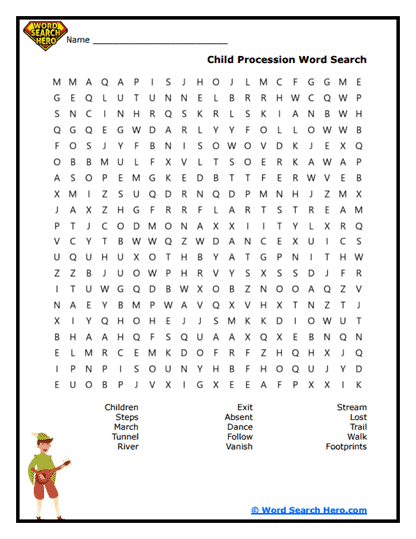
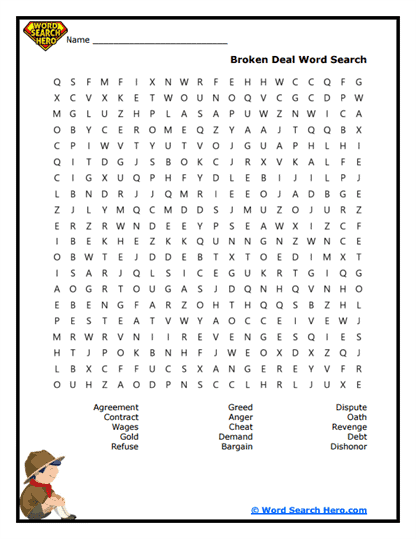
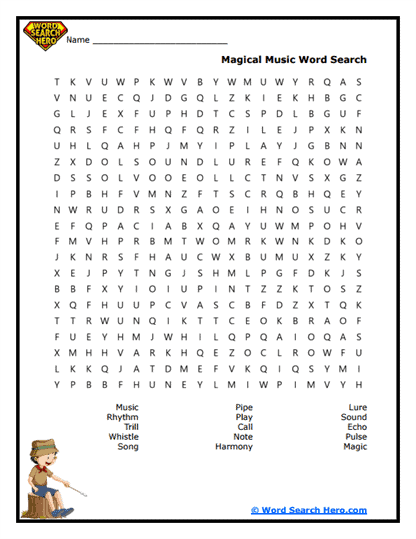
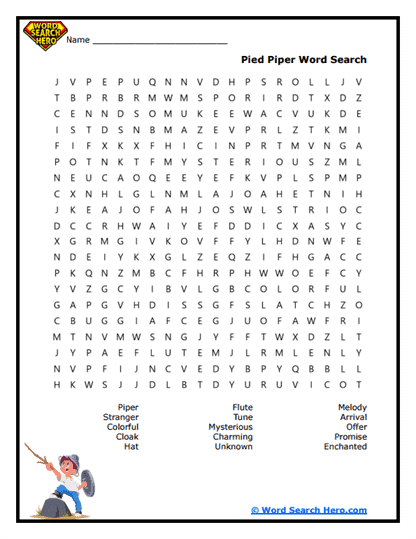
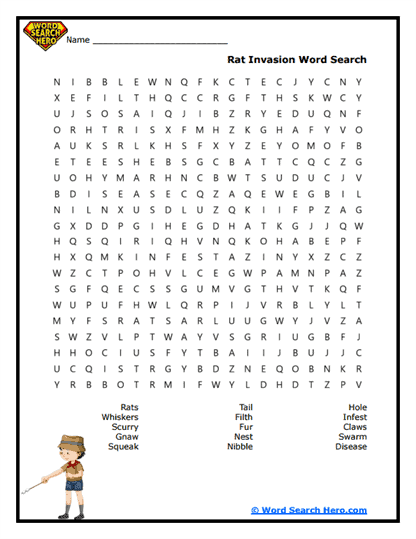
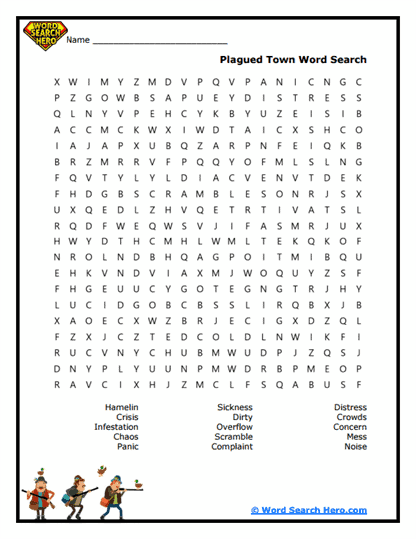
About Our The Pied Piper of Hamelin Word Searches
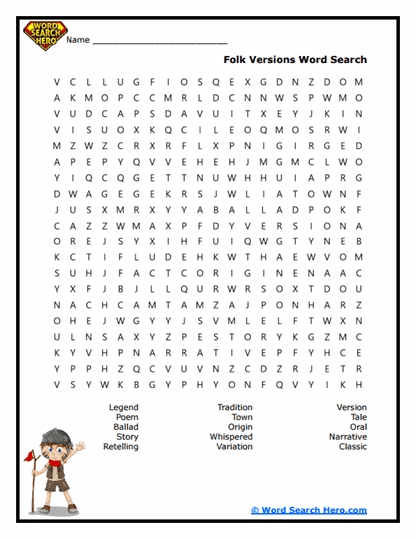
The Pied Piper of Hamelin word searches offer an engaging way to explore one of the most enduring cautionary fairy tales while uncovering its compelling narrative and timeless moral lessons. These printable puzzles introduce students to important vocabulary connected to honesty, promises, responsibility, justice, music, courage, and consequences. As learners search for each word, they follow the story from a town overwhelmed by rats to a heartbreaking ending that reminds readers why keeping one’s word matters.
The story begins in the town of Hamelin, where a severe rat infestation leaves the townspeople desperate for help. A mysterious piper offers to solve the problem in exchange for payment, and the town leaders eagerly agree. Using the enchanting sound of his pipe, he leads the rats away and saves the town. However, once the danger has passed, the leaders refuse to honor their agreement. In response, the Piper returns and uses his music once more-this time leading the town’s children away. Through this unforgettable ending, the fairy tale warns that dishonesty, greed, and broken promises can have devastating consequences.
These word searches strengthen vocabulary, spelling, reading comprehension, and literary analysis while encouraging meaningful discussions about integrity, fairness, and personal responsibility.
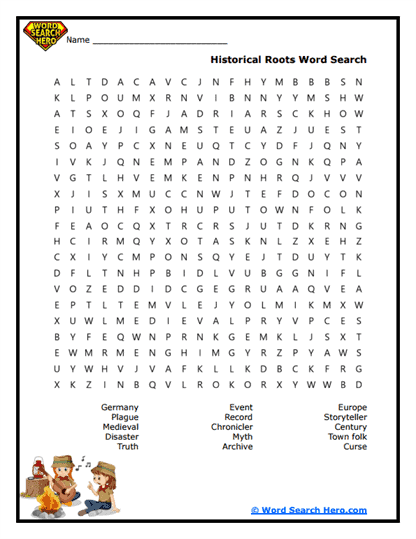
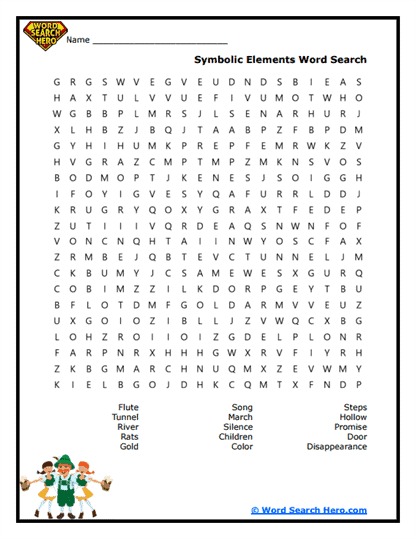
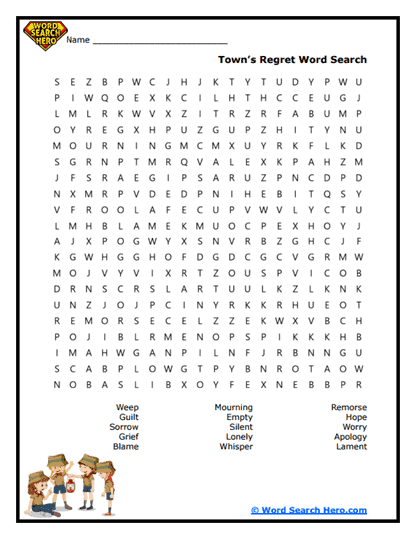
With puzzles covering the troubled town, mysterious music, broken promises, hidden clues, lasting regret, and the tale’s historical legacy, this collection helps readers appreciate why The Pied Piper of Hamelin has remained one of the world’s most powerful cautionary tales.
The Narrative and Its Moral Lessons
The Pied Piper of Hamelin unfolds as a story where every important event grows directly from the choices people make. Word searches throughout this collection introduce students to themes such as honesty, responsibility, greed, justice, courage, promises, consequences, leadership, trust, and wisdom. Together, these ideas reveal how one broken agreement changes the lives of an entire community.
At its heart, the fairy tale teaches that promises should never be made lightly. The leaders of Hamelin gladly accept the Piper’s help when they need it most, but once the rats are gone, they allow greed to outweigh honesty. Their refusal to keep their word becomes the story’s turning point, demonstrating that dishonesty often creates consequences far greater than the original problem.
The tale also highlights the importance of ethical leadership. Good leaders honor agreements, treat others fairly, and accept responsibility for their actions. The leaders of Hamelin fail in each of these areas, placing personal gain above justice. Through their example, readers learn that trust is difficult to earn but easy to lose.
Students can deepen their understanding by discussing questions such as, “Would the story have ended differently if the town had kept its promise?” and “Why is honesty especially important when people make agreements with others?”
Paul’s Pro-Tip

One of the most effective ways to use The Pied Piper of Hamelin word searches is to create a “promise pathway.” As students find words like agreement, gold, promise, revenge, and consequence, have them place each word in the order it appears throughout the story. Then ask them to explain how each decision leads directly to the next event. This visual chain helps students recognize that the tragedy is not caused by magic alone-it begins with the town’s decision to break its promise.
Another engaging activity is the “fair leader checklist.” After completing the puzzle, have students imagine they are the mayor of Hamelin. Ask them to list the choices they would make differently and explain why. Would they honor the agreement? Would they negotiate fairly? Would they apologize if they made a mistake? This activity encourages students to apply the fairy tale’s moral lessons to real-world leadership, responsibility, and ethical decision-making.
From Story to Literary Understanding
The Pied Piper of Hamelin word searches become even more meaningful when students connect the vocabulary to the fairy tale’s larger themes. After completing a puzzle, students can choose one word and explain how it changes the direction of the story or reveals something important about a character.
For example, students might explore how promise serves as the foundation of the entire narrative, how greed causes the town leaders to abandon fairness, or how music symbolizes both hope and consequence depending on how it is used. Others may examine how trust is built through honesty and destroyed through deception.
These activities naturally support literature, character education, and critical thinking by encouraging discussions about leadership, responsibility, fairness, honesty, and the long-term effects of broken commitments.
By connecting vocabulary to the narrative and its moral lessons, students transform a simple word search into a deeper exploration of one of history’s most memorable cautionary fairy tales.
Frequently Asked Questions
What is the main moral of The Pied Piper of Hamelin?
The central lesson is that promises should be honored and agreements should be kept. The leaders of Hamelin benefit from the Piper’s help but refuse to pay him as promised. Their dishonesty leads to far greater consequences than the original problem, teaching that integrity and fairness matter.
Why do the leaders of Hamelin refuse to pay the Pied Piper?
After the rats are gone, the leaders allow greed to influence their decision. They believe they can avoid paying because the work has already been completed. Their choice shows how selfishness and dishonesty can undermine trust and create lasting consequences.
Why is the Pied Piper considered a mysterious character?
The Piper arrives as a stranger with extraordinary musical abilities and little explanation about his background. His mysterious nature makes him both fascinating and unpredictable. Rather than simply representing magic, he also symbolizes justice, accountability, and the consequences of broken promises.
How can I make The Pied Piper of Hamelin word searches more interactive?
Have students create a cause-and-effect chart that connects each major decision to its consequence. Another excellent activity is asking students to rewrite the ending based on what would have happened if the town had honored its agreement. These activities strengthen comprehension while encouraging thoughtful discussions about honesty and responsibility.
Why is The Pied Piper of Hamelin considered a cautionary fairy tale?
The story warns readers that dishonesty, greed, and broken promises can have serious and lasting consequences. Every major conflict grows from the town leaders’ refusal to keep their word. By showing how one unethical decision affects an entire community, the fairy tale encourages readers to value honesty, fairness, and personal responsibility above short-term gain.