Choose a topic !

Carbon Cycle Word Searches

Carbon Quest Word Search

Carbon Quest

The “Carbon Quest” word search explores vocabulary related to carbon movement and transformation across ecosystems. Terms such as “Flow,” “Change,” “Travel,” and “Emit” reflect how carbon shifts through various processes. Students will identify words associated with scientific actions and cycles that describe the dynamics of carbon in the environment. This search encourages familiarity with complex […]

View More
Solar Greens Word Search

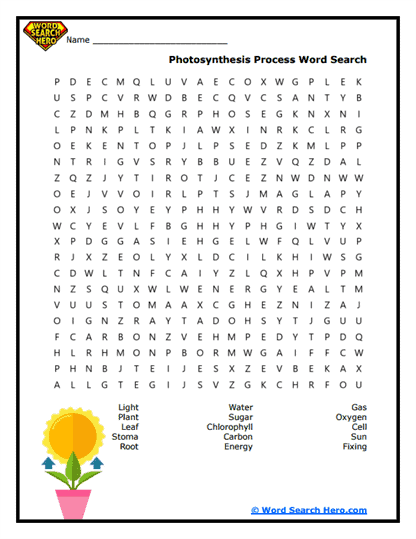
Solar Greens

“Solar Greens” centers around the process of photosynthesis, showcasing essential terms like “Light,” “Chlorophyll,” and “Oxygen.” This word search teaches how plants use sunlight to produce food and oxygen. The vocabulary highlights both the components involved and the outputs created during the photosynthesis process. It’s an ideal reinforcement tool for plant biology and environmental science […]

View More
Breath Cycle Word Search

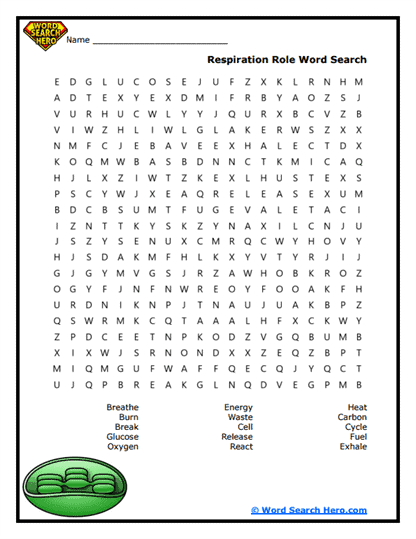
Breath Cycle

“Breath Cycle” explores the vocabulary of cellular respiration and the biological role of breathing. Students will encounter words like “Glucose,” “Exhale,” and “Oxygen,” which help explain how energy is produced in living organisms. The terms span inputs, processes, and byproducts of respiration. This search supports understanding of how living beings convert food into usable energy. […]

View More
Rot Life Word Search

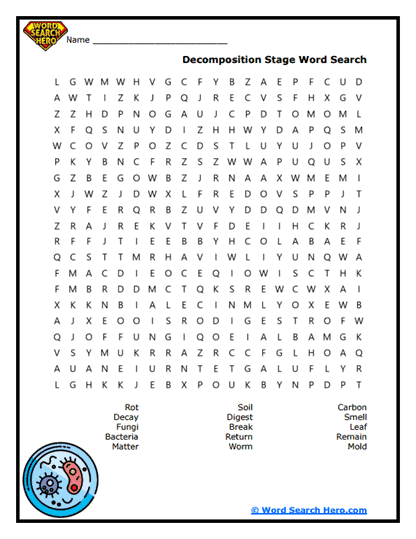
Rot Life

“Rot Life” is a decomposition-themed word search introducing students to vocabulary like “Fungi,” “Mold,” and “Bacteria.” These words represent the organisms and processes that break down dead material into nutrients. Students learn about natural recycling systems in ecosystems. The worksheet helps explain what happens to organic matter after death and how it supports new life. […]

View More
Energy Burn Word Search

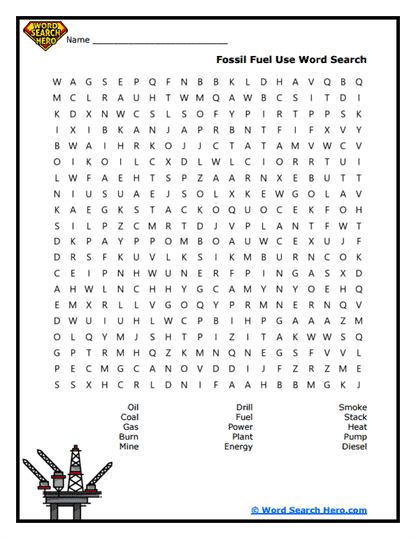
Energy Burn

“Energy Burn” introduces students to the vocabulary of fossil fuels and energy production. Terms such as “Coal,” “Drill,” “Plant,” and “Smoke” connect fossil fuel extraction to power generation and pollution. The word list encourages awareness of the sources and consequences of our energy use. This activity ties directly into environmental science and geography. Students expand […]

View More
Ocean Deep Word Search

Ocean Deep

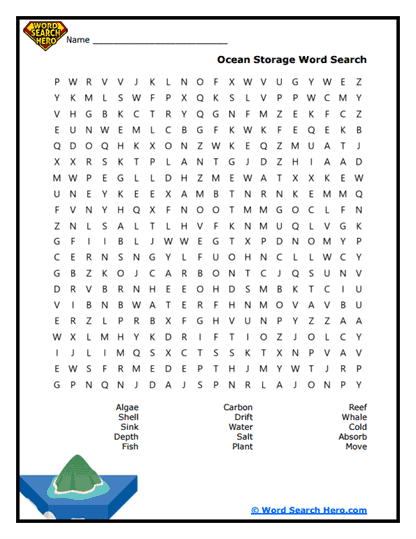
“Ocean Deep” focuses on carbon storage within ocean ecosystems. Students will find words like “Algae,” “Drift,” “Salt,” and “Absorb.” The vocabulary illustrates how oceans act as major carbon sinks and how marine life plays a role in climate regulation. The terms also introduce basic oceanography and marine biology concepts. This word search supports science vocabulary […]

View More
Soil Secrets Word Search

Soil Secrets

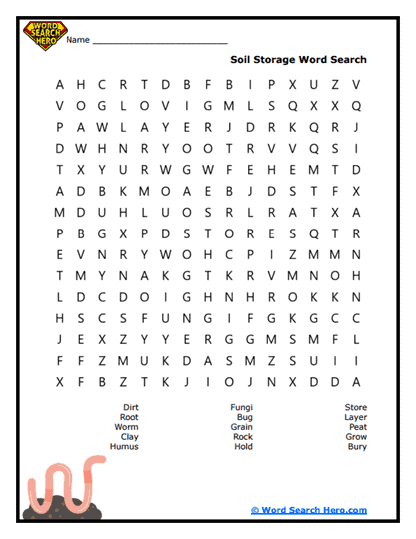
“Soil Secrets” dives into the vocabulary of underground ecosystems and soil carbon storage. With words like “Dirt,” “Root,” “Humus,” and “Hold,” students explore the importance of soil in the carbon cycle. The terms highlight how soil layers support plant life and store organic carbon. It promotes understanding of soil science and its impact on the […]

View More
Emission Trail Word Search

Emission Trail

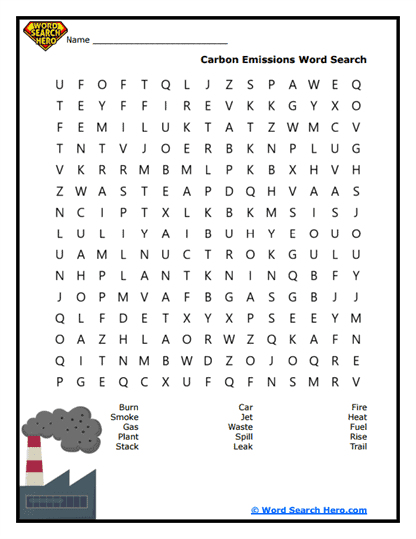
“Emission Trail” highlights the vocabulary surrounding human-made carbon emissions. Words such as “Jet,” “Leak,” “Waste,” and “Stack” demonstrate how various activities release carbon into the atmosphere. The worksheet connects everyday activities and industrial actions to climate change. It’s an ideal resource for discussing environmental impact and sustainability. By working through this search, students develop critical […]

View More
Green Traps Word Search

Green Traps

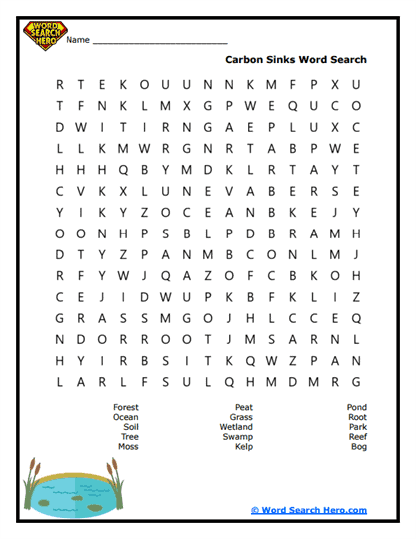
“Green Traps” focuses on natural carbon sinks that capture and store carbon dioxide. Students will find words like “Moss,” “Peat,” “Tree,” and “Bog.” These ecosystems are essential to mitigating climate change. The search helps students visualize how nature plays a role in absorbing atmospheric carbon. The activity enhances ecological literacy and teaches students about nature-based […]

View More
Human Imprint Word Search

Human Imprint

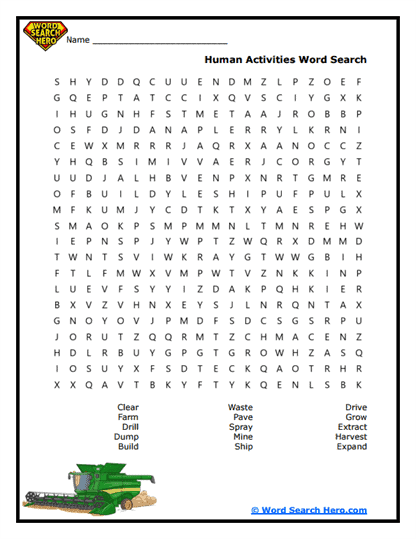
“Human Imprint” explores the vocabulary of human activities that affect the carbon cycle. Words like “Farm,” “Drill,” “Harvest,” and “Spray” represent ways people interact with the land and natural resources. This search reinforces the concept that human behavior directly impacts the environment. It’s a valuable companion to discussions about sustainability and conservation. Students improve their […]

View More

About Our Carbon Cycle Word Searches

The carbon cycle is not a single process, but a vast, interconnected web of physical, chemical, and biological exchanges that shape Earth’s climate, ecosystems, and life itself. These word searches are built to reflect that complexity. Each one focuses on a specific mechanism or sub-system that controls carbon’s movement and transformation across the planet-through living organisms, geological forces, atmospheric chemistry, and human activities.

Carbon Quest sets the framework by focusing on verbs that describe carbon’s movement between reservoirs. Words like emit, transfer, absorb, and exchange reflect real biochemical and geophysical processes-photosynthesis, respiration, combustion, weathering, and diffusion among them. These words form the operational language of the cycle. They also represent transformations in carbon’s chemical state: from atmospheric gas to dissolved ion, from sugar molecule to fossil residue. Understanding these actions supports systems thinking and provides the functional language needed for explaining cause and effect in ecology.

The biotic engine of the cycle comes into view in Solar Greens and Breath Cycle. These two puzzles emphasize the biological fluxes-how carbon enters and exits organisms. Solar Greens centers on photosynthesis, where plants capture carbon dioxide and use solar energy to fix it into organic matter. The inclusion of terms like chlorophyll, stoma, and sugar maps directly to the molecular steps of the Calvin cycle and gas exchange. Breath Cycle, in contrast, explores cellular respiration-how organisms metabolize glucose, releasing carbon dioxide and energy in return. Together, these two puzzles represent the major biological exchanges of carbon in and out of the biosphere.

Decomposition often gets glossed over in basic carbon cycle diagrams, but Rot Life gives it the attention it deserves. Decomposers like fungi and bacteria don’t just clean up dead matter; they are crucial carbon processors. They return locked-up carbon back into the soil and atmosphere through enzymatic digestion and microbial respiration. Words like fungi, digest, mold, and remain represent active steps in the degradation and mineralization of organic compounds. Without these decomposers, the carbon cycle would collapse into stasis-matter would accumulate, but carbon would not flow.

Energy Burn and Emission Trail shift focus to the anthropogenic disruption of the natural cycle. Energy Burn includes vocabulary from the fossil fuel extraction and combustion process. These words-drill, stack, smoke, diesel-are not just technical; they denote carbon transitions that occur over geological and industrial timeframes. Burning coal or oil injects carbon into the atmosphere that was previously stored underground for hundreds of millions of years, short-circuiting the slow carbon cycle.

Emission Trail continues this thread, highlighting carbon’s release through modern infrastructure and transport systems. This is the vocabulary of distributed emissions-jet, car, leak, trail-tracing how carbon leaves industrial systems and enters the air. These terms are tied directly to measurable sources in climate science: point sources, fugitive emissions, and combustion byproducts. The puzzle builds familiarity with the language used in environmental monitoring, carbon accounting, and climate policy frameworks.

Carbon sinks are essential for stabilizing atmospheric carbon levels, and Ocean Deep and Soil Secrets explore the natural systems that serve this role. Ocean Deep targets marine processes-phytoplankton photosynthesis, carbonate formation, and the solubility pump. Words like algae, sink, and absorb reference processes responsible for drawing down and sequestering carbon in the oceanic reservoir. The ocean holds about 50 times more carbon than the atmosphere, and it absorbs approximately 25% of human emissions annually. This puzzle reflects that scale.

Soil Secrets, on the other hand, highlights carbon storage in terrestrial substrates. Soil organic matter-formed from plant residues, microbial byproducts, and decomposing organisms-is a major carbon reservoir. Humus, peat, clay, and layer each signify material and structural components that control how carbon is stabilized in soil. These words are directly tied to processes like carbon occlusion, aggregation, and microbial immobilization. Soil carbon retention depends heavily on root activity, microbial ecology, and land management-all of which are embedded in this vocabulary.

Green Traps expands the view of natural carbon capture beyond soils and oceans. This puzzle focuses on ecosystems known for long-term carbon storage: peatlands, forests, wetlands, and coastal kelp forests. Terms like bog, swamp, tree, and moss refer to environments with low decomposition rates and high biomass accumulation. Many of these systems are anaerobic, waterlogged, or nutrient-poor-conditions that slow microbial respiration and allow carbon to accumulate over centuries. These ecosystems are often under pressure from land-use change, making them important focal points for conservation science.

Human Imprint closes the set with vocabulary that maps human interaction with carbon-relevant landscapes. Unlike Emission Trail, which deals with carbon output, this puzzle focuses on land modification: farm, pave, extract, harvest. These are all drivers of carbon flux-agriculture and deforestation release carbon from vegetation and soils; urbanization alters hydrology and root biomass; mining and extraction disrupt long-sequestered carbon stocks. Every term in this puzzle connects directly to a known mechanism in carbon accounting models used by climate scientists.

What Is the Carbon Cycle?

Imagine a single carbon atom-let’s call her Carla. Carla was born in a star billions of years ago and has been traveling the universe ever since. Sometimes she’s part of a tree trunk. Sometimes she floats in the atmosphere as carbon dioxide. Other times she swims in ocean water, gets gobbled by a fish, or buried underground for a million years before being released in a puff of exhaust from a passing car. This is the carbon cycle-a cosmic relay race where carbon, in its many forms, is always on the move.

At its core, the carbon cycle is how carbon travels between living things, the atmosphere, the land, and the oceans. Plants take in carbon dioxide from the air through photosynthesis, turning it into sugars that help them grow. Animals eat the plants, use the carbon for energy, and release some of it back into the air through respiration. When organisms die, decomposers like fungi and bacteria break them down, sending carbon back into the soil and air. And that’s just the biological part. Carbon also travels through geological and industrial pathways-from volcanoes to factories to your family car.

This cycle is like Earth’s way of recycling one of its most important ingredients. Carbon is the backbone of life-it’s in our cells, our food, our fuel, and even our breath. But it’s not just sitting still. It’s constantly cycling, shifting between states and systems. Think of it like nature’s version of a massive, interconnected subway system: carbon hops between stations, catching different trains-photosynthesis, combustion, decomposition-on its never-ending journey.