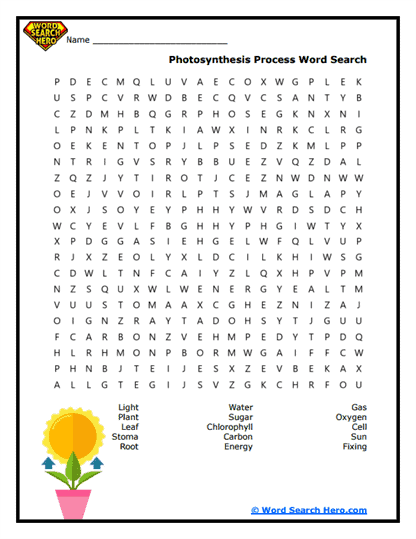
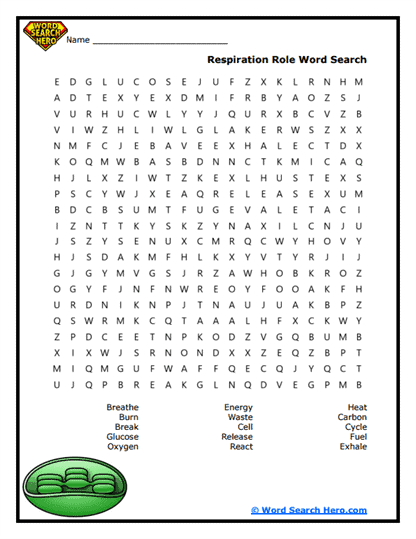
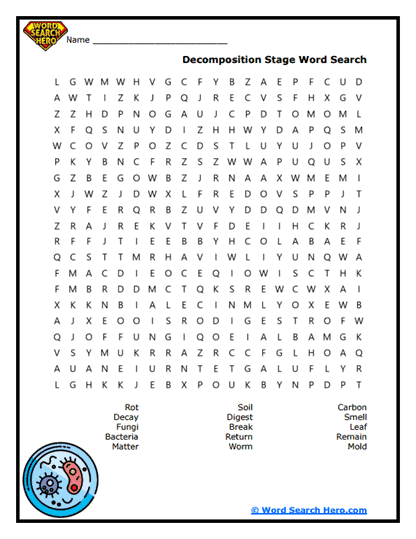
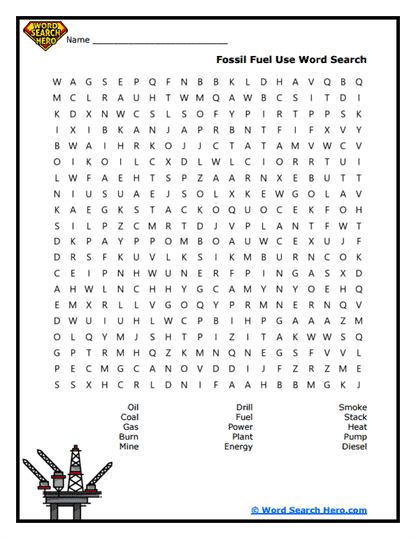
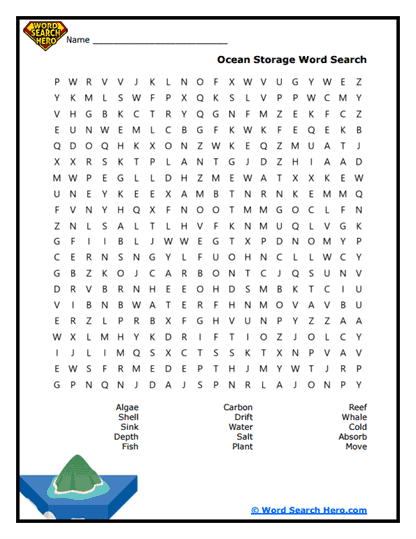
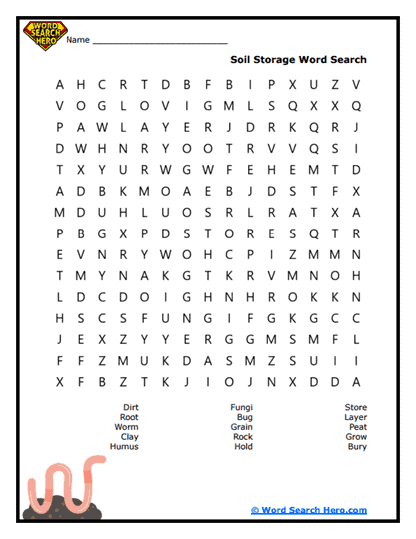
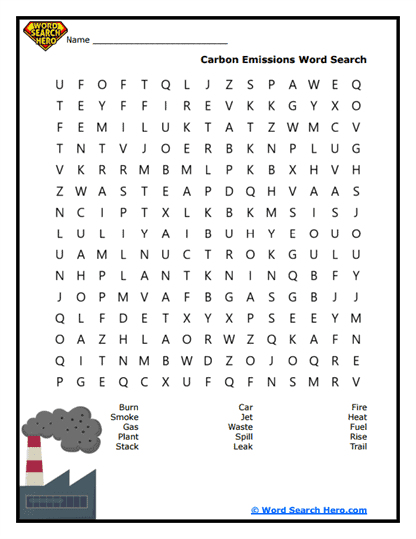
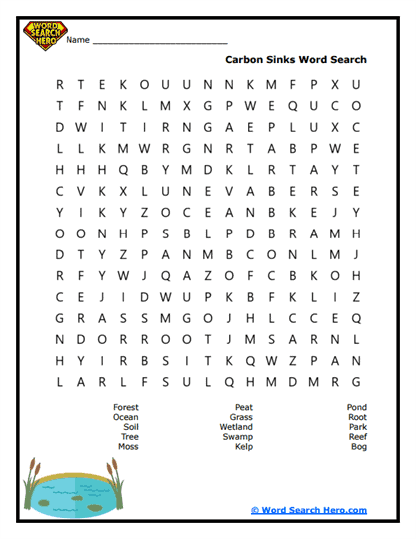
About Our Carbon Cycle Word Searches
Carbon Cycle word searches introduce students to the vocabulary used to describe how carbon moves through Earth’s natural systems. These printable puzzles help learners become familiar with scientific terms related to ecosystems, the atmosphere, oceans, and living organisms. Before students explore environmental science and climate systems in depth, it often helps to first recognize the language used to explain how carbon circulates through the planet.
Students studying the carbon cycle may encounter words such as carbon, atmosphere, photosynthesis, respiration, decomposition, fossil fuels, and ecosystem. These terms frequently appear in earth science, biology, and environmental science lessons and help students understand how carbon moves between living organisms and the environment. A word search provides an engaging way to reinforce this vocabulary while strengthening reading, spelling, and observation skills.
Because the activity feels like a puzzle rather than a traditional worksheet, it can make complex environmental science vocabulary easier to approach. Teachers often use these printables during science centers, independent practice, review sessions, or early finisher activities. Parents and homeschool educators can also include them in lessons as a way to introduce carbon cycle vocabulary in an interactive format.
As students search for the words in the puzzle grid, they strengthen concentration, visual scanning, and pattern recognition skills. At the same time, they build familiarity with the scientific language used to describe how carbon moves through Earth’s systems.
Understanding the Carbon Cycle
The carbon cycle describes how carbon moves through the atmosphere, living organisms, soil, oceans, and rocks. Carbon is an essential element for life because it forms the basis of many biological molecules found in plants, animals, and microorganisms.
Plants absorb carbon from the atmosphere during photosynthesis. Animals obtain carbon by consuming plants or other organisms. When organisms respire, decompose, or burn fuels, carbon returns to the atmosphere or soil.
Oceans also store large amounts of carbon, absorbing it from the atmosphere and circulating it through marine ecosystems. Over long periods of time, carbon can become trapped in rocks and fossil fuels, forming long-term storage within Earth’s crust.
Learning the vocabulary associated with the carbon cycle helps students understand how carbon moves through different parts of the planet and supports life on Earth.
Word searches reinforce this learning by giving students repeated exposure to the key terms used when studying environmental cycles and ecosystem processes.
Paul’s Pro-Tip
A powerful extension activity is a “carbon journey diagram.” After students complete the word search, ask them to trace the path of a carbon atom through several parts of the carbon cycle.
Students might begin with carbon in the atmosphere, then show how it enters a plant through photosynthesis, moves into an animal through food, and eventually returns to the atmosphere through respiration or decomposition.
Encourage students to draw arrows and label each stage using vocabulary from the puzzle. This activity helps students visualize the continuous movement of carbon through Earth’s systems.
Teachers and homeschool educators can quickly assess whether students understand that carbon does not stay in one place but cycles through living organisms and the environment.
Helping Students Understand Environmental Cycles
The carbon cycle is an important concept in environmental science because it explains how carbon moves through ecosystems and the atmosphere. These processes influence plant growth, climate systems, and the balance of gases in the air.
Understanding carbon cycle vocabulary helps students interpret diagrams, environmental science lessons, and discussions about ecosystems and climate systems. These ideas also connect to broader topics such as biogeochemical cycles, energy flow, and environmental sustainability.
A word search can serve as an introduction to a lesson about the carbon cycle or as a review after students have studied environmental cycles in class. After completing the puzzle, educators can encourage students to connect the vocabulary with diagrams showing how carbon moves between plants, animals, the atmosphere, and the oceans.
When students become familiar with carbon cycle vocabulary, they gain the language and understanding needed to explore how essential elements move through Earth’s living and nonliving systems.
Frequently Asked Questions
What is the carbon cycle?
The carbon cycle is the process by which carbon moves through the atmosphere, living organisms, soil, oceans, and rocks.
Why is carbon important for life?
Carbon is a key element that forms many molecules needed for living organisms to grow and function.
How do plants use carbon?
Plants absorb carbon from the atmosphere during photosynthesis to produce energy and grow.
How does carbon return to the atmosphere?
Carbon returns to the atmosphere through processes such as respiration, decomposition, and the burning of fuels.
What classroom activity pairs well with this puzzle?
Students can draw a diagram tracing the path of a carbon atom through plants, animals, and the atmosphere to illustrate how carbon moves through the carbon cycle.