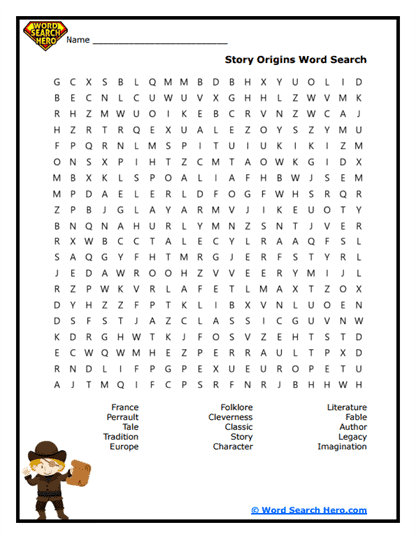
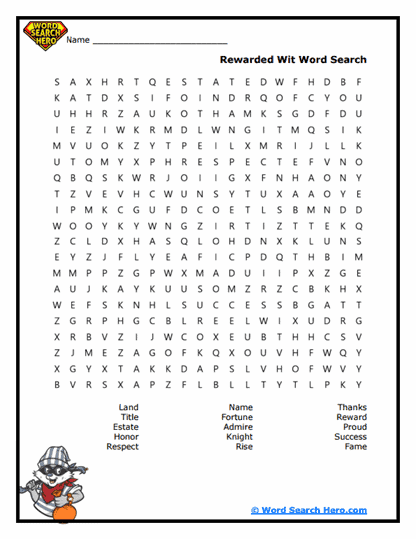
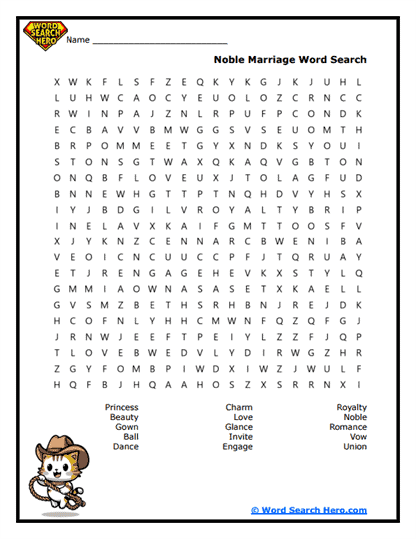
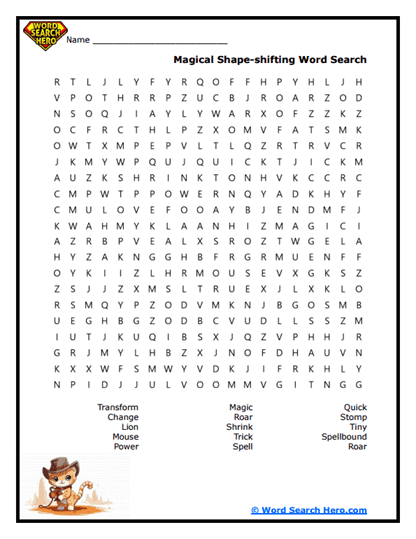
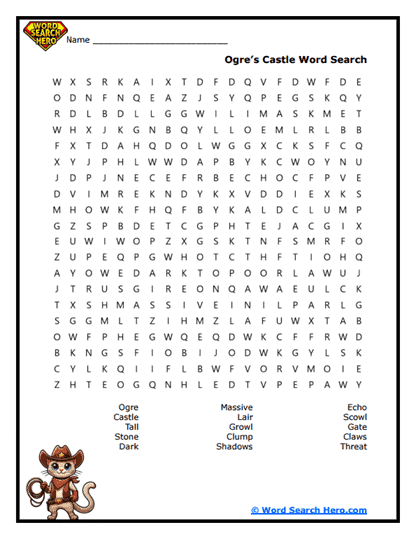
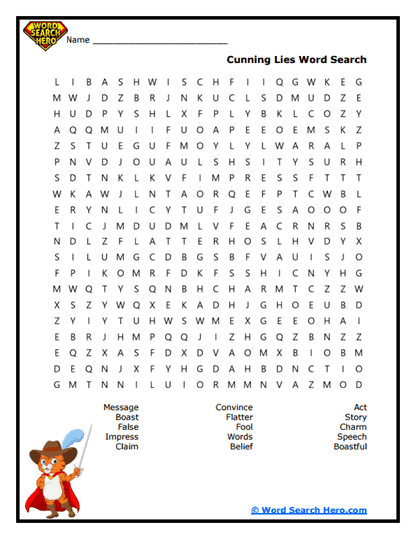
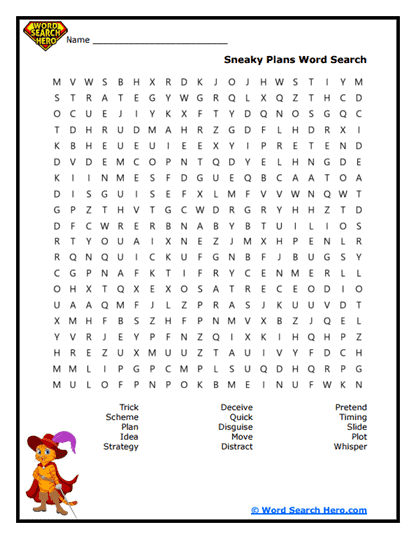
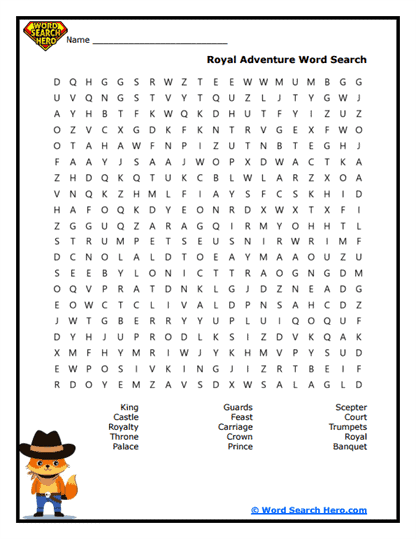
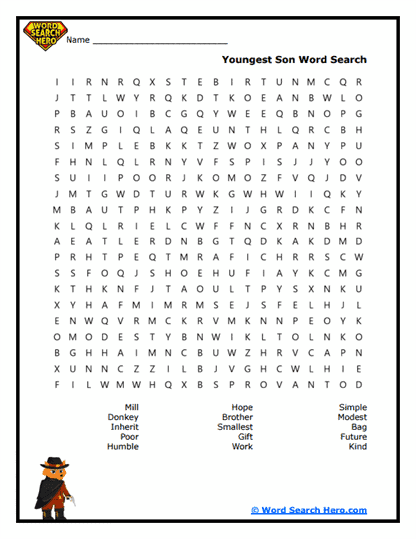
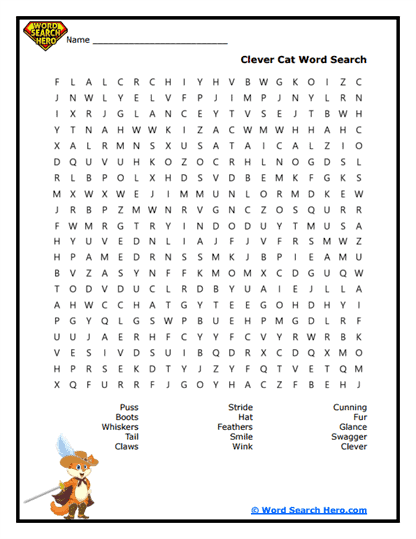
About Our Puss in Boots Word Searches
Puss in Boots word searches provide a delightful way to explore one of the world’s most beloved fairy tales while uncovering its exciting narrative, memorable characters, and timeless moral lessons. These printable puzzles introduce students to important vocabulary connected to cleverness, courage, strategy, royalty, magic, and perseverance. As learners search for each word, they gain a deeper appreciation for the remarkable cat whose intelligence changes the course of his master’s life.
The story begins with a poor miller’s youngest son who inherits what appears to be the least valuable gift imaginable-a cat. However, Puss quickly proves that wisdom, confidence, and careful planning are worth far more than riches. Through a series of clever schemes, persuasive conversations, and daring adventures, the cat transforms his master’s fortunes and secures a brighter future. While the fairy tale is filled with humor and imagination, it also encourages readers to think carefully about honesty, appearances, and how intelligence should be used responsibly.
These word searches strengthen vocabulary, reading comprehension, spelling, and literary analysis while introducing students to one of the greatest trickster tales in classic literature.
With puzzles covering clever planning, royal courts, magical transformations, problem-solving, and enduring folklore, this collection helps readers discover why Puss in Boots has entertained generations for centuries.
The Narrative and Its Moral Lessons
Puss in Boots follows an unlikely hero whose greatest strength is neither wealth nor physical power, but quick thinking. Word searches throughout this collection introduce students to themes such as cleverness, opportunity, confidence, persuasion, responsibility, ambition, courage, imagination, and perseverance. Together, these ideas reveal how the cat’s resourcefulness drives every major event in the story.
At its heart, the fairy tale celebrates intelligence and creative problem-solving while also serving as a gentle cautionary tale. Puss often succeeds through trickery and carefully crafted illusions, encouraging readers to consider both the benefits and the ethical questions surrounding deception. Students can discuss whether the cat’s actions are justified because they help an honest, poor young man or whether some of his methods cross important moral boundaries.
Rather than presenting success as something earned only through birth or fortune, the story suggests that determination, confidence, and imagination can open unexpected doors. At the same time, it reminds readers to think critically about appearances and persuasive words because not everything is exactly as it seems.
Encouraging students to ask questions such as, “Was Puss truly helping his master or manipulating others?” and “What makes intelligence different from dishonesty?” helps them appreciate the fairy tale’s surprising depth.
Paul’s Pro-Tip

One of the most effective ways to use a Puss in Boots word search is to create a “clever plan tracker.” As students find words like plan, strategy, convince, castle, and reward, have them place each word beside the part of the story where Puss uses it. Then ask students to explain whether the plan succeeded because of preparation, confidence, luck, or persuasion. This helps readers recognize that the cat’s victories are built from many carefully connected decisions rather than random good fortune.
Another engaging activity is the “wise choice or risky choice?” challenge. After completing the puzzle, choose several of Puss’s biggest decisions and ask students to decide whether each one was wise, risky, or both. For example, was tricking the ogre courageous or dangerous? Was pretending to be the Marquis of Carabas harmless imagination or dishonest deception? This activity encourages thoughtful discussion about the difference between creativity, responsibility, and manipulation while helping students understand why Puss in Boots works as both an entertaining adventure and a cautionary tale.
From Story to Literary Understanding
Puss in Boots word searches become even more meaningful when students connect the vocabulary to the fairy tale’s larger lessons. After completing a puzzle, students can choose one word and explain how it changes the direction of the story or reveals something about a character.
For example, students might explore how cleverness helps overcome obstacles that strength cannot, how confidence allows Puss to persuade kings and nobles, or how transformation represents both magical change and the improvement of the miller’s son’s life. Others may examine how fortune grows from opportunity combined with careful planning rather than simple luck.
These activities naturally support literature, character education, and critical thinking by encouraging discussions about honesty, responsibility, perseverance, leadership, and the ethical use of intelligence.
By connecting vocabulary to the narrative and its moral lessons, students transform a simple word search into a deeper exploration of one of the world’s most enduring fairy tales.
Frequently Asked Questions
What is the main moral of Puss in Boots?
One of the story’s central lessons is that intelligence, creativity, and confidence can overcome obstacles that money or physical strength cannot. At the same time, the fairy tale encourages readers to think carefully about how cleverness is used. It reminds us that wisdom should be guided by responsibility and good judgment.
Why is Puss considered such an unusual fairy tale hero?
Unlike traditional heroes who rely on bravery or magical powers, Puss succeeds through observation, planning, and persuasive communication. His ability to solve problems creatively drives the entire story. This makes him one of literature’s most memorable trickster characters.
Is Puss in Boots a cautionary tale as well as an adventure?
Yes. While the story celebrates clever thinking, it also invites readers to question deception and appearances. Puss often succeeds by misleading others, creating opportunities to discuss when cleverness becomes dishonesty and why critical thinking is important. The fairy tale encourages readers not to accept everything at face value.
How can I make Puss in Boots word searches more interactive?
Have students connect each vocabulary word to one of Puss’s plans and explain how it helped move the story forward. Another excellent activity is asking students to decide whether each major decision in the fairy tale was wise, risky, or both, supporting their answers with evidence from the story. These activities strengthen both reading comprehension and moral reasoning.
Why has Puss in Boots remained popular for centuries?
The fairy tale combines humor, adventure, memorable characters, and timeless lessons about intelligence, perseverance, and opportunity. Readers of every generation enjoy watching an unlikely hero succeed through wit rather than force. Its moral questions and imaginative storytelling continue to inspire discussions long after the story ends.